

More news on this day
A sweeping shutdown of key Middle Eastern airspace linked to the Iran war is cascading across the global aviation network, with airlines in Canada, Spain, Latvia, Greece, Hong Kong and Iran scrambling to cancel, reroute or suspend services on some of the world’s busiest long-haul corridors.
Get the latest news straight to your inbox!
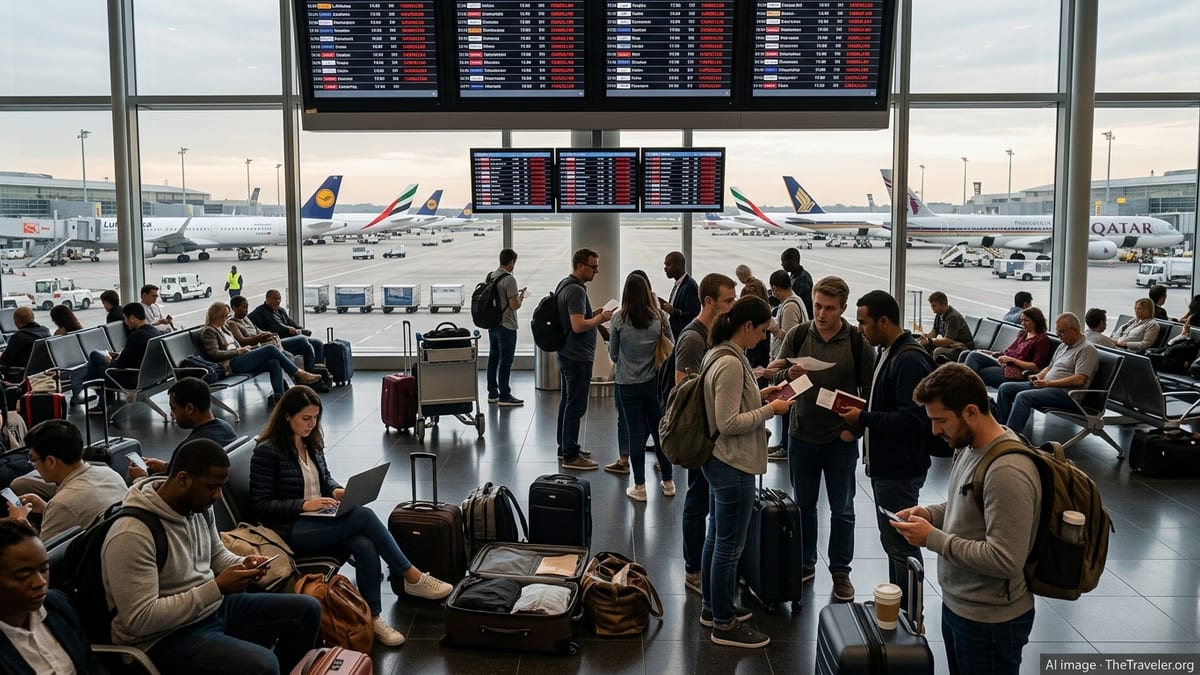
A Sudden Choke Point in the Global Sky
Since strikes on Iran began on February 28, 2026, regional airspace closures over Iran, Iraq, Israel, Syria, Qatar, Bahrain, Kuwait and the United Arab Emirates have turned a historic aviation crossroads into a no go zone for many carriers. Publicly available flight tracking data and operational bulletins show civilian traffic over wide swathes of the Gulf and northern Middle East dropping to near zero as airlines divert around the conflict area.
Briefed assessments from aviation risk consultancies and travel management firms describe an unprecedented squeeze on capacity between Europe and Asia, with operators forced onto longer southern or polar routes that add hours of flying time and sharply raise fuel burn. Industry analyses suggest thousands of flights have been cancelled outright across multiple days as airlines weigh safety, cost and aircraft range limits against volatile political and military conditions.
Economic studies of the 2026 Iran war already point to aviation as one of the hardest hit sectors, alongside energy and tourism. With major Gulf hubs handling an outsized share of global connecting traffic, any prolonged shutdown or restriction in the region has an outsized impact on itineraries that never intended to stop in the Middle East at all.
Canada Reroutes and Cancels as Long Haul Links Fray
Canadian travelers are feeling the shock most acutely on routes to South Asia, the Gulf and parts of Africa that typically rely on Middle Eastern overflight rights or transit hubs. Airline notices and booking data indicate that services from Canadian cities to Dubai, Doha and other key Gulf gateways have been suspended or significantly reduced, while flights to India and Southeast Asia are being re timed and rerouted around blocked airspace.
Passengers report last minute cancellations of itineraries that connected from Canada through European or Gulf hubs onward to the Middle East, with some journeys rebooked via longer transatlantic and southern corridors that avoid conflict zones entirely. Travel agencies based in Canada describe a wave of schedule changes, lengthy call center queues and a surge of requests for refunds or future travel credits as the situation evolves day by day.
The disruption comes as Canadian carriers and airports were still working to consolidate post pandemic gains in long haul demand. Analysts note that increased competition on Canada Gulf routes, approved earlier this year, has now collided with a sudden security driven capacity crunch, creating an unpredictable landscape for both airlines and passengers.
Europe’s Southern Fringe Feels the Strain
In Europe, Spain, Greece and Latvia are emerging as frontline states in the rerouting puzzle, positioned along alternative corridors that attempt to bridge Asia and the Americas without crossing the most restricted zones. Data from European schedule aggregators shows carriers trimming frequencies, inserting additional technical fuel stops and, in some cases, suspending entire city pairs when longer detours make flights commercially unviable.
Spanish airports with large long haul operations are seeing disrupted connections to South and Southeast Asia as partners in the Gulf pause services or extend block times significantly. Greek gateways on the eastern edge of the European Union are absorbing diverted traffic yet also confronting their own operational limits as air traffic control sectors become more crowded with rerouted flows that once crossed the Levant and Iraq.
Latvia and other Baltic states, connected to Asia largely through one stop links, are contending with a patchwork of schedule changes as European and Asian partners adjust routings. Aviation observers warn that if the closures persist, capacity from northern and eastern Europe to parts of Asia could remain constrained well into the summer season.
Hong Kong and Asian Hubs Confront Longer Paths
Hong Kong, traditionally a major bridge between Asia and Europe, has been forced to adapt to narrower routing options that avoid Iranian and Iraqi airspace. Regional media coverage and airline advisories describe aircraft bound for European capitals taking more southerly tracks via the Arabian Sea and Red Sea or, in select cases, longer northerly detours that skirt conflict zones, each option carrying its own operational trade offs.
Carriers across East and South Asia are publishing rolling updates as schedules are rebuilt around the new constraints. Some have opted to temporarily suspend services to Middle Eastern destinations entirely, while preserving truncated networks to Europe with extended flight times. Others are consolidating frequencies, combining lightly booked flights and prioritizing widebody capacity on routes with strong premium and cargo demand.
For travelers in Hong Kong and neighboring hubs, the immediate effects are longer journeys, missed connections and tight availability on remaining services. Industry analysts caution that higher fuel and insurance costs generated by the detours are likely to filter through to airfares if the crisis endures.
Iran and Regional Carriers Face Near Standstill
Inside the region, Iranian airlines and Gulf based giants alike are contending with some of the most severe operational shocks in their history. Economic impact assessments describe a near total cessation of regular commercial traffic for leading Middle Eastern carriers at the peak of the closures, with hub airports in Doha, Dubai and other cities temporarily suspending many passenger operations.
Iran’s own airspace, effectively emptied of most international overflights after the initial strikes, has seen domestic operations constrained by safety, infrastructure and demand shocks. With neighboring states from Iraq to Israel also tightening or shutting their skies, regional carriers that built their business models on cross continental connectivity are suddenly operating at a fraction of normal capacity.
Aviation economists note that the Middle East accounts for a significant share of global transfer traffic between Europe, Asia and Africa. The current shutdown is therefore being watched as a critical test of how quickly the global system can rewire itself around a missing hub region and at what cost to airlines and travelers if the conflict and associated airspace restrictions drag on.