

More news on this day
Turkish Airlines has joined a growing list of carriers forced into sweeping cancellations across Lebanon, Syria, Iraq, Iran, Jordan and the Gulf, as unprecedented airspace closures tied to the escalating US–Israel conflict with Iran trigger a fast-moving travel crisis that is stranding passengers from Europe to Asia.
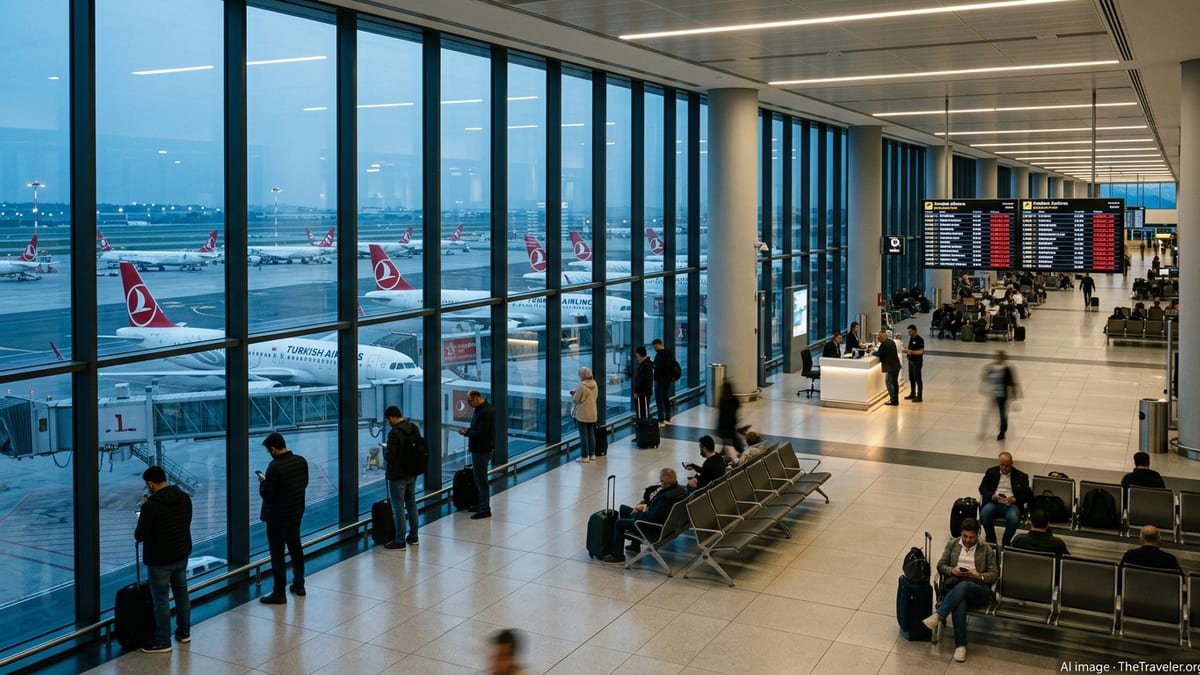
How the Middle East Airspace Crisis Unfolded
The current wave of flight cancellations began after joint US and Israeli strikes on Iran in late February, followed by retaliatory attacks that prompted multiple Middle Eastern states to shut or heavily restrict their airspace. Authorities in Iran, Iraq, Israel, Syria, Kuwait, Qatar and Bahrain moved quickly to issue NOTAMs closing skies to civil aviation, while Gulf hubs such as Dubai, Abu Dhabi and Doha saw large-scale groundings and diversions.
By early March, travel data firms and aviation agencies were estimating thousands of flights canceled or rerouted over just a few days, as airlines scrambled to redraw routes around closed corridors. Long haul links between Europe and Asia, as well as connections across Africa and India, have been particularly affected, with some journeys extended by hours due to detours over Egypt, Turkey and the eastern Mediterranean.
The disruption has hit at a sensitive moment for global tourism and business travel, with late winter and early spring traffic ramping up. Travelers transiting through the Gulf on route to destinations as varied as Bangkok, Johannesburg, Sydney and Mumbai have found themselves caught up in the turbulence, even if their final destination is far from the conflict zone.
While some airspaces are technically listed as open, many carriers are choosing to avoid them entirely, citing dynamic security assessments and the need to protect passengers, crew and aircraft from missile and drone activity in the wider region.
What Turkish Airlines Has Suspended So Far
Turkey’s Transport and Infrastructure Ministry confirmed that Turkish Airlines, along with sister and partner carriers AJet, Pegasus and SunExpress, has halted passenger services to several of its core Middle East markets. Flights to Iran, Iraq, Syria, Lebanon and Jordan have been suspended through at least March 6, reflecting the widespread closure or heavy restriction of those airspaces.
In addition, all planned flights from Turkish carriers to Qatar, Kuwait, Bahrain and the United Arab Emirates were canceled through March 3, although authorities have signaled that the timeline could shift again depending on security conditions and air traffic control advisories. Limited services to Saudi Arabia and Oman are still operating, with aircraft routed along carefully controlled corridors that avoid the most sensitive areas.
The cancellations are being reviewed day by day, and officials in Ankara have warned that extensions remain likely if missile and drone launches continue. Turkish Airlines has emphasized that safety considerations and compliance with international aviation directives are taking precedence over commercial pressures as it reshapes its regional schedule.
Aircraft and crews previously rostered on Middle East routes are being repositioned where possible, but Istanbul’s role as a key east west transfer hub means that any prolonged outage to nearby airspace will continue to have knock on effects across the carrier’s European, Asian and African network.
Is Your Destination on the Disruption List
For travelers, the most immediate impact is on direct flights to and from Lebanon, Syria, Iraq, Iran and Jordan, which have seen near total cancellations from Turkish and many international carriers. Services into Beirut, Baghdad, Erbil, Tehran, Amman and Damascus are either suspended outright or subject to last minute changes, leaving passengers heavily reliant on airline notifications and airport departure boards.
Gulf destinations including Dubai, Abu Dhabi, Doha, Kuwait City, Manama and various airports in the United Arab Emirates have also been thrown into disarray after temporary closures and partial reopenings. Even when airports reopen for limited operations, airlines may still keep flights grounded, either due to continuing risk assessments or because aircraft and crews are out of position after days of diversions.
Indirectly, many itineraries to South and Southeast Asia, East Africa and Australasia are being affected, especially those that usually connect through Gulf super hubs or via Istanbul with routings over Iraq and Iran. Travelers headed to cities such as Mumbai, Delhi, Bangkok, Nairobi or Colombo may find their journeys rerouted via alternative European gateways or delayed while airlines rebuild their schedules around safer corridors.
Because the situation is so fluid, two passengers booked to the same end destination on the same day may experience very different outcomes depending on their chosen airline, routing and departure time. Some will be rebooked on longer, one stop alternatives, while others face overnight delays or enforced stopovers far from home.
What Travelers Can Expect in the Coming Days
Industry analysts say that even if certain airspaces reopen in the short term, it could take days for schedules to stabilize. Aircraft that diverted to secondary airports, from Cairo to Antalya, must be refueled, serviced and crewed before they can be reintegrated into normal rotations. Flight crews are also hitting duty time limits after extended missions around closed zones, compounding the challenge of restoring timetables.
Passengers booked on Turkish Airlines and other major carriers serving the region should brace for rolling updates rather than a single definitive announcement that everything is back to normal. Airlines are updating schedules in short windows, often 24 to 48 hours at a time, in step with evolving NOTAMs and military risk assessments.
Ticketing rules have been temporarily relaxed by many airlines, allowing free date changes or refunds for journeys touching affected countries or overflight zones. However, availability on alternative flights is tightening as demand piles up on the remaining safe corridors through Egypt, Turkey, the Caucasus and southern routes that avoid the most restricted skies.
Travelers with urgent trips are being urged by industry experts to build in extra time, consider rerouting through less affected hubs where possible, and remain prepared for last minute gate changes, delays or overnight disruptions as the crisis plays out.
How to Check Your Flight and Plan Ahead
For anyone flying with Turkish Airlines, AJet, Pegasus, SunExpress or other carriers into, out of or over the Middle East in the coming days, the single most important step is to monitor your booking closely. Schedules are changing several times a day in some cases, and notifications may arrive via email, app alerts or text messages with relatively short lead time.
Airports and governments are also adjusting security postures and operational hours in line with regional military developments. This means that even flights initially listed as operating can be subject to change if new restrictions are introduced or extended during the day. Checking just once, days in advance, is no longer sufficient in such a fast moving environment.
Travel advisers recommend that passengers verify not only departure and arrival times but also whether their routing involves overflight of highly restricted countries such as Iran, Iraq, Israel, Syria, Qatar or Kuwait. Even if a destination appears unaffected on a map, the path your aircraft was originally scheduled to take may no longer be available due to evolving airspace closures.
For now, the Middle East airspace crisis remains a rolling story rather than a contained event. Until military tensions ease and aviation regulators restore standard routing options, Turkish Airlines and many of its regional peers will remain in reactive mode, and travelers with plans that touch the region should be prepared for a level of uncertainty rarely seen in global aviation.