

More news on this day
Global aviation networks are straining under a rare double shock, as sweeping airspace restrictions across the Middle East intersect with mounting disruption at airports in the United States, where a partial federal government shutdown, staffing shortages at the Transportation Security Administration and broader operational constraints are reshaping travel plans for millions.
Get the latest news straight to your inbox!
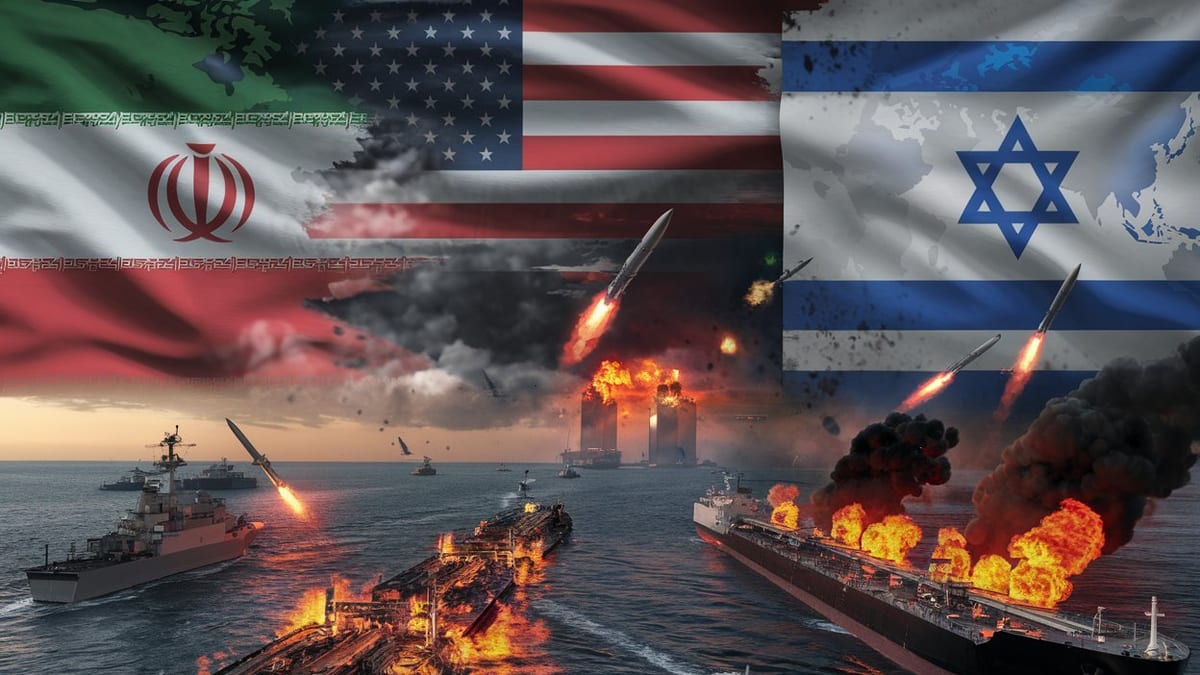
Image by Travel and Tour World – Tourism, Airline, Destination, MICE, Gobal Travel Market, Hotel news that you will find only over here.
War-Driven Airspace Closures Ripple Across the Middle East
According to publicly available airspace advisories and regional travel alerts issued in recent weeks, Israel, Iraq, Qatar, Kuwait, Bahrain and the United Arab Emirates have all imposed significant airspace closures or restrictions since late February, in response to escalating conflict involving Iran and allied forces. Large sections of the eastern Mediterranean and Gulf region are now either entirely closed to civilian overflights or subject to tight routing constraints and short-notice shutdowns.
Information from aviation safety bulletins indicates that multiple flight information regions, including those covering Bahrain, Iraq, Israel, Kuwait, Qatar and the UAE, are categorized as high risk, with airlines advised to avoid large portions of the region or operate only under stringent contingency procedures. Carriers based in Europe, Asia and North America have adjusted schedules, rerouted long-haul services and, in many cases, temporarily suspended operations to key hubs such as Doha, Dubai and Tel Aviv.
Travel management advisories describe a patchwork of closures in which national authorities reopen limited corridors for evacuation, cargo or humanitarian movements, while keeping most regular commercial traffic grounded. Qatar’s airspace, for example, has been subject to extended shutdowns punctuated by controlled reopenings under emergency conditions, which has left passengers dealing with rolling cancellations and minimal advance notice.
The scale of the restrictions has effectively carved out a large no-go zone for civil aviation at the crossroads of Europe, Asia and Africa. Long-haul routes that would typically cross the Gulf and adjoining states are being pushed north or south, adding flight time, fuel costs and operational complexity at the same moment that capacity is under pressure worldwide.
Lockdown-Like Conditions for Stranded Travelers
Reports from regional outlets and international travel advisories portray major Middle Eastern hubs in a quasi-lockdown state, with terminals full of passengers who cannot depart and aircraft parked on aprons waiting for clearance that often does not come. Airline customer notices reviewed in recent days highlight repeated mass cancellations, limited rebooking options and backlogs in call centers unaccustomed to this level of sustained disruption.
Travel firms operating package holidays and business itineraries in the region have publicly warned clients of extended stays in countries affected by airspace closures. Some have shifted guests to overland transport or coastal ports where shipping lanes remain partially open, while others are focusing on securing hotel rooms and basic services in cities experiencing surges of stranded visitors.
Security advisories emphasize that road access to certain airports has been intermittently restricted due to nearby military activity and precautionary closures. While many terminals technically remain open, curtailed inbound and outbound flights have created conditions that some observers compare to pandemic-era travel freezes, with deserted check-in counters alternating with overcrowded holding areas when limited corridors briefly reopen.
Insurance and risk consultancies have updated their guidance to classify parts of the Middle East as areas of elevated operational risk for corporate travel. Organizations with staff in the region are being urged to maintain flexible routing plans, verify flight status repeatedly before departure and prepare for rapid shifts in airspace status that can strand travelers with little warning.
U.S. Partial Shutdown Brings TSA Staffing to a Breaking Point
While the Middle East grapples with war-related airspace closures, the United States is facing a different kind of aviation crisis driven by domestic politics. A partial federal government shutdown that began in mid-February under President Donald Trump has left key transportation agencies operating with constrained budgets and unpaid personnel, including large segments of the Transportation Security Administration.
Recent reporting from national outlets such as the Associated Press and Axios indicates that hundreds of TSA officers have resigned since the shutdown began, while thousands more are calling in sick or unable to report for duty. Internal figures cited in that coverage suggest that, on some days, around 11 percent of scheduled TSA staff nationwide have been absent, with absentee rates at several major airports soaring to 30 to 40 percent.
Airports in Houston, Atlanta, New Orleans, New York and Baltimore have repeatedly reported security wait times stretching to several hours, according to local and national news reports. At Houston’s George Bush Intercontinental Airport, publicly available updates described general screening queues reaching approximately four hours at points this week, with expedited programs such as TSA PreCheck and CLEAR temporarily suspended at some checkpoints due to insufficient staffing.
The White House has moved to ease pressure by authorizing emergency payments to TSA workers despite the impasse over Department of Homeland Security funding, following a directive signed by President Trump on March 27. Public statements accompanying that order describe the U.S. aviation system as being at a “breaking point,” underscoring the extent to which airport security operations have been stretched by the prolonged funding standoff.
ICE, Possible National Guard Support and Safety Concerns
In an attempt to backfill gaps at security checkpoints, the administration has directed Immigration and Customs Enforcement officers to support operations at selected U.S. airports. News coverage from Washington and several major cities indicates that ICE personnel have been deployed to hubs including Chicago O’Hare and Pittsburgh International, where they are assisting with crowd management and ancillary tasks to speed passenger flows.
However, labor unions representing federal employees and aviation experts quoted in public statements have raised concerns about relying on officers who are not trained as aviation security screeners. Commentary from these groups points out that full-time TSA officers undergo months of specialized instruction in detecting weapons, explosives and sophisticated concealment methods, and argue that untrained personnel cannot safely replace them in core screening roles.
Separate reports circulating in U.S. political and aviation forums describe discussions about a potential deployment of National Guard units to assist ICE and TSA if current shortages persist, although such moves would require coordination with state authorities and would likely face legal and logistical hurdles. For now, the primary focus appears to be on retaining existing TSA staff through emergency pay and preventing further resignations as the shutdown drags on.
Travel industry observers are warning that the combination of unpaid work, intensified schedules and heightened public pressure could affect morale and increase the risk of burnout. While there have been no confirmed systemic security failures reported, analysts caution that sustained staffing gaps at checkpoints and among air traffic controllers introduce additional layers of risk into an already complex system.
A Perfect Storm for Global Aviation
The overlapping crises in the Middle East and the United States are converging into what airline analysts describe as one of the most challenging periods for commercial aviation since the height of the COVID-19 pandemic. War-driven airspace closures are forcing long-haul carriers to take lengthier, fuel-intensive detours or cancel services altogether, just as U.S. gateway airports face prolonged security delays and potential schedule reductions tied to government funding disputes.
Publicly available advisories from European and international aviation authorities recommend that airlines reassess routings across the broader Middle East region, including the Persian Gulf and eastern Mediterranean, and prepare contingency plans for further closures. At the same time, U.S. domestic carriers are warning customers to arrive significantly earlier for departures, particularly at large hubs burdened by TSA shortages and possible air traffic control constraints.
Travel planners report that passengers attempting to connect between the Middle East and North America are among the hardest hit, with some itineraries now requiring complex multi-stop routings through secondary European or Asian airports, longer layovers and an increased risk of missed connections. Business travelers and expatriate communities with ties to Gulf states are experiencing repeated last-minute changes, often with limited alternatives available.
For now, there is no clear timeline for a full restoration of normal flight patterns. The trajectory of the conflict that triggered the Middle East closures, and the outcome of political negotiations in Washington over federal funding, will both determine how long global aviation remains caught in this double bind of conflict-driven airspace restrictions abroad and shutdown-related disruptions at home.