

More news on this day
Thousands of travellers across the Middle East are facing acute disruption as a cascade of airspace closures and operational suspensions has forced airlines including Gulf Air, Qatar Airways, Malaysia Airlines, EgyptAir and FlyDubai to cancel or delay hundreds of services, grounding passengers in major hubs from Manama and Doha to Dubai, Abu Dhabi and Fujairah.
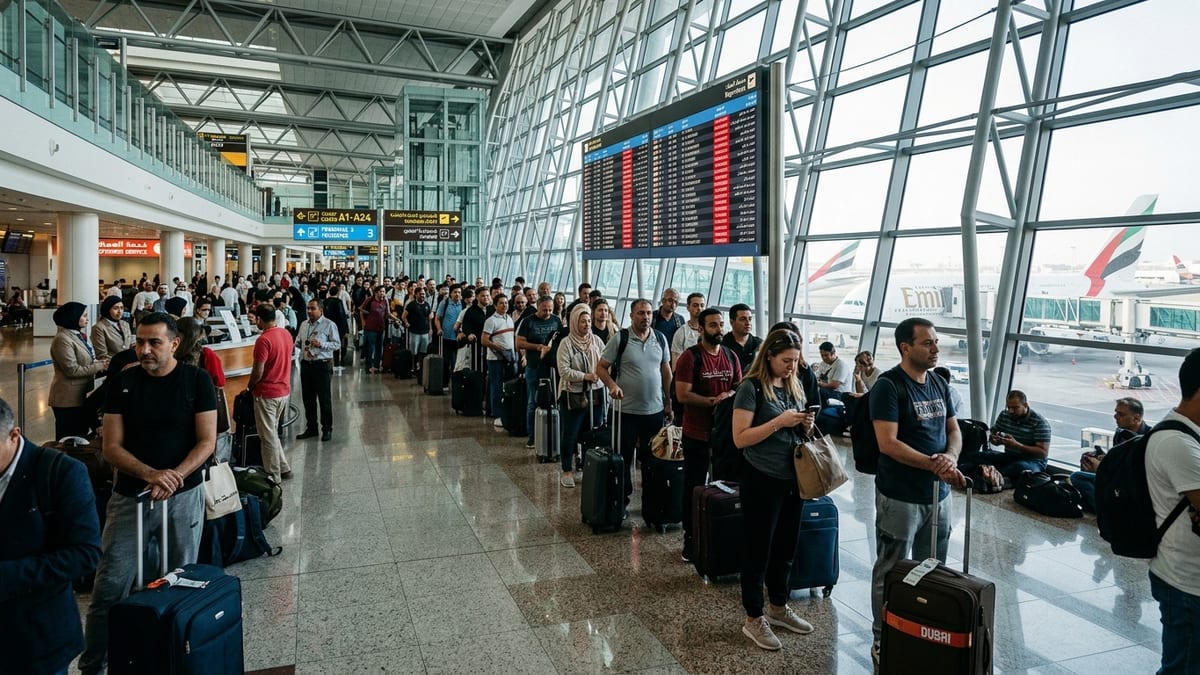
Regional Airspace Closures Ripple Across Major Hubs
Published coverage over recent days indicates that a series of partial and full airspace closures in the Middle East and North Africa has triggered widespread disruption to commercial aviation, with airports in Bahrain, Qatar and the United Arab Emirates among the most heavily affected. Flight tracking data and airline advisories show that at least 272 flights involving carriers such as Gulf Air, Qatar Airways, Malaysia Airlines, EgyptAir and FlyDubai have been cancelled or suspended across the region, alongside more than 200 recorded delays.
Manama, Doha, Dubai, Abu Dhabi and Fujairah, all key transit points for long-haul traffic linking Europe, Asia, Africa and Australasia, have seen waves of ground operations halted or sharply reduced. Publicly available information shows that Bahrain’s airspace closure effectively paused scheduled services in and out of Manama, while Qatar’s restrictions around Doha have resulted in the temporary suspension of routine Qatar Airways flights and the rerouting or cancellation of services by foreign carriers that rely on Hamad International Airport as a connection hub.
In the United Arab Emirates, operations at Dubai International, Al Maktoum International and Abu Dhabi International have moved through phases of complete shutdown followed by limited or partial resumptions. Reports indicate that FlyDubai has been among the most exposed low-cost carriers due to its dense regional network, while international partners and codeshare airlines have also been forced to trim schedules or reroute to avoid closed or congested airspace corridors.
Further east and south, services touching Fujairah and other secondary airports have also been affected as airlines adjust routings around restricted zones. Malaysia Airlines and other Asian long-haul operators have been reported to suspend or divert services that normally transit Gulf hubs, adding to the complexity and length of journeys for passengers attempting to move between Southeast Asia, Europe and North America.
Thousands of Passengers Stranded as Cancellations Mount
Aviation analytics cited in regional business and travel media suggest that the cumulative effect of cancellations and rolling delays since the latest round of airspace closures began has already stranded tens of thousands of passengers across the Gulf. With hubs such as Dubai and Doha temporarily operating far below normal capacity, large numbers of travellers have found themselves stuck in transit hotels, airport terminals and nearby city accommodation as they wait for replacement flights or reroutings.
In Manama, the suspension of Gulf Air’s regular operations to and from Bahrain International Airport has left outbound travellers unable to depart and inbound passengers diverted to alternative gateways. Similar patterns are evident in Doha, where Qatar Airways’ temporary halt to many scheduled services has disrupted complex itineraries that rely on tight intercontinental connections, particularly for travellers heading between Europe and Australasia.
Dubai and Abu Dhabi, ordinarily among the world’s busiest transit points, have seen long queues at rebooking counters and call centres as airlines attempt to prioritise passengers with imminent onward connections, medical needs or expiring visas. Publicly available accounts from stranded travellers describe extended waits, multiple rebookings and sudden schedule changes as carriers respond to evolving safety and regulatory constraints on a day‑by‑day basis.
The knock-on impact extends well beyond the Gulf itself. Flight data referenced in international coverage shows that cancellations and diversions at Middle Eastern hubs are prompting delays at airports across Europe, South Asia and East Asia, as crews, aircraft and slots fall out of their regular rotations. In some cases, passengers are being re-routed via much longer paths that avoid the region entirely, adding many hours to overall journey times.
Airlines Adjust Networks and Activate Limited Repatriation Flights
Airlines involved in the disruption are gradually adjusting their networks in response to operational and safety assessments. According to airline statements and notices carried by regional media, many carriers have moved from blanket suspensions toward more targeted cancellations and limited resumptions, opening a narrow path for repatriation and essential travel while regular schedules remain on hold.
Gulf Air and EgyptAir have focused initially on consolidating services on routes where alternative options are scarce, attempting to move stranded nationals and residents from heavily affected hubs back to their home markets. Qatar Airways has announced small numbers of repatriation-style flights from Doha to major European gateways using temporary corridors approved by aviation authorities, while keeping broader commercial operations suspended until airspace capacity and routing options improve.
FlyDubai and other Gulf-based carriers are reshaping their networks day by day, cancelling short-haul rotations into closed airspace while operating selected services south and west of the main conflict-affected areas. Malaysia Airlines and several other Asian operators have temporarily suspended routine Gulf transits in favour of more southerly or northerly routes, in some cases partnering with alternative hubs to maintain at least partial connectivity for long-haul travellers.
Industry observers note that airlines are also managing aircraft positioning and crew duty limitations, both of which can constrain how quickly suspended routes can be restored once airspace begins to reopen. Even where limited operations have resumed at airports such as Dubai and Abu Dhabi, schedules are significantly thinned out compared with normal levels, with priority given to flights that support repatriation, cargo and critical connectivity.
Travelers Face Complex Rebooking, Visa and Cost Challenges
For individual travellers, the operational complexity translates into a growing list of practical challenges. Reports from consumer travel outlets and passenger forums highlight difficulties in securing new itineraries as remaining seats on unaffected routes rapidly sell out, particularly in and out of Europe and major Asian hubs. With more than 272 flights suspended and over 200 delayed across multiple carriers, traditional rebooking options via neighbouring Gulf airports are often no longer available.
Passengers transiting Manama, Doha, Dubai, Abu Dhabi and Fujairah are being encouraged, via public advisories and airline alerts, to avoid travelling to the airport until they have confirmed flight details. However, many travellers already in the terminal at the time of the initial shutdowns have had to secure emergency accommodation, food and local transport, testing the capacity of airport hotels and nearby properties during peak demand periods.
Visa rules and entry restrictions add another layer of complexity. Travellers holding transit-only permissions or short-stay visas in Gulf states may need extensions or special arrangements when unexpected overnight stays or multi-day delays arise. Published guidance from several governments and airlines emphasizes the importance of checking both immigration requirements and airline policies before committing to alternative routings that pass through different countries or require new stopovers.
There are also financial implications. While most major airlines have introduced fee waivers or flexible rebooking policies for affected tickets, publicly available reports suggest that some travellers are still facing additional costs for accommodation, alternative flights on other carriers or last-minute changes to onward ground transport. Travel insurers are being tested on the scope of their coverage, with outcomes varying depending on policy wording around conflict-related airspace closures and government advisories.
Uncertain Timeline for Full Recovery of Gulf Connectivity
Analysts following the aviation sector in the Middle East caution that the recovery of normal traffic flows through the Gulf’s biggest hubs is likely to be gradual rather than instantaneous. Even once key airspace segments reopen and safety assessments permit a wider range of routings, airlines will need time to rebuild schedules, reposition aircraft and restore crew rotations disrupted by days of cancellations and delays.
Capacity constraints at airports such as Dubai, Abu Dhabi, Doha and Manama could also shape the pace of recovery. With thousands of passengers still waiting to be re-accommodated, carriers are expected to prioritise clearing backlogs with additional sections and larger aircraft where possible, before adding new commercial capacity for future bookings. This process may lead to continued short-notice timetable changes and rolling disruptions for some weeks.
Travel industry observers note that the current disruption highlights the central role Gulf hubs play in global connectivity. The temporary suspension of hundreds of flights involving Gulf Air, Qatar Airways, Malaysia Airlines, EgyptAir, FlyDubai and other operators has exposed how reliant many long-haul itineraries are on a relatively small number of transit points in the Middle East. As airlines and regulators work to stabilise operations, travellers and industry stakeholders alike are watching for clearer signals on when full-scale connectivity through the region can safely resume.
For now, publicly available information continues to emphasise caution. Prospective passengers are being advised to monitor airline channels closely, keep contact details up to date for schedule alerts and remain prepared for further changes as the situation in the affected airspace and at key Gulf airports continues to evolve.