

More news on this day
Middle East tourism and global air connectivity have been thrown into turmoil as airspace closures and mass flight cancellations ripple across the United Arab Emirates, Qatar, Saudi Arabia, Bahrain, Kuwait, Jordan, Lebanon and other regional hubs, just as analysts in Italy warn that the widening US-Israel conflict with Iran could wipe out tens of billions of dollars in visitor spending across West Asia.
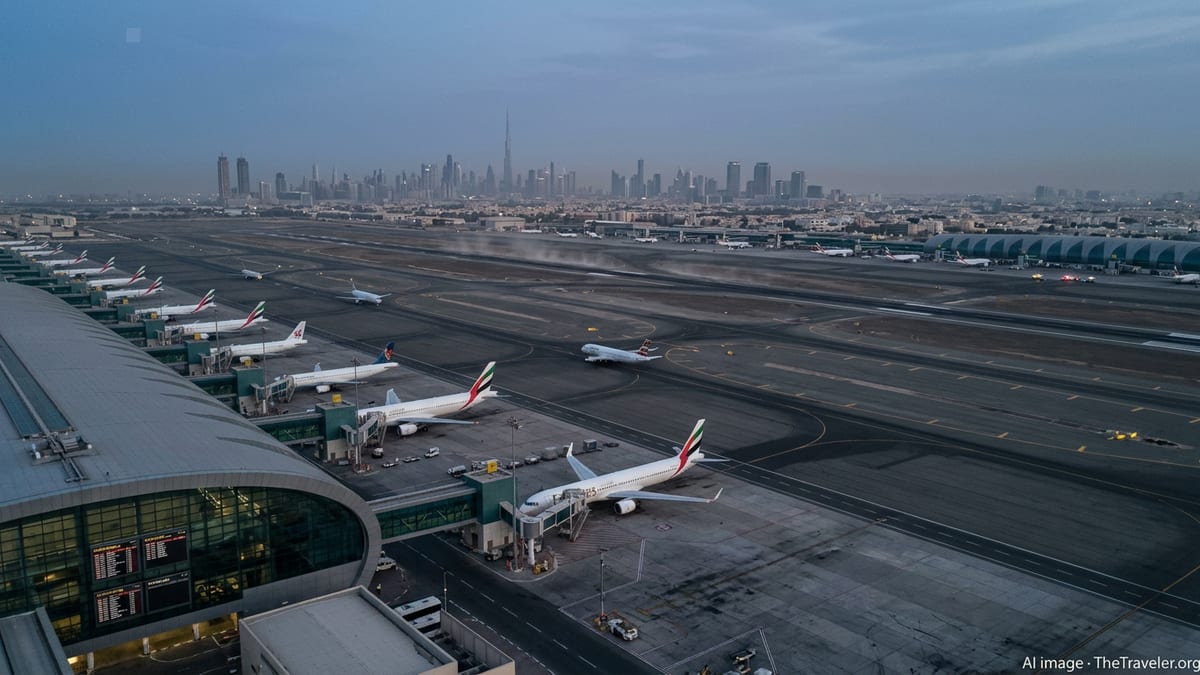
Airspace Closures From Gulf to Levant Cripple Regional Hubs
Since US and Israeli strikes on Iran began on February 28, followed by Iranian missile and drone attacks on Gulf states and Israel, aviation authorities across the region have moved to close or heavily restrict their skies. Airspace over Iran, Iraq, Israel, Syria, Qatar, Bahrain, Kuwait and parts of the United Arab Emirates has been shut at various times, forcing airlines to cancel or divert thousands of flights and effectively freezing some of the world’s busiest transfer corridors.
Dubai International, Abu Dhabi’s Zayed International and Doha’s Hamad International, normally among the most important junctions for travel between Europe, Africa and Asia, have either been closed outright or operating on sharply reduced schedules. Industry data providers tracking the crisis report more than 23,000 flight cancellations to, from and within the Middle East since February 28, with the three major Gulf super-connectors Emirates, Qatar Airways and Etihad at the center of the disruption.
Authorities in Kuwait, Bahrain and Qatar have also imposed temporary airspace closures or severe capacity limits following reports of missile strikes and attempted attacks near key infrastructure. In Jordan, the air force has periodically restricted civil aviation and suspended flights during overnight security windows, while carriers serving Beirut have cut back frequencies amid concerns about spillover from strikes in southern Lebanon and Syria.
The result is a patchwork of rolling shutdowns and partial reopenings, where aviation authorities announce new airspace restrictions with only hours of notice. Routes that remain technically open often require long detours around conflict zones, adding hours to flight times and sharply increasing fuel burn and operating costs for airlines.
Gulf Carriers Slash Schedules as Travellers Scramble for Options
Flag carriers in the Gulf have moved rapidly from full-scale suspension to cautiously restoring a skeleton network, but capacity remains a fraction of normal. Emirates has canceled hundreds of departures through Dubai while testing limited long-haul services on adjusted routings. Etihad has begun resuming select flights from Abu Dhabi to North America and Europe, even as debris from earlier strikes near the airport underscores the fragility of the recovery.
Qatar Airways, heavily exposed to overflight restrictions in Qatari airspace and along key corridors over Iran and Iraq, has temporarily halted most operations and is rebooking passengers on alternative routings where possible. Kuwait Airways and Gulf Air in Bahrain are operating severely curtailed schedules, often prioritizing evacuation and repatriation flights over regular commercial services.
Global airlines that use Gulf hubs as waypoints between Europe and Asia, including major carriers from India, Southeast Asia and Europe, have canceled or rerouted services in bulk. Airports as far away as Delhi and Mumbai have reported more than a hundred cancellations in a single day as airlines rework networks that typically funnel passengers through Dubai, Doha or Abu Dhabi.
For travelers, the disruption has meant days sleeping on terminal floors, rapidly rising last-minute fares on remaining routes, and a scramble for scarce seats via alternative gateways in Oman, Turkey, Greece or Central Asia. Travel agents in Europe and Asia report that some one-way tickets between major cities, rerouted away from the Middle East, have surged to several times their usual peak-season price.
Italy Sounds Alarm Over Tourism Losses as Forecasts Darken
As aviation chaos deepens, tourism economists in Europe are warning of a major hit to visitor flows and spending across the Middle East in 2026. A recent analysis circulated among Italian tourism and aviation officials estimates that international arrivals to the region could fall by 11 to 27 percent this year depending on how long the conflict and airspace closures persist.
The study projects a loss of between 23 million and 38 million visitors to Middle Eastern destinations, translating into a hit of roughly 34 to 56 billion dollars in tourism spending. Italian officials, concerned about the knock-on impact for European outbound travel and airlines, have framed the estimates as a wake-up call, warning that the prolonged shutdown of Gulf hubs risks erasing close to one billion dollars a week in regional tourism receipts if current conditions continue.
For countries that have spent the past decade positioning themselves as global leisure and business destinations, the timing could not be worse. The United Arab Emirates, Saudi Arabia, Qatar and Bahrain have all poured resources into new resorts, cruise terminals and cultural mega-projects, banking on sustained growth in visitor numbers. Jordan and Lebanon, reliant on a mix of heritage tourism, religious travel and diaspora visits, are equally exposed to the sudden collapse in air access and the sharp rise in perceived security risk.
Analysts warn that the headline figures on lost visitor spending understate the broader impact on hotel pipelines, event planning, aviation investment and the service-sector jobs that have underpinned diversification plans from Riyadh to Dubai. In Italy and elsewhere in Europe, outbound tour operators are already rewriting brochures and shifting marketing budgets away from Middle Eastern packages toward alternative Mediterranean and Asian destinations.
Security Advisories, Evacuations and Shifting Travel Corridors
The airspace crisis has unfolded alongside a cascade of government travel warnings and evacuation moves. The United States, European Union members and several Asian governments have urged their citizens to leave parts of the Middle East, including the Gulf, Jordan and Lebanon, while commercial options remain available. Some states have organized charter flights and coordinated with Gulf carriers to prioritize outbound seats for stranded nationals.
These advisories have had an immediate chilling effect on leisure demand, with package holidays and city-break bookings to Dubai, Doha, Abu Dhabi, Riyadh and coastal resorts across the region plummeting within days. Corporate travel managers are diverting conferences and incentive trips to safer destinations, while insurers reassess coverage for travel to conflict-adjacent countries, adding another layer of uncertainty for airlines and hotels.
In practical terms, the shutdown of core Middle East corridors is redrawing global flight paths almost overnight. Carriers are rediscovering older routes via the Caucasus, Central Asia and the eastern Mediterranean to link Europe with South and Southeast Asia, while others are pushing more traffic over the Arctic and Russian airspace where regulatory conditions allow. This complex rerouting raises costs and squeezes already thin margins at a time when jet fuel prices are climbing on the back of the same geopolitical tensions.
Industry observers note that even if a ceasefire were declared quickly, it would take months for confidence to return at scale. Airlines would need to rebuild schedules, crews and aircraft positioning around hubs that have been partially offline, while travelers and corporate clients would weigh the risk of renewed closures before committing to long-term plans.
Outlook for Travelers and the Region’s Tourism Ambitions
For now, officials across the United Arab Emirates, Qatar, Saudi Arabia, Bahrain, Kuwait, Jordan and Lebanon are trying to balance security imperatives with the urgent need to keep some commercial lifelines open. Limited daytime windows, tightly controlled approach paths and temporary humanitarian and repatriation corridors have become defining features of the current operating environment.
Travel experts advise passengers with tickets to or through the region in the coming weeks to monitor airline alerts closely, remain flexible about routings and dates, and consider alternative hubs where possible. With schedules changing day by day, they say, booking with carriers that offer generous rebooking policies and clear communication has become as important as the itinerary itself.
In the longer term, the crisis raises difficult questions for the Middle East’s flagship tourism and aviation strategies, which have depended on stable skies and open borders to finance ambitious “Vision” roadmaps and mega-projects. If the war between the United States, Israel and Iran drags on or flares again, the region’s role as a seamless bridge between continents could be challenged by new hubs and corridors that bypass West Asia altogether.
Yet officials and industry leaders also point to the sector’s resilience after past shocks, from the global financial crisis to the pandemic. Once airspace stabilizes and security fears recede, they argue, the combination of world-class airports, expanding low-cost networks and sustained investment in attractions from Saudi Arabia’s Red Sea coast to Lebanon’s historic sites will remain a powerful draw for travelers. The urgency now, they say, is to manage the immediate disruption while preserving the credibility of the Middle East as a safe, reliable destination for the years ahead.