

More news on this day
Major global airlines, including British Airways, Virgin Atlantic, Air France, Turkish Airlines, Emirates and Etihad, have rushed to suspend or reroute services across the Middle East after fresh Iran-related strikes triggered sweeping airspace closures and new government travel warnings, unleashing a new wave of disruption for travelers worldwide.
Airspace Closures After Strikes on Iran Hit Key Gulf Hubs
Large stretches of Middle Eastern airspace were abruptly closed over the weekend after coordinated United States and Israeli strikes on Iran and subsequent retaliatory fire, prompting aviation authorities across the region to halt civilian overflights. Iran, Iraq, Israel, Qatar, Kuwait, Bahrain and parts of the United Arab Emirates and other Gulf states imposed full or partial airspace shutdowns, effectively sealing off some of the world’s busiest flight corridors.
The closures forced major hubs in Dubai, Abu Dhabi and Doha to suspend most operations, with flight-tracking services reporting thousands of cancellations and diversions. Aviation analytics firms estimate that more than 3,000 flights have been cancelled in a single day at regional airports, while delays have rippled across Europe, Asia and North America as long-haul routes are hastily redrawn around the conflict zone.
European aviation regulators have issued conflict-zone bulletins warning of a high risk to civil aircraft operating in or near the affected skies, urging carriers to avoid Iranian and neighboring airspace where possible. The guidance reflects concern over potential misidentification of civilian jets amid active missile and drone activity and ongoing military operations.
With Russian airspace still restricted for many carriers due to the Ukraine war, the sudden loss of Middle East corridors has further squeezed already limited routing options between Europe and Asia, compounding congestion, fuel burn and schedule pressures for global airlines.
How Major Airlines Are Responding on Middle East Routes
British Airways has cancelled services to Tel Aviv and Bahrain and suspended some flights to Amman, while rerouting a number of long-haul services that would normally cross Iranian or Iraqi skies. The airline says it is monitoring the situation closely and making day-by-day operational decisions, prioritising passenger and crew safety.
Virgin Atlantic has joined other European and Gulf carriers in diverting flights away from affected airspace and suspending selected services to the region. Routes that typically overfly the Gulf and Iran are being pushed further south where possible, adding flying time and increasing operational costs but keeping aircraft clear of high-risk areas.
Air France and partner airlines KLM and others have halted flights to Tel Aviv and Beirut and adjusted schedules on broader Middle East networks. Turkish Airlines, a key connector between Europe, Africa and Asia via Istanbul, has cancelled or diverted flights that would transit closed airspace and is re-timing some departures to accommodate longer routings.
Gulf giants Emirates, Qatar Airways and Etihad have enacted some of the most sweeping measures, temporarily suspending many departures from Dubai, Doha and Abu Dhabi during the peak of the airspace closure. Flights already in the air have been forced to divert, return to origin airports or hold pending clearance, adding to mounting disruption and crew-rostering challenges.
Travel Warnings, Safety Bulletins and Government Advice
Governments have updated travel warnings for multiple Middle Eastern destinations, advising citizens to reconsider non-essential travel and to avoid transiting through affected hubs where alternatives exist. The United Kingdom’s Foreign, Commonwealth and Development Office has urged nationals in parts of the Gulf and wider region to follow local guidance, be prepared for prolonged disruption and register their presence with consular services.
Some European governments have issued “shelter in place” advisories for citizens currently in Gulf states, particularly those near major airports or urban centers that could be affected by further strikes or airspace closures. Citizens are being told to avoid unnecessary movement, stay away from airports unless they have confirmed bookings, and maintain regular contact with family and embassy officials.
Aviation safety agencies in Europe and beyond have reinforced existing conflict-zone guidance with fresh bulletins covering large portions of the Middle East. Airlines are being advised to conduct detailed risk assessments before operating in adjacent airspace and to prepare contingency plans for rapid route changes should further military activity occur.
Insurers and risk consultants say war-risk premiums and operational insurance costs are likely to rise in the short term for flights anywhere near the conflict area, costs that may eventually feed through to ticket prices even for travelers who are only overflying the region.
What Passengers Are Experiencing on the Ground
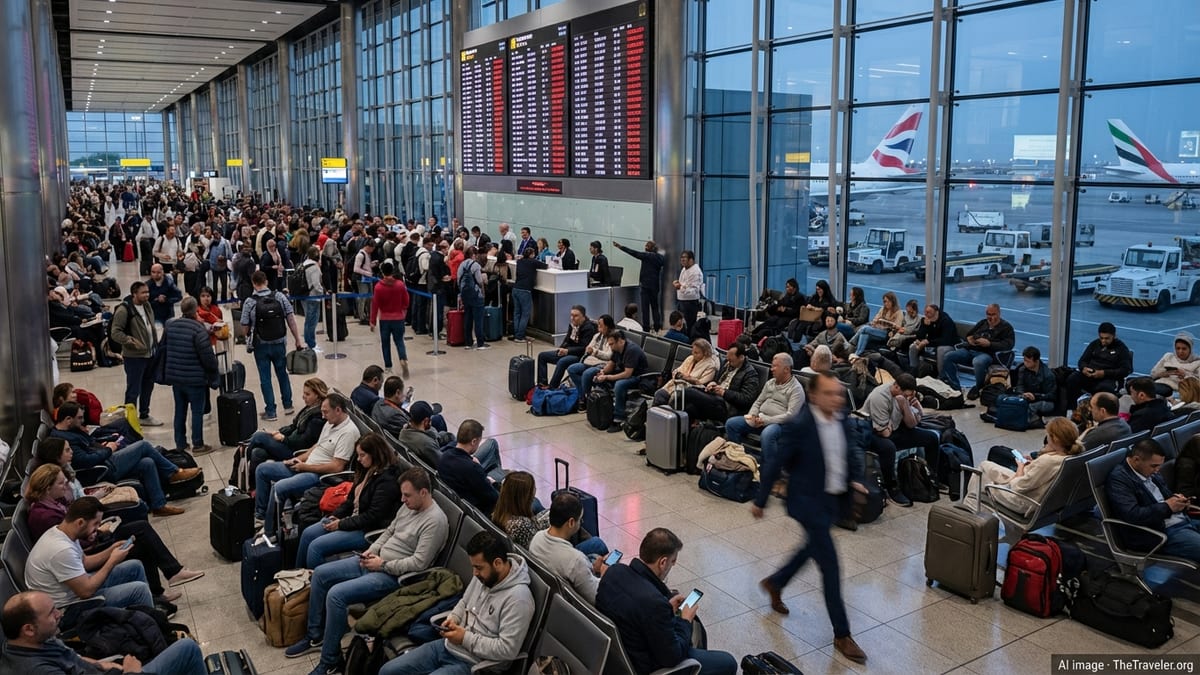
For travelers, the sudden airspace shutdowns have translated into hours-long queues, overnight terminal stays and missed onward connections across multiple continents. Hundreds of thousands of passengers are believed to be stranded or significantly delayed, many with little clarity on when alternative flights will be available.
Scenes of crowded departure halls and improvised sleeping areas have been reported at major hubs in Europe and Asia as well as in the Gulf, where suspended operations left aircraft and passengers in limbo. In some cases, flights turned back mid-journey after airspace closures were extended, returning passengers to their point of origin after many hours in the air.
Travel agents and airline call centers are struggling with a surge in rebooking requests, refunds and itinerary changes. Many carriers are waiving change fees for affected flights and encouraging customers to manage bookings online where possible, but backlogs are growing as schedules are redrawn and aircraft repositioned.
Industry analysts warn that even once core Gulf hubs begin to reopen, clearing the backlog of stranded travelers and repositioning aircraft and crews will take several days at a minimum. Knock-on delays on routes far from the Middle East are expected to continue as aircraft rotations remain out of sync.
What You Need to Know If You Are Due to Travel
Travellers scheduled to fly to, from or through the Middle East in the coming days are being urged to check their flight status frequently and to assume that last-minute changes are likely. Even if a specific route has not yet been cancelled, it may be retimed or rerouted at short notice to avoid restricted airspace, adding hours to journey times.
Passengers booked on British Airways, Virgin Atlantic, Air France, Turkish Airlines, Emirates, Etihad and other affected carriers should monitor official airline communications and travel alerts, and make sure their contact details are up to date in booking records. Many airlines are offering rebooking on alternative dates or routes at no extra charge for a limited period, particularly for travel involving Tel Aviv, parts of the Gulf and nearby conflict-adjacent airspace.
Experts advise allowing extra connection time, carrying essential medications and valuables in cabin baggage, and being prepared for extended waits at airports if flying anywhere near the region. Travellers with flexible plans may wish to consider rerouting via alternative hubs in Europe or Asia that do not require transiting Middle Eastern airspace until the situation stabilises.
While airlines and regulators stress that rerouted flights are operating outside identified conflict zones, the latest travel warnings underline how quickly conditions on Middle East routes can change. For now, passengers are being told to stay informed, stay reachable and build additional time and flexibility into any itinerary that might cross the region.