

More news on this day
Ongoing airspace restrictions across the Gulf are forcing airlines to sharply scale back operations at major Middle Eastern hubs, with Abu Dhabi, Doha, Dubai and other airports grappling with rolling cancellations, long delays and only a gradual return of limited services.
Get the latest news straight to your inbox!
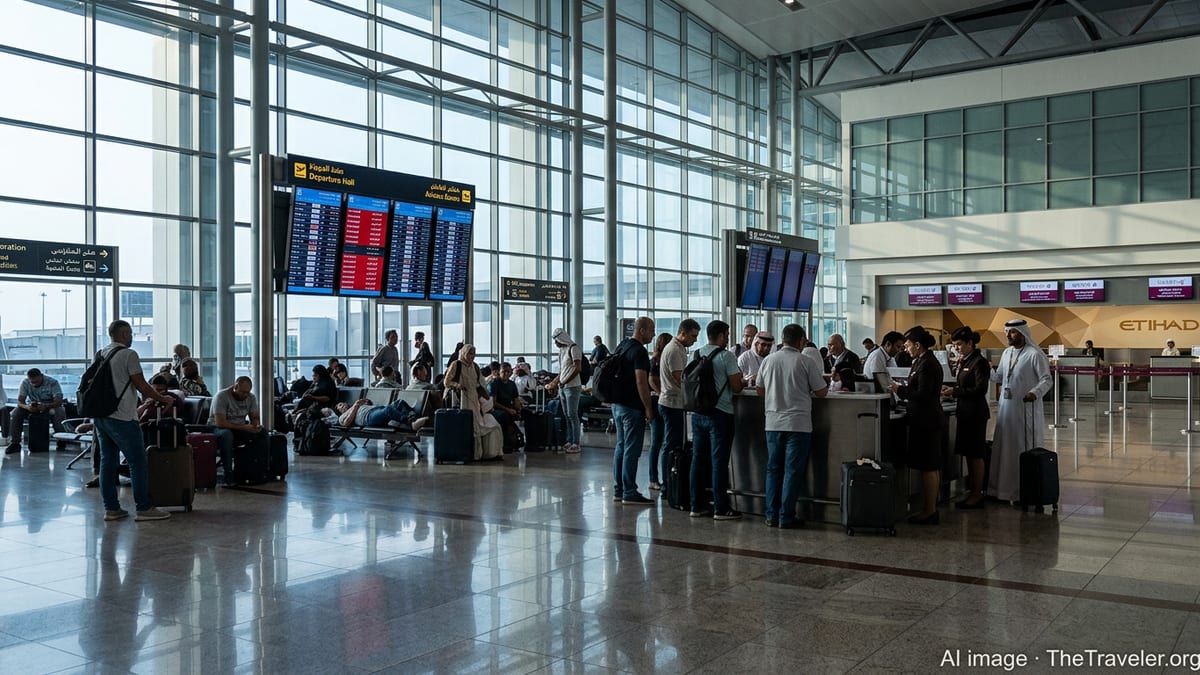
Gulf Hubs Remain Constrained Despite Partial Reopenings
Since late February, a web of airspace closures and military-related restrictions across Iran, Iraq, Israel and much of the Gulf has upended commercial aviation, severing many of the fastest routes between Asia, Europe and the Americas. Analysts estimate that more than 11,000 flights have been canceled across the region since February 28, with Dubai, Abu Dhabi and Doha operating at only a fraction of normal capacity.
Authorities in the United Arab Emirates and Qatar began easing some restrictions in early March, allowing a handful of temporary corridors so that airlines could resume limited services and repatriation flights. Etihad Airways restarted a reduced long haul schedule from Abu Dhabi on March 6, while Emirates and Qatar Airways have also brought back select routes, often on elongated flight paths that loop south of conflict zones.
Even with these reopenings, schedules remain volatile. Aviation data providers and regional travel advisories continue to describe Abu Dhabi’s Zayed International Airport, Doha’s Hamad International Airport and other Gulf gateways as operating under constrained conditions, with short-notice cancellations still common when new security assessments are issued.
Travelers connecting through these hubs should expect leaner timetables, longer journey times on routes that would ordinarily use Iranian or Iraqi airspace, and a higher likelihood of last minute changes as airlines adjust to shifting risk calculations.
Which Airlines and Routes Are Most Affected
Gulf super-connectors have borne the brunt of the disruption. Emirates, Etihad Airways and Qatar Airways all temporarily suspended large portions of their networks when the closures first took effect, cutting off popular one stop itineraries between cities such as New York and Mumbai, London and Bangkok, or Sydney and Paris that rely on Dubai, Abu Dhabi or Doha as mid route hubs.
Data from industry trackers suggests that while Emirates and Etihad have now resumed a portion of their long haul services, frequencies are still significantly below normal on many trunk routes. Some flights that have returned are being routed around closed or high risk airspace, adding four to seven hours to typical flying times and reducing the number of daily rotations a single aircraft can operate.
Doha remains one of the most constrained hubs. Qatari airspace was fully closed for several days, and although authorities have since authorized limited emergency corridors, standard commercial services have been slower to return. Qatar Airways has focused first on repatriation flights to and from key European and Asian capitals, leaving many regular passenger routes either suspended or subject to rolling review.
European and Asian carriers that usually depend on Gulf stopovers have also cut or rerouted services. Airlines in India, Southeast Asia and Europe have pulled flights to affected hubs or shifted them through alternative gateways in Saudi Arabia and Turkey, which still offer relatively stable airspace but often at the cost of added distance and tighter connection windows.
What Passengers in Abu Dhabi, Doha and Nearby Hubs Should Expect
For travelers on the ground in Abu Dhabi, Doha, Dubai and other regional airports, the most immediate impact has been a surge in crowding during the limited windows when flights do depart, followed by long stretches of relative quiet as gaps in the schedule open up. Local authorities have tightened access to terminals, with some airports allowing entry only to passengers holding a confirmed ticket on an operating flight within a short departure window.
Inside terminals, departure boards continue to show clusters of cancellations and delays, especially for flights scheduled to cross or skirt areas of restricted airspace. Airlines are regularly consolidating lightly booked services onto single departures, meaning that even confirmed travelers can see their itineraries shifted by several hours or more than a day.
Hotel availability around major hubs has tightened as stranded passengers seek accommodation during longer than expected layovers. Governments have organized evacuation and repatriation flights from the UAE and Qatar, which has helped ease pressure but not eliminated it, particularly for travelers heading to destinations with limited direct alternatives.
Those due to connect through Abu Dhabi, Doha or nearby hubs in the coming days should monitor their bookings closely, anticipate potential overnight stays and be prepared for extended time at the airport due to additional security screening and shifting gate assignments.
Your Rights on Cancellations, Rerouting and Refunds
Airlines serving the Gulf have introduced temporary flexible policies to cope with the unprecedented scale of disruption. Major carriers based in the United Arab Emirates and Qatar are generally allowing passengers with tickets issued before the latest escalation to change their travel dates or routes without rebooking fees, and in many cases to convert unused tickets into travel credits for future journeys.
Policy details differ by airline and departure point. For flights originating in the European Union or operated by EU based carriers, passengers may be entitled to refunds for canceled services, and in some cases compensation, under European consumer rules. For journeys starting elsewhere, including in the United States and much of Asia, travelers may still claim a refund if a flight is canceled and they choose not to travel, but compensation beyond that is less likely in a conflict driven disruption.
Across the board, airlines and travel agents are urging passengers to verify that their flight is operating before heading to the airport, to ensure that contact details are up to date in their booking so they can receive alerts, and to consider accepting rerouting via alternative hubs, even when it means longer journey times. Seats on remaining services are in high demand, particularly on routes linking the Gulf with India, Southeast Asia and major European capitals.
Travel insurance may offer limited relief, particularly for policies that include coverage for travel disruption and missed connections. However, many standard plans exclude war and related events, so travelers should review wording carefully and speak with insurers about what is and is not covered in the current situation.
Planning Upcoming Trips Through the Region
For travelers who have not yet departed, the current instability in Middle Eastern airspace presents a difficult calculation. Aviation regulators stress that routes cleared for operation have been risk assessed and are safe to fly, but they also acknowledge that the situation remains fluid and that further restrictions may be introduced at short notice if security conditions worsen.
Industry analysts say that while some air corridors are reopening, it could take weeks before Gulf hubs return to something resembling normal schedules. Airlines must not only wait for stable access to key segments of airspace, they also need time to reposition aircraft and crew, rebuild complex connecting banks and restore confidence among passengers wary of becoming stranded.
Travelers booking new tickets through Abu Dhabi, Doha or other affected airports should build additional flexibility into their plans. This can include allowing longer connection times, avoiding last flight of the day options on critical segments, and considering travel dates that can be moved without penalty if conditions change. Where practical, routing via alternative hubs that are less exposed to the current conflict can reduce, but not eliminate, the risk of disruption.
Ultimately, the ongoing instability around Gulf airspace means that even as airlines cautiously add back capacity, cancellations and extended flight times will remain a defining feature of trips that rely on Abu Dhabi, Doha and neighboring hubs for some time to come.