

More news on this day
Malaysia Airlines has abruptly suspended flights between Kuala Lumpur and Doha, Jeddah and Madinah after sudden airspace closures across parts of the Middle East triggered one of the most severe disruptions to global aviation since the Covid-19 pandemic.
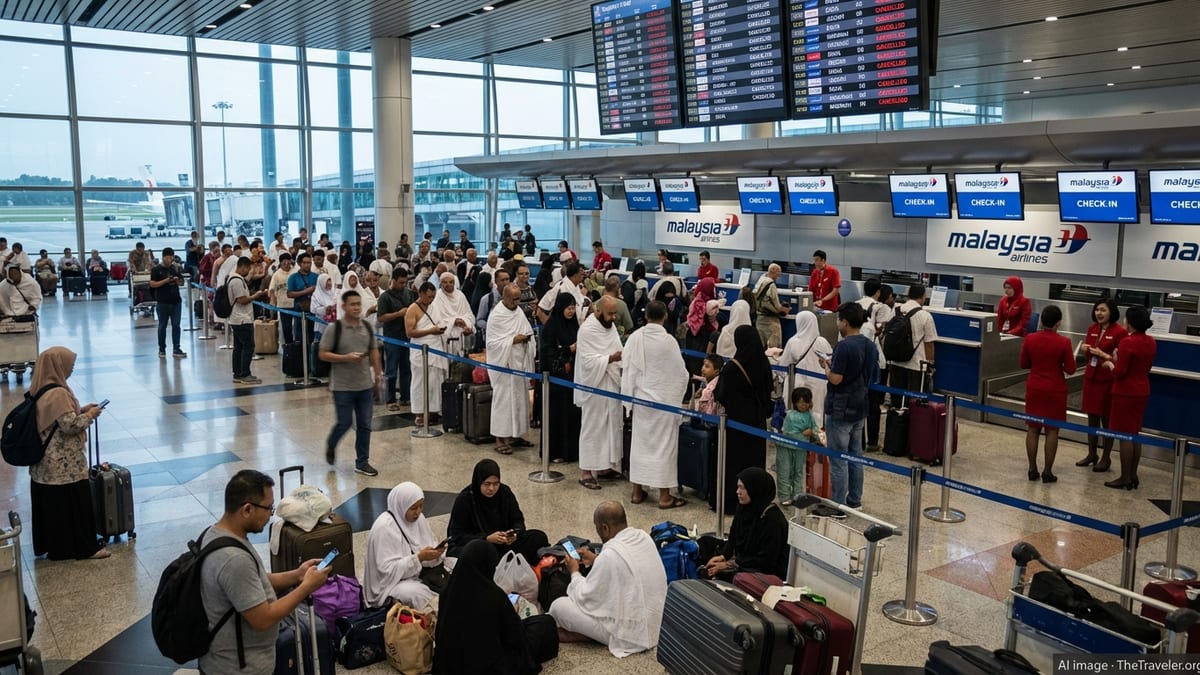
Rapid Escalation Forces Malaysia Airlines to Ground Key Routes
The national carrier confirmed that services to Qatar and Saudi Arabia were halted from February 28 to March 1, 2026, as a precaution in response to fast-moving security developments across the region. The move came after multiple Middle Eastern countries shut portions of their airspace amid a dangerous flare-up involving the United States, Iran and regional allies, prompting widespread flight cancellations and diversions.
Malaysia Airlines listed affected flights linking Kuala Lumpur with Doha, Jeddah and Madinah and said operations to these destinations will remain suspended while it monitors the situation and reviews risk assessments. The airline stressed that passenger and crew safety remains its overriding priority, and that any resumption of services will depend on clearer assurances about safe overflight corridors.
Before the full suspension took effect, two Malaysia Airlines services bound for Doha and Jeddah were forced into mid-journey turnbacks or diversions following real-time airspace risk advisories. Both flights later arrived safely back in Kuala Lumpur or at alternate airports, underscoring how quickly operating conditions deteriorated for carriers crossing the region.
The abrupt shutdown of these routes highlights how exposed Asia–Middle East traffic is to geopolitical tensions, with Kuala Lumpur’s role as a key Southeast Asian hub amplifying the ripple effects on connecting travellers bound for Europe and beyond.
Regional Airspace Closures Ripple Across Global Flight Networks
The Malaysia Airlines suspensions are part of a far broader aviation crisis unfolding across the Middle East after a series of strikes and counterstrikes involving Iran, the United States, Israel and regional partners. Authorities in Iran, Israel, Iraq, Syria, Kuwait, Bahrain, Qatar and the United Arab Emirates have all announced varying degrees of airspace closure or restrictions, forcing airlines to cancel or reroute thousands of flights.
Major hubs in Doha, Dubai and Abu Dhabi have temporarily halted or sharply reduced operations, paralysing some of the world’s busiest long-haul transfer points. International carriers including Emirates, Etihad, Qatar Airways, Turkish Airlines, Air India, Lufthansa, British Airways, Delta and United have all cancelled or diverted services, with analysts estimating well over 1,800 flights scrubbed and many more delayed worldwide.
For airlines serving Southeast Asia, the disruption is particularly severe. The Middle East corridor is a primary artery linking Asian cities with Europe, Africa and parts of North America. With key segments of airspace effectively closed, carriers must either postpone services or adopt significantly longer routings that skirt the affected region, adding hours of flight time, increasing fuel burn and straining crew rosters.
Some Malaysia Airlines long-haul flights to London and Paris are still operating, but on adjusted tracks routed via Afghanistan airspace to avoid the most volatile zones. Aviation authorities stress that each routing is subject to constant review as military activity and risk assessments evolve from hour to hour.
Umrah Pilgrims and Transit Travellers Face Long Delays
The grounding of services to Jeddah and Madinah, gateway cities for pilgrims travelling to perform Umrah in Saudi Arabia, has had an immediate human impact. Reports from Malaysian media describe groups of pilgrims stranded or facing unexpected delays and rebookings as airlines and tour operators scramble to secure alternative itineraries that do not rely on closed airspace.
For many travellers, particularly older pilgrims and those on tightly scheduled group packages, the disruption has introduced uncertainty around hotel bookings, onward ground transport and visa validity. Some groups have been re-accommodated in Kuala Lumpur while awaiting new departure dates, while others already in Saudi Arabia are being rebooked on later flights home as capacity allows.
Transit passengers using Kuala Lumpur as a stepping stone to Doha or onward Middle East and European destinations are also feeling the effects. Travel agents report a surge in enquiries from customers trying to reroute via alternative hubs in South Asia, East Asia or Europe, often at short notice and with limited seat availability. Fare volatility is rising as airlines adjust pricing to reflect longer flight times and higher operational costs.
Airlines and tour operators are urging affected passengers to stay in close contact, keep their contact details updated in booking systems and avoid heading to the airport without confirmed reissued tickets. Many carriers have activated fare-waiver policies for date changes, although exact terms vary by airline and ticket type.
Malaysian Regulators Urge Passengers to Check Flights Before Departure
In a public advisory issued on March 1, the Civil Aviation Authority of Malaysia warned that Middle East airspace closures may disrupt a range of international flights, not only those directly serving the region. The regulator said airlines could be forced to delay, retime, reroute or cancel services as they respond to evolving restrictions and operational challenges.
Officials emphasised that such steps are taken in the interest of safety and in line with international aviation requirements. The authority said it is working closely with airlines to protect passenger interests and ensure that carriers provide appropriate care and assistance in line with the Malaysian Aviation Consumer Protection Code.
Passengers travelling to, from or transiting through affected regions have been urged to check their flight status directly with airlines before leaving for the airport, and to make sure their mobile numbers and email addresses are correctly recorded in reservations to receive real-time updates. Travellers who believe their rights have not been respected are advised to first seek resolution with the airline, and then escalate complaints through official regulatory channels if necessary.
The advisory reflects growing concern among regulators worldwide that the Middle East airspace shutdown could drag on, creating rolling disruptions that may last well beyond the initial wave of cancellations and diversions seen over the weekend.
What Travellers Can Expect in the Days Ahead
Industry analysts say the next few days will be critical for airlines as they reassess routes and wait for clarity on how long airspace closures and military tensions will persist. If restrictions are gradually lifted and risk levels fall, carriers are likely to restore flights in phases, prioritising major trunk routes and heavily booked services such as those linking Asia with Europe.
For Malaysia Airlines, that could mean a cautious, stepwise return of flights to Doha, Jeddah and Madinah once authorities deem overflight paths safe and operationally viable. Until then, the airline is expected to continue liaising with government agencies, foreign regulators and partner carriers as it pieces together alternative travel options for stranded customers.
Travellers planning trips through the region in March 2026 should brace for potential last-minute adjustments, even if their flights remain on the schedule. Longer routing times, technical stops for refuelling, altered departure slots and tighter connection windows are all possible as air traffic controllers manage congested alternative corridors.
While the scale of disruption rivals some of the worst days of the pandemic era for aviation, industry experts note that airlines and regulators now have more experience in handling complex, fast-moving crises. For passengers, the most practical steps remain the simplest: monitor flight information closely, maintain flexible plans where possible and build in extra time for journeys that rely on routes near the troubled Middle East skies.