

More news on this day
Geopolitical tensions and rolling airspace restrictions across the Gulf and Levant have triggered the cancellation of 483 flights and at least 10 significant delays on Monday, March 10, disrupting operations for Qatar Airways, Saudia and EgyptAir across key hubs including Doha, Riyadh, Cairo, Dubai and Amman and leaving thousands of passengers scrambling for alternatives.
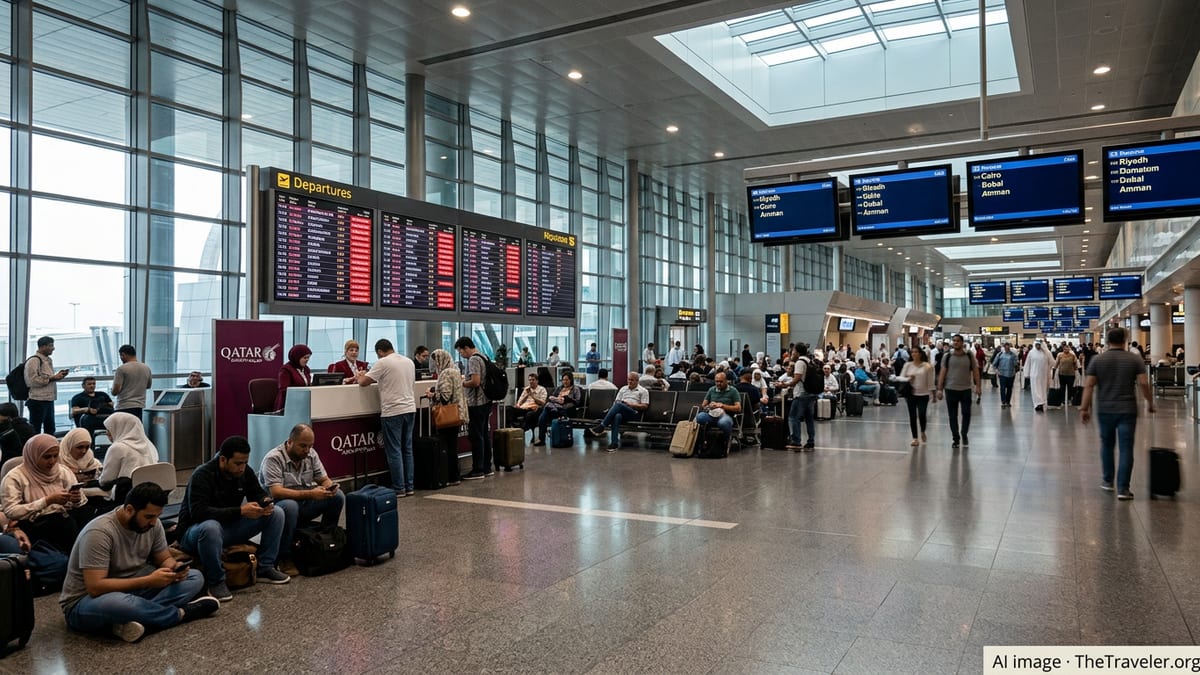
Airspace Closures Ripple Across Major Middle East Hubs
The latest wave of disruption follows nearly two weeks of escalating instability after strikes and counterstrikes involving Iran and several regional states, which prompted aviation regulators to shut or severely restrict parts of the airspace over Qatar, the United Arab Emirates, Saudi Arabia, Jordan, Iraq and the Gulf. Authorities in multiple countries have imposed tight altitude caps, no-fly zones and narrow humanitarian corridors, forcing airlines to cancel services that cannot be safely rerouted.
Doha’s Hamad International Airport remains one of the worst affected. Qatar’s civil aviation regulator closed national airspace on February 28, and while a limited corridor has since reopened, Qatar Airways’ regular commercial schedule is still formally suspended, with only specially approved relief and repatriation services operating. Similar constraints are in place around parts of Saudi and Jordanian airspace, complicating north–south traffic flows and long-haul routes that would typically cross the Gulf and Levant.
Dubai International, normally the region’s busiest hub, is operating at a reduced tempo, with many departures and arrivals either retimed or rerouted on longer tracks that skirt restricted zones. Amman’s Queen Alia International Airport, which experienced a partial closure earlier in the crisis, has reopened on a limited basis, but inbound and outbound frequencies remain well below normal, particularly for eastbound connections that would usually intersect with Gulf airspace.
Industry analysts say the current pattern of rolling restrictions, short-notice regulatory updates and rapidly shifting military risk assessments has been more complex than previous crises in the region. Airlines are having to adjust flight plans day by day as new notices to airmen are issued, adding to the likelihood of last-minute cancellations and multi-hour delays even where airports remain technically open.
Qatar Airways: Limited Corridors, Relief Flights and Long Waits
Qatar Airways has become the most visible symbol of the turmoil. With Qatari airspace formally closed to routine commercial operations since late February, the carrier has been relying on temporary exemptions to run a patchwork schedule of outbound and inbound flights primarily focused on repatriating stranded travelers. Over recent days the airline has announced short-term lists of destinations that can be served from Doha on specific dates, often with less than 48 hours’ notice.
For March 10, the airline is operating a restricted set of services from Hamad International to cities including Cairo, London Heathrow, Jeddah, Manila, Kochi, Muscat, Istanbul, Mumbai, Delhi, Nairobi, Islamabad, Madrid, Frankfurt, Colombo and Milan. These flights are not yet a full resumption of its global network but rather a series of relief rotations designed to clear backlogs and move passengers with previously canceled tickets. Seats are in high demand, and Qatar Airways has repeatedly urged travelers not to come to the airport unless they hold a valid, confirmed booking for one of the announced flights.
Passengers in Doha report crowded transfer areas, long queues at rebooking desks and intermittent communication as the airline races to update travel advisories and push notifications each time regulators adjust the usable corridor. Travelers connecting through Doha from Asia to Europe or Africa have been particularly affected, often facing multi-day layovers as they wait for a compatible relief flight to both their intermediate and final destination.
According to regional aviation bulletins, Qatar Airways expects to continue operating some form of relief schedule until at least March 12, subject to security assessments. Travel agents say that while the airline is offering free date changes and, in many cases, refunds or rerouting via partner carriers, inventory constraints and overlapping disruptions at other Gulf hubs mean passengers should be prepared for extended disruptions well beyond the official airspace reopening date.
Saudia and EgyptAir Cut Regional Links as Security Risks Mount
The knock-on effects have been severe for neighboring flag carriers. Saudia has trimmed operations across multiple Gulf and Levantine destinations, with particular impact on routes linking Riyadh and Jeddah to Doha, Dubai and Amman. Cargo subsidiaries have also scaled back, reflecting elevated risk assessments for overflying contested airspace corridors and concerns over potential missile or drone activity targeting aviation infrastructure.
EgyptAir, while still operating from its Cairo hub, has suspended or curtailed several regional services that depend on safe passage through Gulf or northern Arabian Peninsula airspace. Recent updates from the airline and Egyptian aviation officials point to continued pauses on certain flights to Doha and Amman, as well as frequency reductions on routes to parts of Saudi Arabia. Although Egyptian airspace itself remains open, carriers must consider whether viable and insurable routings exist for every stage of a multi-leg journey.
This retrenchment is particularly disruptive because Cairo, Riyadh and Jeddah serve as alternative connection points for travelers who would otherwise transit Doha or Dubai. With all three hubs now operating below capacity, the options for rerouting have narrowed, especially for time-sensitive itineraries such as business travel, medical visits or migrant worker rotations tied to fixed contracts and visas.
Regional travel specialists note that the secondary effects extend far beyond the airlines named in the latest cancellation count. Carriers such as Oman Air, Etihad, Emirates and various low-cost operators have all adjusted schedules, creating a patchwork network in which a viable itinerary on paper may quickly become unworkable if even one leg is affected by fresh restrictions or crew duty-time limits caused by prolonged detours.
Which Cities and Routes Are Most Affected
While the headline figure of 483 cancellations encompasses flights across dozens of city pairs, several core routes and hubs stand out. Doha remains the epicenter, with the majority of Qatar Airways’ regular departures still off the board and only a fraction of usual frequencies operating under special permissions. Services between Doha and major regional centers like Riyadh, Dubai and Amman are heavily curtailed or temporarily suspended, forcing passengers to seek indirect routings that avoid restricted airspace.
Riyadh’s King Khalid International Airport is seeing a mix of outright cancellations and extended delays on services to and from Doha, Dubai and Cairo, reflecting Saudia’s conservative stance on overflight risk. Dubai flights into conflict-adjacent corridors have been rerouted on longer tracks that bypass northern Gulf skies, adding up to several hours to journey times for passengers heading toward Europe or South Asia. Amman’s role as a bridge between the Levant, the Gulf and Europe has been sharply diminished, with numerous services to both Doha and Gulf hubs cut back.
Cairo, meanwhile, is operating closer to normal on long-haul routes to Europe and Africa but remains exposed on regional connections. Passengers booked on EgyptAir services between Cairo and Doha or Cairo and certain Saudi cities have faced abrupt cancellations, as flight planners reassess whether safe and efficient detours are feasible. In many cases, even when a technical routing exists, it can be rendered uneconomical by additional fuel burn, limited diversion options en route and tight crew duty-time regulations.
Travel data firms tracking global schedules say the pattern is one of concentric disruption: flights that directly cross restricted zones are canceled first, followed by services that depend on those disrupted legs for feed and connectivity. That dynamic helps explain why even passengers flying entirely outside the immediate conflict area are encountering last-minute changes if their original itineraries were built around hub connections in Doha, Riyadh, Cairo, Dubai or Amman.
What Stranded Passengers Should Do Now
For travelers already caught in the disruption, the most important step is to monitor their booking directly with the operating airline’s official channels and mobile apps. Airlines across the region, including Qatar Airways, Saudia and EgyptAir, are cautioning passengers not to travel to the airport unless their flight status shows as confirmed and operating. With terminal access controls tightened at several Gulf hubs, those without a same-day, confirmed reservation may be denied entry to check in or even to the departures hall.
Where flights have been canceled, carriers are generally offering a mix of free rebooking, voucher options and refunds, although the specific policies vary by airline, ticket class and point of purchase. Many passengers who booked through online travel agencies report slower processing times and more complex rerouting negotiations, since third-party intermediaries must coordinate with airlines that are themselves updating schedules on a rolling basis. Whenever possible, aviation advisers recommend dealing directly with the airline and keeping all documentation of cancellation notices and schedule changes.
For those yet to travel, experts advise avoiding non-essential connections through the most affected hubs over at least the next week, even if flights appear bookable. Flexible tickets, travel insurance that explicitly covers war-related disruptions and routings that avoid the Gulf and northern Middle East corridors are strongly recommended where alternatives exist. Travelers should also be realistic about the possibility of overnight layovers or multi-day delays if security conditions deteriorate or if regulators extend airspace closures at short notice.
As of March 10, there is no firm timeline for a full normalization of flight operations across the region. Aviation authorities are continuing to coordinate with military and intelligence services to reassess risk levels, and airlines are building their schedules in short, cautious increments. For passengers, that means planning for uncertainty, verifying every leg of an itinerary and being prepared to pivot quickly as the situation evolves.