

More news on this day
Major airlines in the Middle East and Asia are hitting the brakes on new aircraft orders as the Iran war, widespread airspace closures and a sudden spike in fuel prices inject fresh uncertainty into long-term fleet plans and travel demand forecasts.
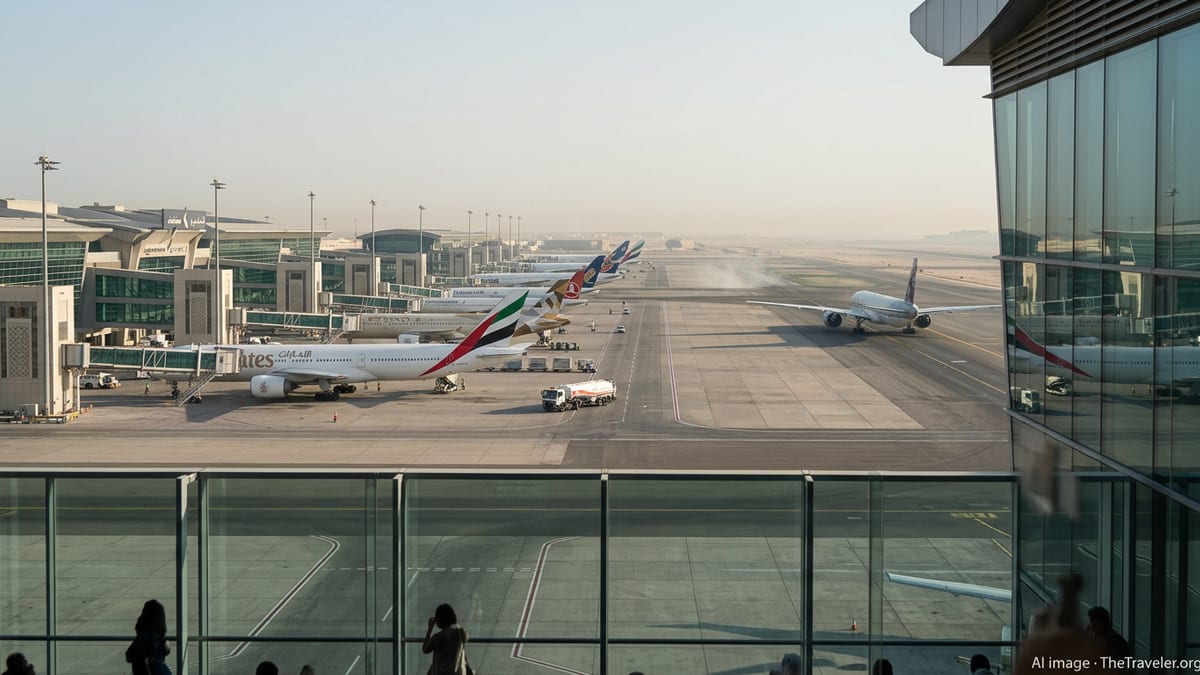
War Fallout Rewrites Growth Assumptions
For more than a decade, Gulf super‑connectors and fast‑growing Asian carriers have underpinned global demand for new widebody jets, banking on ever‑denser flows between Europe, Asia and Africa through hubs such as Dubai, Doha and Abu Dhabi. That model is now under severe strain as the Iran conflict keeps large swathes of Middle East airspace effectively closed to civilian traffic, forcing long detours and shrinking yields on once‑profitable trunk routes.
Operationally, airlines are burning more fuel on every flight that skirts the conflict zone, while schedule buffers and crew‑duty limits constrain how much capacity they can realistically deploy. Analysts say that combination is already undermining the traffic and revenue assumptions behind many multi‑billion‑dollar fleet expansion plans signed in recent years, particularly for long‑range widebodies intended to funnel passengers through Gulf and South Asian hubs.
With no clear timeline for a lasting ceasefire and aviation safety advisories still warning operators away from Iranian and neighboring flight information regions, network planners are re‑running their models for 2030 and beyond. Several regional executives, speaking on background to industry publications in recent days, described current orderbooks as “too optimistic” for a world in which a key corridor between Europe and Asia can shut down overnight.
Gulf Carriers Reassess Ambitious Widebody Pipelines
No region has more to lose from the airspace crisis than the Gulf, where Emirates, Qatar Airways, Etihad and newer players like Riyadh Air built their strategies on unconstrained access to Middle East skies. With traffic through their hubs throttled by detours over the Caucasus, the southern Red Sea and the Arabian Sea, these carriers are now re‑examining the pace at which they intend to take delivery of new long‑haul aircraft.
People familiar with the matter at two major Gulf carriers say internal reviews are underway to align existing Boeing 777X and Airbus A350 delivery timelines with more conservative traffic scenarios. While formal cancellations are seen as unlikely in the near term, executives are discussing deferrals, conversion of some widebody slots to smaller narrowbody types, and greater reliance on extended leases for current fleets rather than fresh purchases.
The calculus is complicated by the fact that aircraft orders are often placed years in advance and are politically sensitive, underpinning strategic relationships with the United States and Europe. Nonetheless, with war‑risk insurance premiums climbing and jet fuel suddenly consuming a larger share of operating costs, even flagship state‑backed airlines are finding it harder to justify aggressive capacity growth in a region where demand could remain volatile for years.
Asian Airlines Turn Cautious on Capacity Growth
Across Asia, carriers that rely on Middle East overflight rights to connect to Europe are also reassessing fleet plans. Indian, Pakistani and Southeast Asian airlines have been forced to reroute or cut frequencies on services to the Gulf and onward to Europe, often adding hours of flying and significant fuel burn. Those extra costs are eroding thin margins just as many operators had begun to regain financial footing after the pandemic.
Industry consultants in Singapore and Mumbai report that several second‑tier Asian airlines have quietly shelved tentative discussions for new long‑haul aircraft and are instead exploring short‑term wet leases or incremental upgrades to existing narrowbody orders. Executives are said to be wary of locking in large widebody commitments until there is greater clarity on route viability, insurance costs and the long‑term trajectory of fuel prices.
Even larger players in Northeast and Southeast Asia, which have more diversified networks, are tempering growth expectations for Europe‑bound traffic. While orders placed at recent airshows remain on the books, airline finance teams are revisiting assumptions about utilization and revenue per available seat kilometer on routes that now require significant dog‑legs to avoid the Gulf region. In some cases, the preferred strategy is to accelerate fleet renewal for efficiency while keeping overall capacity flat rather than expanding rapidly.
Fuel Price Shock Compounds Financial Pressure
The conflict’s impact on oil supply routes and market sentiment has pushed crude and jet fuel prices sharply higher in recent days, dealing a second blow to airlines already grappling with detours and cancellations. Fuel typically accounts for between one fifth and two fifths of an airline’s operating costs, and the latest spike is expected to hit Middle Eastern and Asian carriers particularly hard because of their reliance on long‑haul flying.
Carriers with limited fuel hedging in place are moving quickly to trim non‑essential capacity, delay marginal new routes and revisit discretionary spending such as cabin upgrades. Fleet planners, in turn, are placing greater emphasis on the fuel burn advantages of the latest generation of aircraft, while at the same time questioning whether they can afford to introduce those jets at the scale and pace originally envisaged.
Some airlines are already signaling a preference for deferring new deliveries rather than retiring older aircraft early, preserving cash even at the cost of operating less efficient fleets for longer. The paradox, analysts note, is that the very price shock that makes fuel‑saving aircraft more attractive also undermines balance sheets and raises the cost of financing, making it harder to follow through on ambitious orderbooks negotiated when energy markets were calmer.
Manufacturers Face Rising Risk of Deferrals
For Airbus and Boeing, as well as regional manufacturers in China and Japan, the turbulence in the Middle East and Asia raises the risk that a portion of their backlog will be pushed further into the future. While neither planemaker has publicly reported major cancellations tied directly to the Iran war, both have acknowledged that geopolitical tensions and supply chain constraints are prompting customers to seek more flexibility around delivery schedules.
Leasing companies, which sit between manufacturers and airlines, are also feeling the effects. Several lessors active in the Gulf and South Asia markets are said to be renegotiating placement plans for aircraft due to arrive in 2026 and 2027, as client airlines ask to postpone handovers or swap to smaller, more versatile models. That, in turn, could ripple into secondary market valuations for widebodies that were once assumed to have robust demand in the region.
Industry observers caution that the current pause in ordering does not necessarily herald a collapse in long‑term demand. Demographics and economic growth in South Asia, the Gulf and Southeast Asia still point to strong underlying appetite for air travel over the next two decades. But with war on a key corridor and fuel prices elevated, the near‑term priority for many airlines is preserving liquidity and operational flexibility, not racing to secure additional aircraft slots.