

More news on this day
Escalating conflict across the Middle East, a sharp surge in jet fuel costs and rapid ticket price increases are converging to create one of the most turbulent periods for global aviation since the pandemic, unsettling passengers and forcing airlines to rethink how and where they fly.
Get the latest news straight to your inbox!
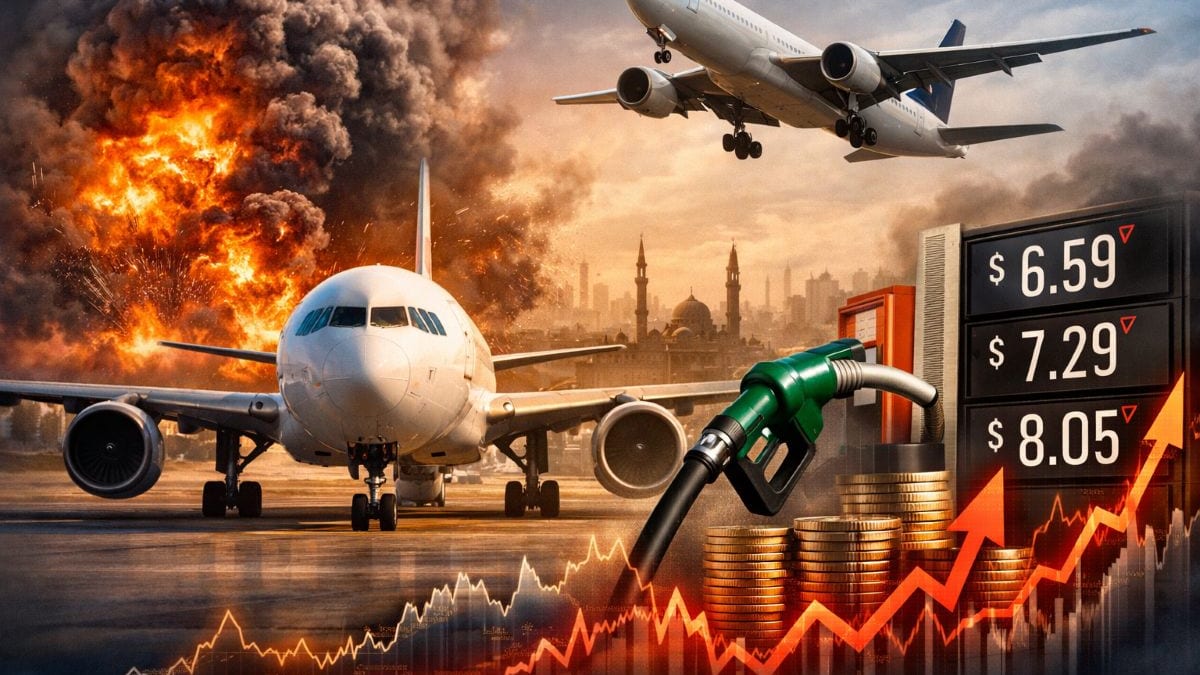
Image by Travel And Tour World
Airspace Closures Turn a Regional War Into a Global Flight Shock
The U.S. and Israel’s war with Iran, which intensified in late February 2026, has triggered sweeping airspace closures across Iran, Iraq, Israel, Kuwait, Bahrain, Qatar, Syria and parts of the United Arab Emirates. Published coverage indicates that key hubs in Dubai, Abu Dhabi and Doha, which usually handle tens of thousands of connecting passengers each day, have faced extended suspensions and heavily curtailed schedules.
Rerouting has become the new normal. Airlines operating between Europe and Asia are diverting around the conflict zone via the Caucasus or along southern corridors over Egypt and the Arabian Sea. Aviation tracking data and specialist analysis show these detours can add two to five hours to long haul journeys, with knock on impacts for crew scheduling, maintenance windows and airport congestion far beyond the Middle East.
The disruption is reaching travelers worldwide. Gulf hubs traditionally funnel traffic between North America, Europe, Africa and Asia, meaning the closure or restriction of these crossroads reverberates through networks as far apart as Sydney, London and Johannesburg. Reports describe hundreds of thousands of passengers stranded or diverted in recent weeks, with some forced into last minute hotel stays or complex rebookings via alternative continents.
Even where flights do continue, schedule reliability has deteriorated. Industry updates show rolling cancellations and day by day timetable adjustments as airlines respond to evolving risk assessments, government advisories and changing overflight permissions. For many travelers, the perception that routes through the region can change overnight is becoming as significant as the delays themselves.
Jet Fuel Supply Shock Pushes Airline Costs to New Highs
The conflict’s impact is not limited to airspace. The Middle East remains central to global energy markets, and recent strikes on oil and transport infrastructure around the Gulf and Strait of Hormuz have driven oil benchmarks sharply higher. Economic analysis of the 2026 Iran war notes that crude prices have climbed by more than a third since the first attacks, reversing the relatively stable fuel environment airlines had enjoyed through much of 2025.
New research from the International Air Transport Association highlights how exposed aviation is to such swings. IATA’s latest chartbook and related economic notes emphasize that airlines cannot easily substitute jet fuel, and that Europe in particular relies on the Persian Gulf for roughly a quarter or more of its jet fuel supply. As shipments become more expensive or rerouted, refiners and carriers face higher input costs that filter quickly into operating budgets.
For Gulf based airlines, the hit is especially severe. Specialist analyses of their balance sheets indicate that fuel already accounts for about 30 to 35 percent of total operating costs in normal conditions. Longer flying times around conflict zones compound this, forcing aircraft to carry and burn more fuel per trip at the very moment global prices are spiking. Analysts warn that some regional carriers may need to cut marginal routes or reduce frequencies to conserve cash.
Cargo operators are under similar strain. Industry logistics briefings report double digit percentage drops in available air freight capacity from Middle Eastern gateways as aircraft are redeployed or grounded. Higher fuel bills, war risk surcharges and insurance premiums are adding to costs for shippers moving goods between Asia, Europe and Africa, with implications for consumer prices later in the year.
Fare Hikes and Surcharges Squeeze Passengers Worldwide
The most immediate sign of the crisis for many travelers is at the checkout screen. Regional press and travel industry outlets are documenting steep fare increases across multiple markets as airlines attempt to offset higher fuel and operational costs. In some Middle Eastern corridors, average ticket prices have reportedly risen by between about 11 percent and more than 100 percent compared with pre conflict levels, with extreme cases cited at almost fourfold increases.
Fuel surcharges that had largely faded from view in recent years are returning. According to recent fare tracking reports, carriers in Asia and Europe have begun adding fixed fuel supplements on both short haul and long haul flights, sometimes ranging from modest amounts on regional routes to significant additional charges on intercontinental tickets. Network airlines are also experimenting with targeted increases on routes that rely heavily on Middle East overflight permissions, reflecting the added risk and distance now built into those journeys.
Price pressure is not confined to the region. Coverage in international media has highlighted sharp jumps on purely domestic routes in North America and Europe as aircraft and crews are reshuffled to cover disrupted long haul operations. In some cases, fares on busy U.S. city pairs that previously hovered in the mid range are now quoted at several times their typical price during peak disruption periods.
As fares rise faster than many household budgets, discretionary travel is starting to feel the strain. Early demand data from IATA and national aviation authorities point to softer bookings on some leisure oriented routes and slower growth in overall passenger traffic than was expected at the end of 2025, when forecasts still assumed relative geopolitical stability.
Travel Confidence Erodes as Risk Perceptions Shift
Beyond the measurable data on delays and prices, the turmoil is reshaping traveler psychology. Surveys referenced in airline and tourism reports suggest that a growing share of passengers now factor geopolitical risk into their route choices, with some avoiding connections through conflict adjacent hubs even when flights are operating normally.
Safety advisories from Western governments have reinforced this caution. In early March, public advisories from the United States and several European states urged citizens in a number of Middle Eastern countries to consider departing while commercial options remained available. Although framed as precautionary, such guidance can accelerate perceptions that the region is unstable for travel, prompting tour operators to scale back itineraries and corporations to tighten non essential business trips.
Confidence can be fragile in aviation markets that are still recovering from the pandemic. Analysts note that Middle Eastern carriers had only recently rebuilt demand on key long haul routes and were investing heavily in new fleets and airport infrastructure. The latest conflict introduces renewed uncertainty, leading some travelers to delay bookings or choose alternative routings via Europe or Asia Pacific hubs that are seen as less exposed to sudden closures.
Insurance trends mirror these shifts. Travel insurance comparisons now highlight additional war and civil unrest clauses, and some policies exclude coverage for trips routed through certain airports or airspaces named in government warnings. For risk averse travelers, this adds another layer of complexity and potential cost when planning journeys that would once have transited the Gulf almost by default.
Airlines Redraw Networks and Look for Longer Term Answers
Facing an environment where conflict and fuel volatility may persist, airlines are moving beyond short term fixes. Publicly available scheduling data shows carriers trimming or suspending routes that cross multiple high risk airspaces, while boosting capacity on alternative corridors through Turkey, Central Asia and the southern Mediterranean. Some low cost airlines have withdrawn from Middle Eastern markets entirely for the current season, redeploying aircraft to Europe, South Asia or domestic networks.
At the same time, major network airlines are investing more heavily in operational resilience. Industry briefings indicate increased use of dynamic flight planning tools that can model alternative routings in real time, along with closer coordination between security, operations and commercial teams to react quickly to new restrictions. Longer block times are being built into schedules to accommodate likely diversions, even at the cost of reduced aircraft utilization.
Strategically, the turmoil is accelerating discussions about fuel hedging, sustainable aviation fuels and regional diversification. While alternative fuels cannot yet supplant conventional jet fuel at scale, several carriers are revisiting hedge positions and exploring supply contracts outside the most volatile regions. Airport and tourism authorities in parts of Europe, Central Asia and Africa are also promoting their hubs as more stable connecting options for traffic that once depended heavily on the Gulf.
For travelers, the result is a more fragmented and less predictable global network. The Middle East remains an essential bridge between continents, but the current conflict, fuel shock and price spiral are forcing both airlines and passengers to rethink long established habits. How quickly confidence returns will depend not only on security conditions, but also on whether airlines can contain costs without pushing flights beyond the reach of the very customers they rely on.