

More news on this day
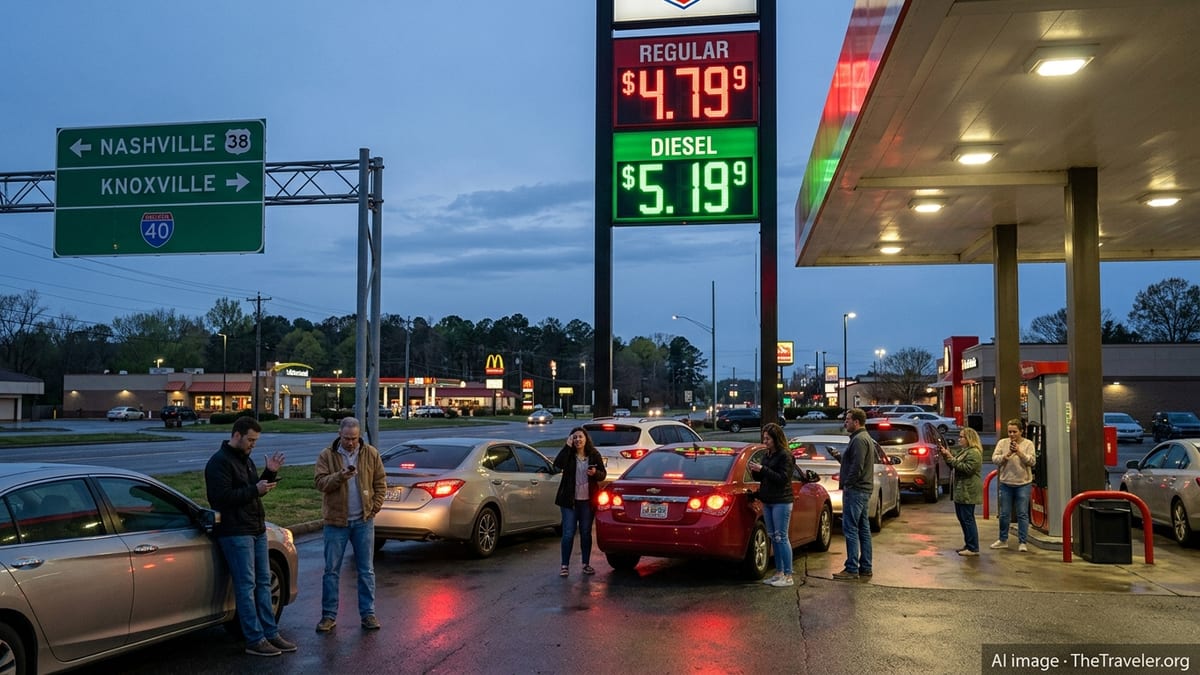
As the Iran war and the Strait of Hormuz crisis roil global energy markets, travelers across Tennessee are being hit with rapidly rising prices at the pump and in the air, just as spring and summer travel plans ramp up.
Get the latest news straight to your inbox!
Middle East Turmoil Sends Oil Prices Sharply Higher
The latest escalation in the Middle East, including attacks on major oil and gas infrastructure and severe disruptions around the Strait of Hormuz, has pushed global crude benchmarks well above 100 dollars a barrel in March 2026. Reports indicate that the closure or near closure of key shipping lanes has temporarily stranded a significant share of the world’s seaborne oil and liquefied natural gas, intensifying fears of prolonged supply shortages.
Analysts note that the current price spike has unfolded faster than in many previous conflicts, with Brent crude climbing into territory not seen since the early 2020s. Market commentary from banks, energy consultancies, and international agencies points to the combination of disrupted Gulf exports, risk premiums on remaining shipments, and uncertainty over how long the conflict will affect flows as key drivers of the surge.
Research groups tracking the economic fallout from the Iran war describe the supply shock as one of the largest in modern oil market history. Production cuts and shipping disruptions across several Gulf producers are being compounded by airspace closures and heightened maritime security risks, feeding into expectations of tighter supplies and higher costs for refiners and airlines worldwide.
Energy economists warn that, depending on how long the conflict and shipping crisis persist, high oil prices could add fresh inflation pressure to economies already adjusting to higher interest rates. For US consumers and travelers, that impact is now becoming visible in gasoline, diesel, and jet fuel prices, including across Tennessee.
Gasoline Prices Climb Across Tennessee
Publicly available pricing data show that average US gasoline prices have risen quickly through March, with many regions paying significantly more than just a month earlier. While coastal states that rely heavily on imported refined products have seen some of the steepest jumps, Tennessee drivers are also facing noticeable increases as wholesale costs move higher.
Market reports point out that higher crude prices feed almost directly into the cost of producing gasoline. Refiners are paying more for each barrel of oil they process, and those costs filter through pipelines, storage terminals, and local distributors before appearing on roadside price signs from Memphis and Nashville to Knoxville and Chattanooga.
Industry analysts highlight that Tennessee’s location on major fuel pipeline networks helps with physical supply, reducing the risk of outright shortages. However, being well supplied does not shield drivers from global pricing. Because fuel markets in the eastern United States are tightly interconnected, the higher cost of oil and refined products in the Gulf Coast region still translates into higher retail prices in Tennessee within days.
For many households, especially those who commute long distances or rely on road trips for vacations, the rising cost of gasoline is forcing a reassessment of budgets. Travel forecasters suggest that some motorists may shorten planned drives, consolidate errands, or delay discretionary trips if prices continue to rise into the peak summer season.
Airfares Rise as Jet Fuel Costs Spike
The same forces lifting prices at the pump are rippling through the aviation sector. Jet fuel is among the largest operating expenses for airlines, and the jump in crude prices has pushed jet fuel benchmarks sharply higher. According to airline and aviation industry data, carriers have begun adjusting pricing on many domestic and international routes to reflect the new cost environment.
Travel industry coverage indicates that airlines serving Tennessee’s major airports, including Nashville International, Memphis International, and regional hubs, are raising base fares and cutting back on the deepest promotional discounts. Some carriers have also reduced capacity on selected routes or shifted aircraft to higher demand markets to preserve profitability, a move that can further tighten seat availability and support higher prices.
Economic research on past oil shocks shows that airfare increases often lag initial fuel spikes by several weeks as airlines work through existing hedges and fuel contracts. With the current Middle East conflict already pushing prices higher for an extended period in March, analysts expect more visible fare increases to show up in searches for late spring and summer travel from Tennessee.
Budget-conscious travelers are likely to feel the squeeze most acutely on popular leisure routes, where competition has sometimes softened after earlier airline consolidations and network changes. Observers note that while ultra-low-cost carriers can offer some relief, their own fuel exposure and limited route networks mean they are not immune to sustained increases in jet fuel costs.
How Tennessee Travelers Can Adapt Their Plans
Travel planners and consumer advocates suggest that Tennessee residents can take several practical steps to soften the impact of higher fuel and airfare costs. One recurring recommendation in public guidance is to lock in travel plans early where possible, because prices on both flights and rental cars often climb as fuel costs rise and availability tightens.
For road trips, trip-planning tools and widely available fuel price information can help drivers route through lower cost stations or time purchases to avoid sudden local spikes. Drivers are also being encouraged in public-facing advice to maintain proper tire pressure, reduce excess weight in vehicles, and moderate highway speeds, all of which can improve fuel efficiency and slightly offset higher per gallon costs.
On the air travel side, published travel columns point to flexibility as a key advantage. Shifting departure days to midweek, considering early morning or late-night flights, or choosing alternative airports within driving distance can sometimes yield lower fares. Some travelers are also revisiting the tradeoff between flying and driving for regional trips, especially if they can share costs with family or friends.
Travel experts caution that rewards points and credit card miles may not fully shield frequent travelers from the impact of higher fares, since award charts and dynamic pricing can adjust quickly to new market conditions. Nonetheless, strategically using accumulated points for peak-season trips from Tennessee could provide some relief if cash prices remain elevated.
Outlook: Volatile Energy Markets Keep Costs Uncertain
Forecasts for fuel and airfare costs over the coming months remain highly uncertain, hinging largely on developments in the Iran war and efforts to stabilize shipping through the Strait of Hormuz. International organizations and market commentators have emphasized that further disruptions to Gulf energy exports or prolonged closures of key routes could keep oil prices elevated, while any durable easing of tensions could bring some relief.
Economic briefings from banks and research institutes suggest that policymakers are watching energy prices closely for signs of renewed inflationary pressure. Measures such as coordinated releases from strategic oil reserves or temporary adjustments to energy policies remain under discussion in several major economies, though their impact on retail fuel prices can be limited and short lived if supply disruptions persist.
For Tennessee travelers, the immediate reality is a period of heightened volatility. Gasoline prices may fluctuate from week to week rather than move steadily in one direction, and airfare pricing could change rapidly as airlines reassess fuel costs, demand, and capacity. Travel planners advise regularly rechecking fares and fuel costs in the run up to departures and building some flexibility into budgets.
Despite the headwinds, demand for travel remains resilient after several years of pandemic and post-pandemic disruptions. Industry commentary notes that many Tennessee residents are still prioritizing trips to visit family, attend events, or explore destinations. The challenge in 2026 will be navigating a more expensive fuel environment, making informed choices, and watching closely how a distant conflict is reshaping the cost of getting away.