

More news on this day
At least 29 commercial flights touching the Middle East were grounded in the first week of April 2026, as conflict-related airspace restrictions and airport slowdowns rippled across key hubs and left hundreds of travelers stranded or rerouted at short notice.
Get the latest news straight to your inbox!
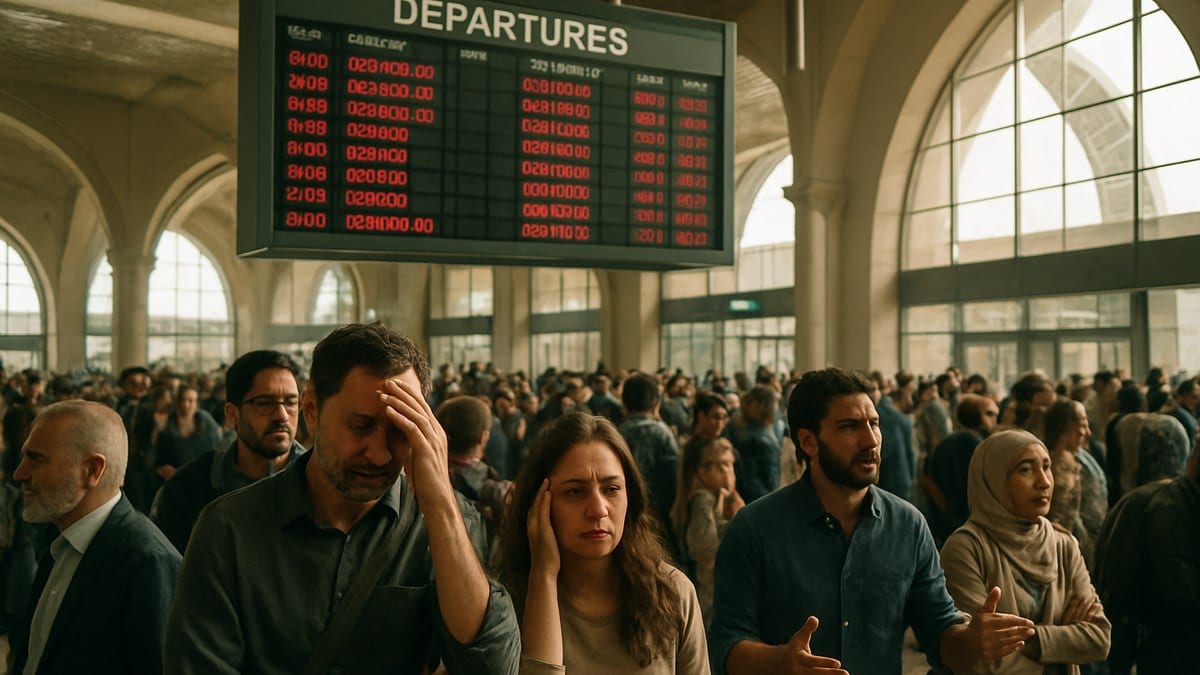
Focused wave of cancellations hits early April schedules
Operational summaries published by regional travel agencies and aviation analysts in recent days point to a fresh cluster of cancellations centered on the first weekend of April, as airlines reassessed the risks of flying through contested Middle Eastern airspace. While thousands of flights have been affected since hostilities escalated in late February, at least 29 services were specifically grounded or terminated in connection with April schedule adjustments, creating a concentrated disruption for passengers who had believed the worst of the turmoil had already passed.
These figures draw on flight tracking snapshots and consolidated airline advisories rather than any single official tally, but they align with a broader pattern seen since the start of the Iran conflict. Services that overfly Iran, Iraq, Syria or Israel remain the most vulnerable, particularly overnight connections linking Europe and North America with the Gulf and South Asia. The April cancellations often involved aircraft that had already repositioned away from core hubs in March, leaving crews and planes out of place when new restrictions or security alerts emerged.
Reports from aviation data firms and regional newsrooms suggest that many of the grounded April flights involved last minute decisions to cancel or convert scheduled services into rescue rotations. This reshuffling helped clear some longstanding backlogs but also created new pockets of stranded passengers, especially those booked on once daily or less frequent routes where an individual cancellation effectively wipes out an entire day’s connectivity.
Industry coverage highlights that the 29 grounded flights represent only a snapshot of the wider picture, yet for the travelers affected, they marked an abrupt end to already fragile travel plans. Many had rebooked from earlier March disruptions, only to encounter renewed cancellations just as they expected a gradual normalization of schedules.
War in Iran continues to reshape regional airspace
The underlying cause of the April turmoil remains the war involving Iran, which has led to a patchwork of airspace closures and restrictions across the region. Publicly available summaries of aviation notices indicate that overflight bans or severe limitations apply to parts of Iran, Iraq, Syria, Israel and segments of the Gulf, with some states allowing only military, humanitarian or tightly controlled special operations. These measures have effectively blocked one of the world’s busiest aviation corridors linking Europe and Africa with South and East Asia.
Analyses published by business media and global travel outlets throughout March described how the fighting and subsequent missile and drone activity prompted successive waves of airport suspensions. Dubai, Abu Dhabi, Doha, Kuwait City and Tel Aviv all experienced periods of highly restricted operations, while secondary airports in Saudi Arabia and Oman absorbed diverted traffic and emergency connections. A KPMG flash alert and other consultancy briefings characterized Saudi airspace as one of the only relatively stable east–west passageways, but noted unprecedented congestion and pressure on air traffic control capacity.
Further reporting has documented targeted attacks on critical energy and military infrastructure in the wider region, including drone strikes on facilities in Kuwait and Saudi Arabia. Even where airports escaped direct damage, nearby incidents triggered precautionary closures and heightened security postures. These conditions made it difficult for airlines to plan reliably, often forcing day by day decisions on whether to operate, reroute or cancel scheduled flights.
With the conflict still active as of early April 2026, most expert commentary points to a prolonged period of irregular schedules and rolling disruption. Airlines and regulators remain cautious about reopening closed airspace or restoring prewar routings, meaning travelers can expect continued detours, extended flight times and frequent last minute changes throughout the month.
Stranded travelers face patchwork of rescue flights and rebookings
For passengers on the 29 grounded flights, the disruption has translated into crowded terminal floors, lengthy queues at ticket counters and improvised overnight stays in cities that were never meant to be part of their itineraries. News reports and social media accounts compiled over the past week describe passengers in hubs such as Dubai, Amman and Doha queuing for hours for rebooking, with some travelers holding multiple paper boarding passes as they were shuttled between potential connections.
Publicly available guidance from airlines and travel management companies suggests that most carriers are offering no cost rebooking on the next available services or refunds where journeys have become impractical. However, the limited number of remaining flights into and out of the most affected hubs means that “next available” can sometimes mean several days of waiting. Travelers on complex itineraries crossing multiple alliances or using separate tickets have reported particular difficulty stitching together onward journeys when one segment fails.
Rescue and special flights have played a critical role in easing the situation. Coverage from regional travel news outlets highlights how some long haul aircraft, effectively stranded at European or Asian gateways after the initial closure of Middle Eastern airspace, have been redeployed as dedicated repatriation services when short windows of safe passage open. These operations have cleared some of the longest standing backlogs, yet they are typically announced at short notice and sell out quickly, leaving many passengers to rely on slower surface transport or extended hotel stays.
Travel insurance has emerged as a contentious issue for some stranded travelers. Advisories from insurance brokers note that many policies include wartime or civil unrest exclusions, potentially limiting coverage for additional accommodation or living expenses. Travelers are being urged to document all costs carefully and to check whether their specific policy treats the current conflict as a named event, which can determine eligibility for partial reimbursement.
Airlines juggle safety, costs and network integrity
Behind each grounded flight lies a complex risk calculation as airlines weigh safety considerations against operational and financial pressures. Industry analyses covering the first week of April describe how carriers are factoring in missile and drone activity, the reliability of local air defense systems, and the status of neighboring airspace in deciding whether to operate certain routes. For many, the threshold for resuming flights over or near contested areas remains extremely high.
Several major Middle Eastern and European airlines have published rolling updates extending suspensions on routes to cities such as Dubai, Riyadh, Tel Aviv and Beirut into mid or late April. These decisions reflect not only direct security risks but also the logistical challenge of ensuring that aircraft and crew can safely position to and from disrupted hubs. In some cases, airlines that had resumed limited services in late March scaled back again in April as fresh intelligence or renewed military activity shifted risk assessments.
Financial considerations are never far from view. Commentaries from aviation economists point out that rerouting long haul flights around closed airspace can add several hours to block times, increasing fuel burn and crew costs. Some carriers have opted to suspend marginal routes entirely rather than operate them on significantly longer, more expensive trackings. Others are consolidating multiple frequencies into single daily services or upgauging aircraft to preserve capacity while limiting exposure.
For smaller regional airlines, the April wave of cancellations has also exposed limited resilience in fleets and scheduling. With few spare aircraft available, any unplanned maintenance issue or crew rotation problem can cascade quickly into canceled flights. The resulting operational brittleness makes it harder for these carriers to step in and replace capacity withdrawn by larger rivals, prolonging the disruption for travelers who depend on regional links.
What April travelers should expect in the days ahead
For those planning trips through or near the Middle East in April 2026, publicly available travel advisories and government notices continue to recommend a cautious approach. Many foreign ministries still urge citizens to avoid nonessential travel to directly affected countries and to maintain flexible plans for journeys that involve transiting nearby hubs. Airlines and online travel agencies, meanwhile, encourage passengers to monitor bookings closely, as departure times and routings may shift several times even when flights ultimately operate.
Travel management companies are advising corporate clients to prioritize itineraries that use relatively stable corridors, particularly those transiting Saudi Arabia and certain secondary airports in the Gulf that have maintained more regular operations. Where possible, companies are steering travelers toward tickets that remain within a single airline or alliance, making it easier to secure rebooking if any one sector fails.
Leisure travelers are being urged to build in additional time buffers and to prepare for potential overnight stays, especially if their itineraries rely on tight connections through Dubai, Doha, Amman or Kuwait City. Some consumer advocates suggest packing extra prescription medication, key work devices and basic essentials in carry on luggage in case checked bags become temporarily inaccessible during unexpected stopovers.
With no immediate resolution to the conflict in sight, most forecasts indicate that flight disruptions will remain a defining feature of Middle East travel through at least the rest of April. The 29 grounded flights identified in early April represent only the latest visible flare up in a crisis that continues to reshape global aviation routes and travelers’ expectations of reliability across one of the world’s most important air corridors.