

More news on this day
Escalating conflict in the Middle East is rippling across global aviation and energy markets, with new projections indicating that Thailand, Vietnam, Malaysia and Indonesia could collectively lose millions of visitors in 2026 as higher airfares, longer routes and weaker consumer confidence weigh on long-haul travel demand.
Get the latest news straight to your inbox!
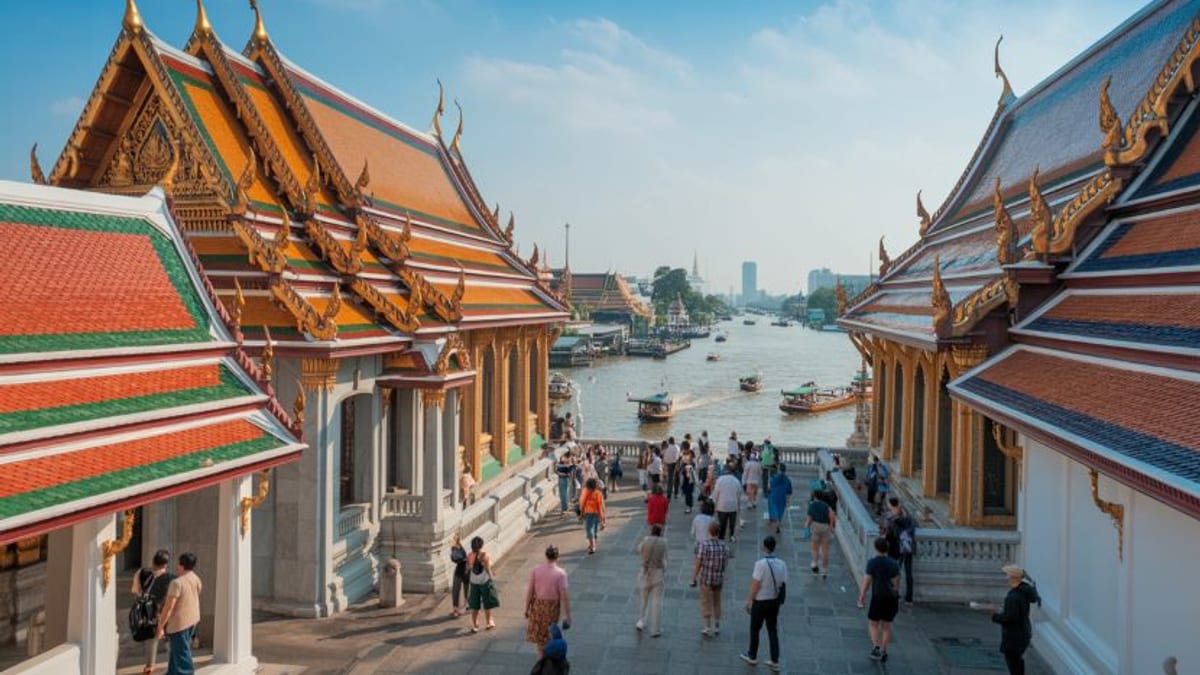
Image by Travel And Tour World
How the Middle East Conflict Is Rewiring Global Travel Routes
The latest phase of conflict involving Iran and regional actors has effectively turned key Middle Eastern air corridors and the Strait of Hormuz into high-risk zones, disrupting the traditional Europe–Asia flight bridge. Airlines that once crossed Iran and neighboring airspace are diverting around Central Asia or deep into the Indian Ocean, adding flight time and fuel burn on routes linking Europe to Southeast Asia.
Reports indicate that tens of thousands of flights connecting Europe and Asia have been altered or cancelled since early March 2026. Longer routings are pushing up operating costs at the same time that war-risk insurance premiums for overflights and nearby maritime lanes are rising. For leisure travelers weighing a long-haul holiday against a tighter household budget, even modest fare increases can tilt decisions away from far-flung destinations such as Thailand, Vietnam, Malaysia and Indonesia.
At sea, trade and logistics disruptions around Hormuz and the wider Gulf region are compounding the pressure. Shipping companies are diverting vessels around the Cape of Good Hope, a pattern previously seen during the Red Sea crisis, increasing transit times and freight rates. These higher costs feed back into air cargo and passenger pricing, adding another layer of uncertainty for Southeast Asian tourism markets that had only recently rebuilt after the pandemic shock.
Thailand: From Record Recovery to Risk of a Sharp 2026 Slowdown
Thailand is emerging as the bellwether for how deeply the Middle East conflict could hit Southeast Asian tourism. The country welcomed about 33 million international visitors in 2025, approaching pre-pandemic levels and underpinning robust growth in hotels, aviation and retail. Yet 2026 is already proving more volatile. Data released in March show just over 7.4 million arrivals between January and early March, around 4 to 5 percent below the same period a year earlier, despite Bangkok retaining its status as one of the world’s most visited cities.
Tourism and economic assessments published in Thai media outline increasingly stark scenarios. The Tourism Authority of Thailand has set a 2026 target of roughly 36.7 million foreign visitors, but recent scenario planning suggests that a prolonged conflict that keeps Middle East airspace constrained could drag actual arrivals down to 27 to 29 million. That would imply a loss of up to 9 to 10 million visitors compared with the target, or around a 25 percent shortfall.
Business groups are also sounding alarms about the macroeconomic spillovers. Thailand’s Joint Standing Committee on Commerce, Industry and Banking has warned that if oil prices remain elevated because of the conflict, national GDP growth in 2026 could slip toward the lower end of current forecasts, with tourism one of the most exposed sectors. Higher jet fuel costs would hit regional and European carriers that feed Thailand’s resort hubs, while households in key source markets could pull back on discretionary spending, slowing bookings into the next high season.
Even so, publicly available information points to a mixed picture. Some hoteliers report a rise in long-stay and high-spending guests from Israel and the wider Middle East who are choosing Thailand as a temporary refuge, investing in villas in destinations such as Phuket and Koh Samui. That inflow offers some offset, but it is unlikely to compensate fully for a broad decline in European and other long-haul arrivals if airspace restrictions persist deep into 2026.
Vietnam, Malaysia and Indonesia Brace for Softer Long-Haul Demand
While detailed 2026 projections for Vietnam, Malaysia and Indonesia are still emerging, analysts across the region are drawing parallels with Thailand’s experience. All three markets rely heavily on long-haul travelers from Europe and, to a lesser extent, the Middle East to fill higher-yield seats on full-service airlines and lift occupancy at upscale coastal and city hotels.
Vietnam’s tourism recovery has been driven by strong demand from South Korea, China and other Asian neighbors, but the country has been steadily expanding routes from Europe, particularly to Hanoi and Ho Chi Minh City. Rerouted flights that must avoid the Middle East add time and cost to those sectors, eroding Vietnam’s price advantage versus Mediterranean or short-haul European alternatives. Industry commentary suggests that tour operators are already reworking packages and may scale back capacity for the 2026–27 winter if fares remain elevated.
Malaysia and Indonesia, both substantial aviation hubs in their own right, are facing similar headwinds. Congestion and potential container backlogs in key transshipment ports such as Port Klang and Tanjung Pelepas in Malaysia can spill over into higher logistics costs, including for airlines that depend on belly cargo revenue to support passenger routes. For Indonesia, which has pinned part of its tourism strategy on attracting higher-spending Europeans to Bali and new destinations like Labuan Bajo, volatile fuel prices and weaker long-haul confidence could delay investment plans and slow the rollout of new routes.
In all three countries, policymakers have been promoting diversification into nearer Asian markets, echoing Thailand’s push toward short-haul visitors. However, the scale of potential losses from long-haul segments means that even strong regional demand may not fully offset the hit if the conflict continues to disrupt key corridors through late 2026.
Rising Costs, Higher Fares and Shifting Traveler Behavior
Beyond flight diversions, the broader economic shock from the Middle East conflict is reshaping traveler behavior in ways that directly affect Southeast Asia. With global oil benchmarks elevated and supply chains strained, airlines have less room to absorb fuel and insurance costs. Industry updates from Thai and regional carriers suggest that jet fuel and war-risk premiums are among the fastest-rising expense lines, feeding into higher base fares and surcharges on many long-haul tickets.
For travelers from Europe, where household budgets are already squeezed by inflation, Southeast Asia’s affordability advantage is being tested. A journey that once offered warm-weather value can now require significantly more time in transit and a higher total trip cost. Travel economists interviewed in European media have compared the current mood to the early 1990s Gulf War period, when geopolitical risk and energy prices combined to trigger a global tourism slowdown.
Outbound patterns from Asia are shifting as well. Credit card and booking data cited by Thai financial institutions show that Thai and regional travelers are redirecting spending away from Europe and the Middle East toward closer destinations such as Japan and China, perceived as safer and easier to reach. This pivot reduces two-way traffic flows that normally support airline profitability on Europe–Southeast Asia routes, potentially leading to capacity cuts that further limit options for inbound visitors.
At the same time, some Southeast Asian destinations could benefit from a “safe haven” effect, as travelers from conflict-adjacent regions look for relatively stable alternatives. Thailand has already experienced such a pattern once during the Russia–Ukraine war. If similar dynamics emerge again in 2026, they may cushion, but not erase, the broader downturn in visitor volumes linked to disrupted long-haul markets.
How Governments and the Industry Are Responding
Across Southeast Asia, publicly available policy documents and industry briefings point to a common playbook: double down on regional markets, adjust marketing to emphasize safety and accessibility, and work with airlines on tactical capacity shifts. Tourism agencies in Thailand, Vietnam, Malaysia and Indonesia are accelerating campaigns in nearby source markets such as China, India, South Korea and within ASEAN, where travelers can often reach destinations on shorter, conflict-free routes.
In Thailand, scenario planning by tourism authorities now explicitly incorporates Middle East conflict risks alongside more traditional factors like currency movements and pandemic-related health measures. The emphasis is on expanding short-haul arrivals to compensate for weaker European and Middle Eastern flows, while nudging visitors to secondary cities and less crowded islands to spread the economic benefits.
Vietnam and Indonesia are highlighting domestic and intra-ASEAN tourism to reduce dependence on volatile long-haul segments, backed by airport upgrades and new low-cost carrier routes. Malaysia, with its major aviation hubs and logistics capabilities, is positioning itself as both a holiday destination and a resilient transport node, even as it faces potential congestion and higher logistics costs from diverted maritime traffic.
For now, the trajectory of the Middle East conflict will largely determine whether these strategies are sufficient. A relatively swift easing of tensions could see European and Middle Eastern demand stabilize, limiting the fall in arrivals to a manageable short-term dip. A prolonged crisis, by contrast, would risk turning 2026 into another year of underperformance for Southeast Asia’s tourism powerhouses, with Thailand, Vietnam, Malaysia and Indonesia all facing the prospect of millions fewer visitors than previously hoped.