

More news on this day
Thailand is emerging as the latest major tourism destination to feel the fallout from escalating conflict in the Middle East, joining Cyprus, Greece, Turkey, Egypt, Tunisia and Kenya in reporting softer hotel bookings amid flight disruptions, shifting safety perceptions and growing uncertainty across key long-haul travel corridors.
Get the latest news straight to your inbox!
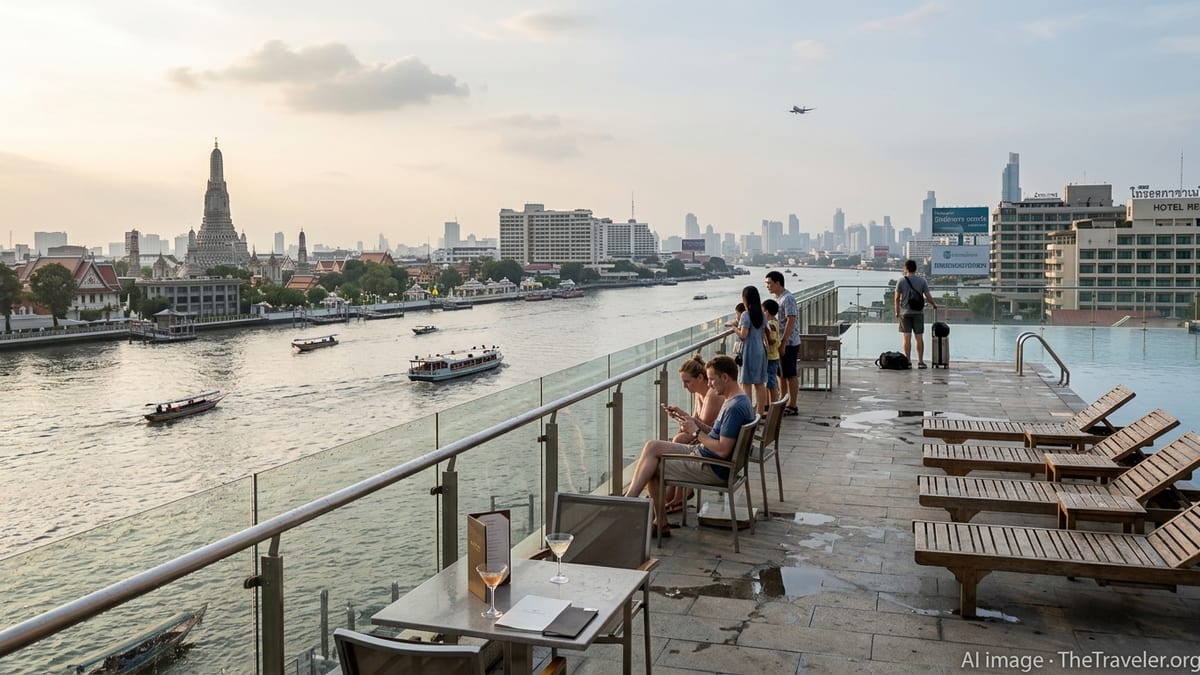
Thailand’s Tourism Slowdown Enters a New, More Complex Phase
After a strong rebound in 2024, Thailand’s tourism recovery has been losing momentum, with fresh headwinds now linked to instability across the wider Middle East and its knock-on effects on long-haul travel. Recent figures for 2025 showed a 7.25 percent year-on-year drop in foreign arrivals for the first 11 months, highlighting a clear cooling trend even before the latest escalation in regional tensions. Publicly available economic and tourism assessments note that the slowdown is particularly visible in receipts from big-spending markets.
The softening in hotel demand is especially evident in urban and resort areas heavily dependent on long-haul travelers and organized tour groups. Industry surveys and sector outlooks report weaker advance bookings compared with pre-conflict patterns, with some Thai hoteliers indicating lower occupancy expectations for traditionally strong seasons. In popular beach destinations, anecdotal reports from operators and travelers point to more aggressive discounting and wider availability at properties that would normally sell out months in advance.
A key structural issue is the ongoing shortfall in visitors from China, historically Thailand’s largest inbound market. Research notes that Chinese arrivals have remained well below pre-pandemic levels, with safety perceptions, domestic economic pressures and changing travel preferences all playing a role. The latest round of geopolitical tension adds an extra layer of caution for risk-averse travelers considering long-haul itineraries that rely on complex air connections.
Thailand’s central bank and domestic research institutes have highlighted tourism as a crucial growth driver, warning that prolonged weakness in arrivals and hotel occupancy could weigh on economic performance. Analysts emphasize that while headline visitor numbers remain high in absolute terms, the composition of tourists and their spending patterns are shifting in ways that challenge traditional hotel business models.
Cyprus, Greece, Turkey, Egypt, Tunisia and Kenya Feel the Same Squeeze
The pressures facing Thai hotels echo a pattern emerging across a band of destinations stretching from the eastern Mediterranean to North and East Africa. In Cyprus, Greece and Turkey, travel trade reports point to rising booking volatility as tour operators and airlines navigate airspace restrictions, fluctuating insurance costs and nervous consumer sentiment linked to the broader Middle East conflict.
Travel-industry coverage of Greece and Cyprus notes that some coastal resorts and city hotels have seen a discernible drop in forward bookings from markets that typically route flights via Middle Eastern hubs. While overall European demand for sun destinations remains resilient, the geographical proximity to flashpoints and recent incidents affecting airports and coastal infrastructure have prompted some travelers to reconsider plans or switch to alternative destinations perceived as less exposed.
Egypt and Tunisia, which rely heavily on package tourism from Europe and increasingly from Asia, are grappling with similar dynamics. Tourism analysts point out that both countries benefit from competitive pricing and established resort infrastructure, yet are vulnerable to any deterioration in regional security perceptions or additional incidents in the Red Sea and Eastern Mediterranean. Operators report that even brief spikes in news coverage of nearby attacks, drone activity or shipping disruptions can trigger short-term booking pauses and higher cancellation rates.
Further south, Kenya’s safari and coastal sectors have been affected by the same risk recalibration. Trade publications and regional tourism updates indicate that inquiries from some European and Middle Eastern markets have softened as travelers weigh security assessments and the complexity of reaching East Africa amid rerouted or curtailed flight schedules. While core demand for wildlife and beach experiences remains, hotels and lodges are increasingly reliant on last-minute bookings and deep promotional offers to stabilize occupancy.
Flight Disruptions Reshape Routes and Undercut Confidence
The conflict’s most immediate impact on the global travel landscape is playing out in the skies. Aviation industry reports describe a patchwork of airspace closures and restrictions across parts of Iran, Israel, Iraq and Syria, forcing airlines to cancel thousands of flights or implement long detours on routes linking Europe, the Middle East, Africa and Asia. Airport advisories in Europe and Asia have repeatedly warned passengers that services to, from or over the region may be delayed or cancelled at short notice.
Carriers based in the Gulf and wider Middle East, which serve as critical hubs for long-haul connectivity, have periodically suspended routes, pared back frequencies or restructured schedules to comply with evolving safety and regulatory guidance. Coverage from aviation and travel outlets shows that this has disrupted itineraries not only for travelers heading into the conflict zone but also for those simply transiting through to leisure destinations such as Thailand, Kenya, Greece and Egypt.
For hotel operators that depend on predictable charter and scheduled arrivals, this volatility undermines planning and revenue management. Tour operators are less willing to commit to large room allotments when airline partners cannot guarantee stable capacity, while individual travelers confronted with rerouting, extended flight times and uncertain connections are more inclined to postpone or shorten trips. The result is a more fragmented booking curve, with shorter lead times and greater reliance on flexible cancellation policies.
The aviation turmoil is unfolding alongside lingering fragilities in airline systems globally. Recent large-scale IT outages and operational meltdowns at major carriers have contributed to a sense of instability among travelers, who increasingly factor perceived reliability into destination and booking choices. In this environment, any region associated with heightened geopolitical risk faces an additional hurdle in restoring confidence.
Safety Perceptions and Travel Advisories Steer Demand
Beyond flight logistics, evolving security assessments are exerting a powerful influence on where and when travelers choose to book hotels. Government travel advisories in North America and Europe have been updated multiple times since the latest escalation, with some areas in or near the conflict zone now carrying the strictest warnings. Specialist risk maps and corporate travel briefings place large parts of the Middle East in higher-risk categories, encouraging companies and individual travelers to minimize discretionary trips.
These signals tend to spill over into nearby destinations, even when they are not directly affected by violence. Analysts note that a portion of leisure travelers interpret advisory updates regionally rather than nationally, avoiding whole swathes of the eastern Mediterranean or North Africa when confronting alarming headlines. This can translate into fewer bookings in countries such as Cyprus, Greece, Turkey, Egypt and Tunisia, despite tourism authorities’ efforts to underline that major resorts and cultural sites remain open and operational.
Thailand is indirectly caught in this shift in risk perceptions. While it lies far from the immediate conflict, parts of its tourism industry depend heavily on tourists from the Middle East and from markets that route flights through hubs in the region. As travelers from these areas become more cautious, and as families reconsider complex multi-stop itineraries, hotels in Bangkok, Phuket, Pattaya and other key destinations report weaker-than-expected group and high-spend segment demand.
At the same time, social media circulation of incidents involving tourist safety in Thailand has kept overall risk awareness elevated, particularly among visitors from East Asia. Publicly available commentary from tourism analysts suggests that rebuilding perceptions of safety, reinforcing consumer protections and improving on-the-ground experiences are now seen as essential complements to any marketing push aimed at offsetting regional geopolitical concerns.
How Destinations and Hotels Are Responding
Governments and tourism boards across the affected destinations are moving to cushion the blow, with a mix of promotional campaigns, incentives and policy adjustments. In Thailand, sector reports describe renewed efforts to diversify source markets, including more aggressive courting of regional travelers from Southeast Asia and India and targeted campaigns aimed at higher-spending long-haul guests from Europe and North America. Authorities have also announced safety-oriented measures and coordination among tourism police, immigration and airport agencies to reassure key markets, particularly China.
In Cyprus, Greece and Turkey, hotel associations and tourism bodies are collaborating with airlines and tour operators to adjust capacity, extend seasons and push flexible booking terms. Published industry commentary notes that some Mediterranean destinations are leaning into off-season city breaks and niche experiences to reduce reliance on peak summer charter traffic that is more vulnerable to sudden airspace disruptions.
Egypt, Tunisia and Kenya are simultaneously working to reinforce their aviation links, seeking alternative routings and additional partnerships to maintain connectivity even when traditional corridors are constrained. Travel trade coverage highlights efforts to strengthen regional air networks within Africa and between Africa and Europe, in part to limit dependence on a small number of Middle Eastern hubs.
Across all these markets, hotel groups are responding with pricing strategies designed to protect occupancy, even at the cost of yield. Discounted advance purchase offers, bundled experiences and aggressive loyalty program promotions are becoming more common, reflecting a recognition that travelers in 2026 are both cost-conscious and risk-aware. Analysts widely expect that destinations which can most convincingly pair value with credible safety and reliability messaging will be best positioned to capture demand once geopolitical tensions begin to ease.