

More news on this day
Australia’s inbound tourism sector is bracing for a fresh crisis as the escalating conflict in the Middle East closes critical air corridors, disrupts Gulf hub operations and unsettles long-haul travellers from Europe and the United Kingdom who rely on these routes to reach the country.
Get the latest news straight to your inbox!
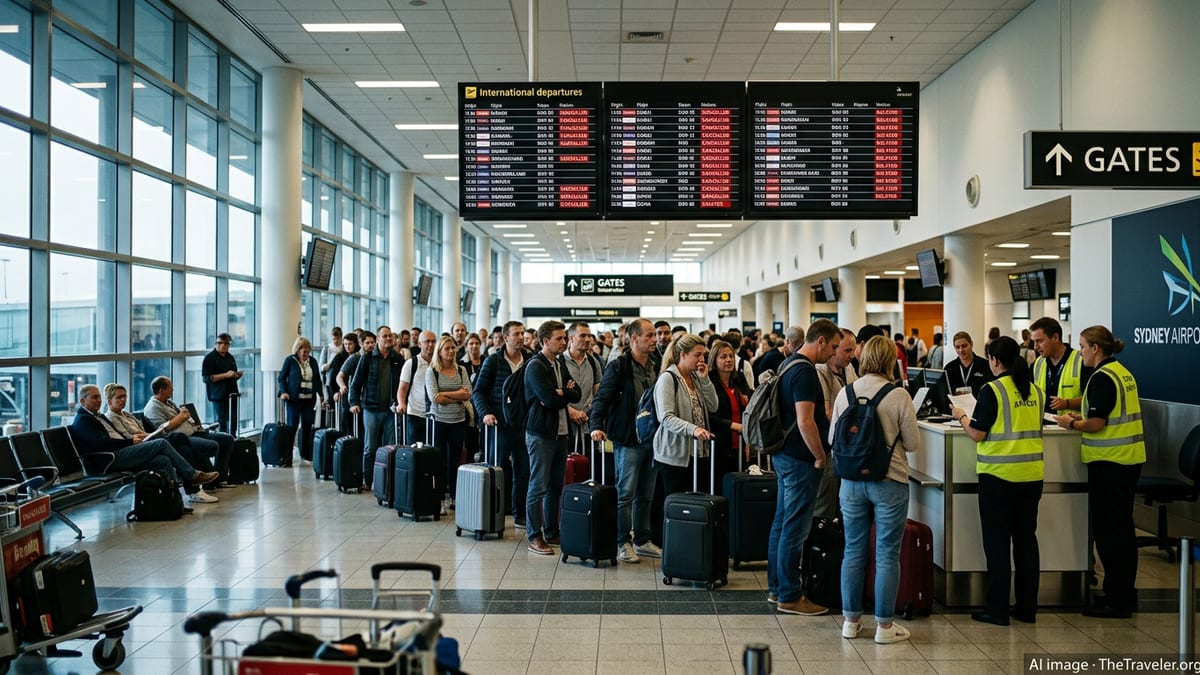
Gulf Airspace Chaos Hits Australia’s Long-Haul Gateways
The latest phase of the Iran war has led to widespread airspace closures across the Middle East, particularly over Iran, Iraq, Israel and key Gulf states, triggering tens of thousands of flight cancellations and diversions on the main corridor linking Europe and Asia. For Australia, whose ties to Europe and the UK are heavily dependent on these routes, the disruption is among the most severe since the pandemic.
Dubai and Doha function as vital junctions for traffic between Australia, Europe and the broader Middle East. With airspace around the Gulf repeatedly closed or restricted, operations at these hubs have been curtailed or suspended, leaving passengers stranded and forcing carriers to plot longer, fuel-hungry detours to keep aircraft away from conflict zones. Aviation analysts warn that the sudden loss of capacity through these hubs has left limited alternative options for Europe to Australia journeys at short notice.
Industry trackers estimate that thousands of services touching Gulf airports have been grounded or rerouted since the conflict flared in late February, with more than 100,000 Australians alone reported to be stranded across the region or on disrupted itineraries. For inbound visitors trying to reach Australia from Europe and the UK, the same bottlenecks are sowing confusion and anxiety, with some travellers abandoning or postponing trips rather than navigating a volatile route map.
The shock comes at a sensitive time for Australian tourism, which has been working to rebuild long-haul demand after years of pandemic restrictions and subsequent cost-of-living pressures in key markets. The Middle East corridor had re-emerged as the workhorse of the so-called Kangaroo Route, restoring one-stop access that is now suddenly in question.
Key Airline Routes Severed as Carriers Reroute or Suspend
Gulf-based giants Emirates and Qatar Airways, which together carry a significant share of passengers travelling between Europe, the UK and Australia, have seen large parts of their networks disrupted as missile strikes and security concerns closed or restricted airspace and airport operations. With Doha and Dubai among the most critical stopover points for Europe to Australia itineraries, their curtailed schedules have immediate knock-on effects for inbound tourism flows.
Australian flag carrier Qantas has been drawn into the turmoil through its longstanding codeshare partnership with Emirates. The closure of several Middle East flight corridors has already forced Qantas to suspend its nonstop Perth to London service and route the flight via Singapore instead, adding hours to the journey and removing a marquee link for European visitors. Other Qantas-operated services and partner itineraries are being reconfigured around the conflict zone, funnelling traffic through Southeast Asia or more northerly paths.
European and British carriers that previously relied on Gulf connections to feed traffic into Australia are also reshaping schedules. Many are booking passengers onto alternative alliances via hubs in Singapore, Bangkok, Hong Kong or Istanbul, but the sudden surge in demand on these routes is straining capacity. Economy-class seats on non-Middle East routings to Australia in the coming weeks are already reported to be scarce or significantly more expensive, particularly around school holiday and peak travel periods.
Airlines face a difficult balancing act between safety, schedule reliability and cost. Detours that loop north over Central Asia or south over the Arabian Sea add between one and six hours to typical Europe to Australia journeys, increasing fuel burn and crew costs. Carriers have signalled that higher fares on long-haul sectors are likely to persist as long as the conflict keeps major corridors closed, compounding affordability challenges for would-be visitors.
Inbound Operators Report Cancellations from Europe and the UK
On the ground in Australia, inbound tour operators are already seeing the repercussions. A rapid survey by the Australian Tourism Export Council indicates that around 70 percent of inbound operators are experiencing cancellations, deferrals or heightened concern from clients, with the sharpest impact coming from the UK and European markets most reliant on Gulf connections.
Many European travellers had locked in trips to Australia for the 2026 northern summer, timing long stays around major events and multi-stop itineraries that often combined the country with other Asia-Pacific destinations. With their flights now subject to sudden cancellations or complex reroutes, some visitors are opting to postpone to 2027, while others are cancelling outright in favour of closer, more predictable destinations.
Operators say the pattern is uneven. High-spend, long-stay travellers are more likely to rebook rather than cancel, seeking alternative routing via Asia or booking direct connections where possible. Shorter-break visitors, particularly those on tight budgets or group tours, are proving more sensitive to both disruption and higher fares, leading to a noticeable dip in enquiries from secondary European markets and smaller UK cities.
Suppliers across accommodation, touring and experiences are responding with flexibility on cancellation fees and date changes in an effort to preserve bookings for future months. Nevertheless, for many regional tourism businesses that had only recently seen strong recoveries from Europe and the UK, the sudden slowdown is a sobering reminder of how external shocks far from Australian shores can reshape demand overnight.
Economic Stakes for Australia’s Tourism Recovery
The timing of the Middle East disruption raises concern among economists and tourism officials who have counted on a strong rebound in long-haul inbound travel to bolster regional economies. European and British visitors tend to stay longer and spend more per trip than many closer markets, underpinning sectors from premium touring and wine tourism to remote nature experiences and Indigenous cultural travel.
Before the latest conflict, Gulf carriers had been expanding and restoring capacity to Australia, reconnecting cities such as Adelaide and Perth with one-stop access to dozens of European destinations via Dubai and Doha. These links not only carried tourists but also supported trade and visiting friends and relatives travel, forming part of a broader economic corridor. The loss or curtailment of these services, even temporarily, threatens to undercut the forecast gains for 2026 and 2027.
With oil prices elevated by geopolitical tensions and flight times extended due to detours, airlines are signalling further fare increases on Europe to Australia sectors. Domestic policymakers fear that if long-haul travel becomes materially more expensive and less reliable, some prospective visitors may recalibrate bucket-list trips to alternative long-haul destinations perceived as easier to reach.
Tourism Australia and state agencies are closely monitoring booking data and sentiment in Europe and the UK, weighing whether to adjust marketing campaigns that had been promoting shoulder-season travel and multi-destination itineraries. For now, officials are emphasising that Australia itself remains safe and open, seeking to disentangle perceptions of regional conflict from the reality on the ground for visitors once they arrive.
Search for Alternative Routes and Longer-Term Resilience
In response to the turmoil, Australian and international carriers are racing to build resilience into the Europe to Australia network. Expanded use of Asian hubs, including Singapore, Kuala Lumpur and Bangkok, is already evident, as airlines redeploy capacity and seek new bilateral arrangements to plug gaps left by Gulf suspensions. Some industry figures argue that the crisis underscores the need for more non-stop and ultra-long-haul services that bypass volatile corridors altogether.
Qantas has previously championed ultra-long-haul routes linking Australia directly with major European and North American cities, a strategy that now appears more prescient amid recurring geopolitical shocks. However, such services are complex and capital-intensive, and cannot be scaled quickly enough to offset an abrupt loss of Gulf capacity. In the short term, travellers are being urged to build in extra time and flexibility for European journeys and to consider alternative gateways when planning trips.
For inbound tourism businesses, the episode is prompting renewed discussion about market diversification and risk. While Europe and the UK are likely to remain cornerstone markets, there is growing interest in accelerating demand from North America and parts of Asia where routing is less exposed to the Middle East corridor. At the same time, operators are investing more heavily in communication, contingency planning and clear advice to reassure nervous European clients.
Much now depends on the duration and intensity of the conflict. If airspace restrictions ease within months, the industry hopes to recoup some of the lost demand later in the year through rebooked trips and pent-up interest. A protracted crisis, however, could reshape travel patterns for years, forcing Australia’s inbound tourism sector to rethink its reliance on a handful of global transit hubs and confront the true cost of vulnerability along the Gulf connection that has long been its bridge to Europe.