

More news on this day
Escalating conflict in the Middle East has thrown the Gulf’s winter cruise season into disarray, leaving thousands of holidaymakers stranded aboard docked vessels as governments rush out urgent travel warnings and key maritime chokepoints effectively shut down.
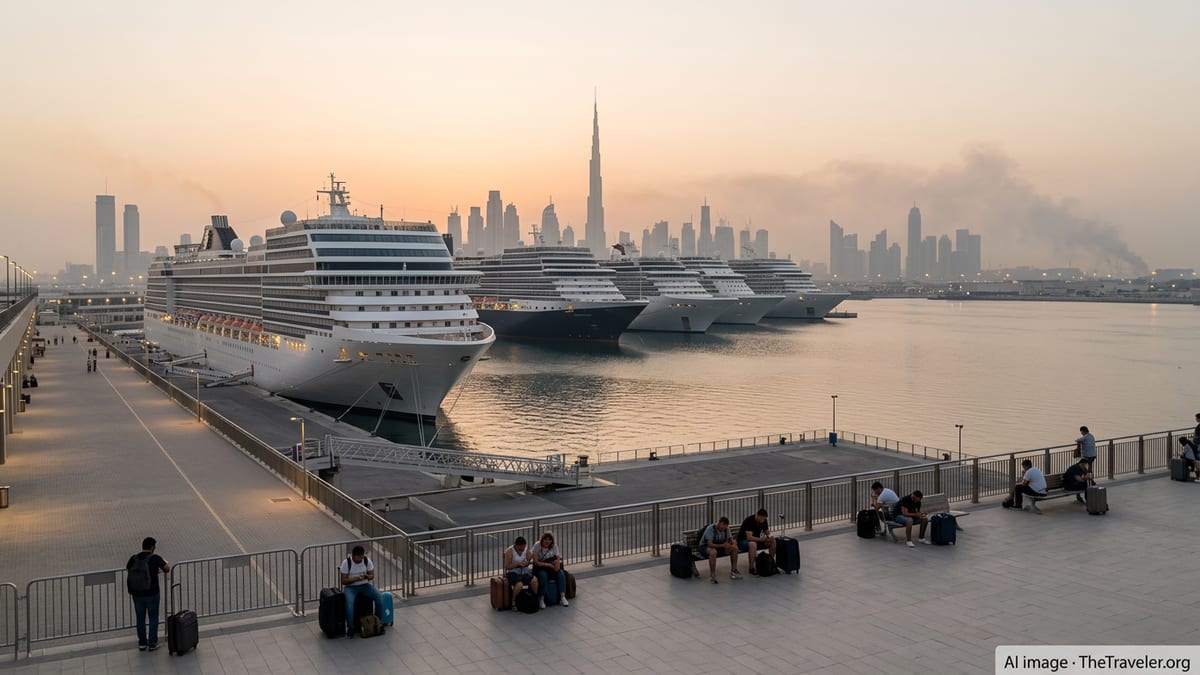
Cruise Itineraries Cancelled Overnight as Strait of Hormuz Closes
The latest surge in regional violence, centered on the 2026 Strait of Hormuz crisis, has transformed one of the world’s most strategically important shipping lanes into a no-go zone for passenger vessels. Following joint military strikes on Iran in late February and retaliatory missile and drone attacks, Iranian forces warned commercial ships to stay out of the narrow waterway, triggering an abrupt halt in traffic.
Cruise lines that had spent months marketing sun-drenched Gulf sailings from Dubai, Doha and Abu Dhabi have been forced into rapid retreat. According to industry updates and operator statements, multiple departures scheduled for early March 2026 have been cancelled outright as companies weigh the risks of remaining in port against attempting any repositioning voyage out of the region.
The crisis builds on two years of heightened caution around the wider Middle East. Cruise itineraries had already been shifting away from the Red Sea and Suez Canal because of earlier conflicts and piracy concerns, with major brands redesigning 2025 and 2026 world cruises to route around Africa instead of threading through the region’s vulnerable choke points.
Ships Turned Into Floating Hotels in Dubai and Doha
The immediate human impact of the crisis is most visible in the Gulf’s marquee ports, where large cruise ships have effectively become floating hotels. In Dubai, MSC Euribia has remained alongside since a late February call, after the line cancelled a series of upcoming sailings and notified guests that the 7 March departure would not operate due to airspace closures and security risks.
In Doha, Celestyal Journey is berthed in port with guests invited to remain on board until at least 7 March while the company works with authorities on next steps. Sister ship Celestyal Discovery is alongside in Dubai, where local instructions have so far prevented regular disembarkation, leaving many passengers unable to continue their trips or easily return home.
Travel advisors and cruise specialists report that at least six ships from several lines are currently stuck in Gulf ports, their movements constrained by the closure of the Strait of Hormuz and the threat of further attacks on commercial vessels. On board, crews have activated contingency plans that include rationing or stockpiling key supplies in anticipation of extended layovers.
Passengers Caught Between Closed Airspace and Changing Advisories
For holidaymakers, the disruption is playing out as a confusing mix of last-minute cancellations, evolving government guidance and practical obstacles to travel. The closure of regional airspace after missile and drone strikes has led to the suspension of flights at key hubs, including Dubai International Airport, cutting off the fastest route home for thousands of international visitors.
The United States has urged its citizens to leave a wide swathe of Middle Eastern countries as soon as commercial options are available, citing the heightened risk of further attacks and the possibility of prolonged airport and airspace closures. Other governments have updated their advisories to warn against nonessential travel to parts of the Gulf and to areas near conflict zones, while stressing that conditions are fluid and could deteriorate quickly.
On social media and in interviews, passengers describe a limbo-like existence: days spent confined to ships that cannot sail, in cities where they are advised not to venture far from secure areas, and with limited information about when they might be able to fly out. Cruise lines are providing regular onboard briefings, but many guests remain anxious about expiring visas, work commitments back home and the safety of any overland or air corridors that may eventually reopen.
Industry Response: Rerouting, Refunds and a Longer-Term Pivot Away From the Region
Cruise operators have moved quickly to soften the financial and logistical blow for affected travelers. Companies including MSC Cruises and Celestyal Cruises are offering full refunds for cancelled voyages, often combined with future cruise credits or discounts designed to retain customer loyalty despite the upheaval.
Behind the scenes, deployment teams are redrawing route maps in real time. For ships already trapped in the Gulf, the immediate priority is negotiating safe passage once security conditions allow limited convoys out of the area. For vessels still in Europe, Asia or the Indian Ocean, many lines are bypassing the Middle East altogether, extending itineraries around the Cape of Good Hope or rebranding world cruises to avoid both the Red Sea and Gulf entirely.
This shift accelerates a trend that has been gathering pace since earlier conflicts around Israel, Gaza and Yemen prompted lines to slash Red Sea and Eastern Mediterranean calls. Several major brands had already redesigned their 2026 world and grand voyages to skip Suez Canal transits in favor of Africa circumnavigations or Pacific-focused routes, signaling that even before the latest crisis, confidence in the region as a reliable cruise corridor had been badly shaken.
What Gulf-Bound Travelers Need to Know Now
For travelers with upcoming bookings that include Gulf ports, industry and government officials are offering a consistent message: check your itinerary and official travel advisories daily, and be prepared for sudden changes. Many cruise lines are proactively cancelling or altering sailings that were due to embark in the United Arab Emirates, Qatar or Oman in the coming weeks, while others are still assessing whether limited regional cruising might resume if security conditions stabilize.
Prospective passengers are being urged not to make independent plans to reach embarkation ports until they have written confirmation that their sailing is proceeding. With war risk surcharges soaring and insurers designating wider high-risk zones at sea, even cruises that remain technically possible on paper may be altered if operators decide the cost and risk profile is no longer acceptable.
Travel experts recommend that anyone considering a future cruise involving the Middle East build in extra flexibility, including fully refundable air tickets and comprehensive travel insurance that covers conflict-related disruption. While the Gulf has emerged in recent years as a popular winter playground for cruise travelers, the current crisis underscores how quickly geopolitical tensions can turn marquee ports into trapped waypoints and winter sunshine escapes into extended, anxious stays at sea.