

More news on this day
A fresh round of global airspace turmoil linked to the escalating conflict in the Middle East has disrupted air travel across Indonesia, with at least 29 flights canceled on Thursday at key hubs in Jakarta, Makassar and Bali, affecting services operated by Qatar Airways, Emirates, Virgin Australia, Batik Air, Lion Air, Garuda Indonesia and other regional carriers.
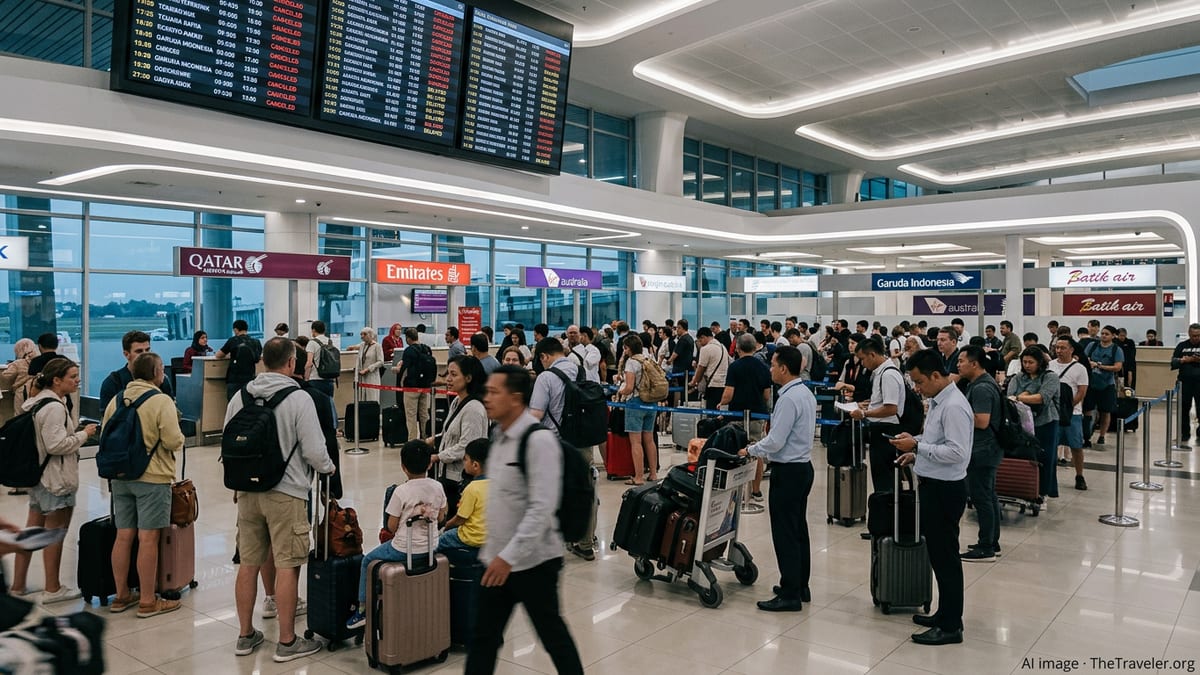
Jakarta, Makassar and Bali Bear Brunt of Latest Disruptions
Operational data from airport operators and aviation trackers on March 5 and 6 show Soekarno Hatta International Airport in Jakarta and Sultan Hasanuddin International Airport in Makassar among the worst affected in Indonesia, with a combined 28 cancellations and dozens of delays recorded in a single day. In Bali, I Gusti Ngurah Rai International Airport reported a smaller but still disruptive cluster of scrapped departures and arrivals layered on top of a week of rolling changes to Middle East services.
The cancellations cut across domestic and international routes. In Jakarta, disrupted services included Middle East and onward European connections as well as busy domestic sectors that shuttle travelers between the capital and secondary cities. Makassar, a key transit point for eastern Indonesia, saw schedule gaps ripple through to onward connections to smaller islands, frustrating travelers trying to reach or leave Sulawesi.
Airport authorities said they were coordinating closely with air navigation providers to monitor evolving airspace restrictions and with airlines to rework schedules in near real time. Passengers arriving at departure halls on Thursday morning described long lines at ticket counters and information desks as carriers tried to consolidate services and rebook travelers onto remaining flights.
Global Airspace Closures Hit Gulf and Australia Links
The latest wave of cancellations in Indonesia is directly tied to the closure and rerouting of key Middle Eastern air corridors after days of intensified conflict. Major Gulf hubs, including Dubai and Doha, have operated on sharply reduced schedules, disrupting the long haul networks that funnel passengers between Asia, Australia, Europe and Africa. This has dragged airlines such as Emirates, Qatar Airways and Virgin Australia into a rolling operational reset.
Qatar Airways and Emirates, which normally operate multiple weekly rotations linking Doha and Dubai with Bali and Jakarta, have already canceled or reshaped dozens of services since late February as they navigate shuttered or high risk airspace. Virgin Australia, heavily reliant on partner connections through the Gulf for Australia to Europe itineraries, has in turn pulled flights or shifted passengers onto alternative routings, tightening capacity on Indonesia bound services from Australian gateways.
Industry analysts say Indonesia is particularly exposed to disruptions centered on Gulf hubs because so much of its long haul demand is funneled through a handful of mega airports. When those hubs suddenly curtail operations, there are few immediately available substitutes with comparable connectivity, forcing airlines either to add substantial detours or to cancel flights outright when schedules and crew availability will not stretch.
Regional Carriers Batik, Lion and Garuda Forced to Adjust
While global headlines have focused on the grounded wide body fleets of Gulf carriers, Indonesia’s own airlines are increasingly caught in the knock on effects. Garuda Indonesia, Batik Air and Lion Air have all been named among operators affected by cancellations and significant delays at Indonesian airports this week as they adjust to shifting slot times and missed international connections.
Garuda Indonesia has already suspended some Middle East services and has begun trimming frequencies on select long haul routes as demand patterns lurch and connecting traffic from Europe dwindles. At the same time, the national airline is under pressure to protect core domestic links between Jakarta, Bali and other provincial capitals, absorbing disrupted passengers who might otherwise have flown regional competitors or foreign carriers.
Batik Air and Lion Air, two of Indonesia’s largest domestic and regional players, have faced schedule compression at Jakarta and Makassar as they juggle aircraft rotations, crew duty limits and airport congestion. Several short haul sectors were scrapped outright on Thursday so that aircraft could be redeployed to higher demand city pairs, a move that helped clear long waiting lists on some routes but left travelers on less busy services hunting for alternatives.
Passengers Confront Long Queues, Patchy Information
For passengers on the ground, the operational chess moves have translated into late night emails, last minute text alerts and hours spent in terminal queues. At Bali’s Ngurah Rai Airport, where cancellations of Middle East bound flights began on February 28 and have persisted in waves, thousands of holidaymakers and returning migrant workers have cycled through rebooking desks over the past week.
Travelers at Jakarta and Makassar reported confusion as departure boards cycled through status changes from “on time” to “delayed” and finally “canceled.” Some international passengers connecting from Indonesia to Europe via Gulf hubs said they received revised itineraries routing them through Southeast Asian or South Asian capitals instead, often with travel times extended by many hours and overnight layovers added at short notice.
Airport managers urged passengers to stay in close contact with airlines and avoid heading to the airport until they had confirmed flight status on official channels. They also cautioned that, with aircraft and crew resources stretched, spare capacity on remaining flights was limited, making it difficult to accommodate everyone on same day alternatives.
What Travelers Between Indonesia, Australia and Europe Should Expect
With airlines and regulators reviewing airspace conditions on a daily basis, industry observers say travelers should prepare for several more days of unstable schedules on routes touching the Middle East. For Indonesia in particular, that means continuing vulnerability on services linking Jakarta, Makassar and Bali with Australia and Europe via Dubai, Doha and other regional hubs.
Qatar Airways and Emirates are gradually restoring select flights as operational windows open, but both remain far from normal schedules into Southeast Asia. Virgin Australia and other Asia Pacific carriers dependent on Gulf partners for beyond traffic are likewise rationing capacity, leaving popular leisure routes between Australia and Bali heavily subscribed and prone to last minute changes.
Travel agents in Jakarta and Denpasar report strong demand for itineraries that bypass the Middle East entirely, even at higher fares, as passengers prioritize certainty over price. Routes via Singapore, Kuala Lumpur and select East Asian hubs are seeing a surge in bookings, while some Indonesian travelers with flexible plans are postponing long haul trips altogether until there is more clarity on the security and airspace picture.
For now, airlines operating to and from Indonesia are offering varying combinations of free date changes, rerouting and refunds on affected tickets, but the fine print differs by carrier and fare type. Passengers are being advised to review conditions carefully and to anticipate longer than usual response times from call centers and online customer service channels as the region works through this latest shock to its air links.