

More news on this day
Thousands of travelers at Boston Logan International Airport faced hours-long lines, sudden cancellations and mounting uncertainty on Sunday as ripple effects from a rapidly escalating conflict in the Middle East disrupted flight schedules across the United States.
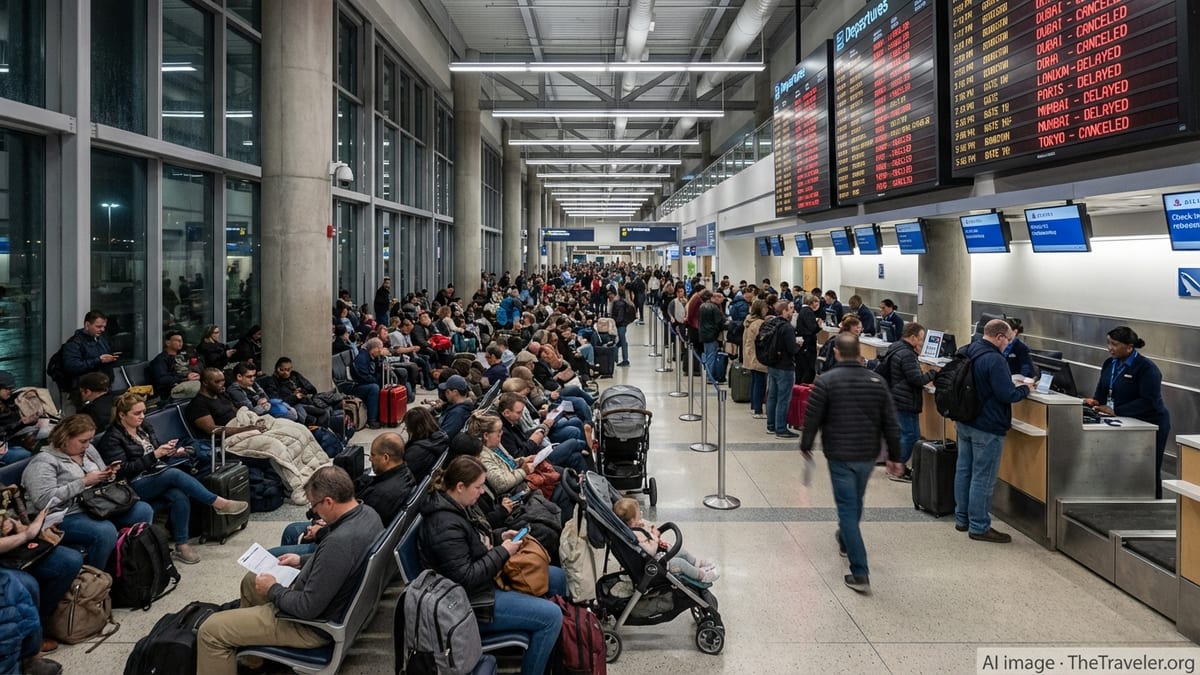
Logan Feels the Shockwave of Middle East Airspace Closures
While runways at Boston Logan International Airport remained open, a wave of cancellations and delays linked to the closure of key Middle Eastern airspace pushed the hub to the breaking point. Airlines scrubbed or rerouted services connecting Boston to major Gulf and Levant gateways, as governments across the region temporarily shut their skies following coordinated US and Israeli strikes on Iran and subsequent retaliatory attacks.
According to aviation data and airport officials, flights to Dubai, Doha and other Middle East hubs were among the first to disappear from departure boards, followed quickly by disruptions to onward connections across Europe, Asia and Africa. Passengers who had originated in Boston but were due to transit through the Gulf suddenly found itineraries unworkable, with many told they could be stuck for days.
Although most North American and core transatlantic services were still operating, the cascading effect of missed connections, crew displacement and aircraft out of position meant disruption rippled well beyond the Middle East routes themselves. By midday, customer-service lines at several airline counters in Logan’s international terminals snaked around corners as staff struggled to rebook affected travelers.
Massachusetts transportation officials emphasized that Logan’s own infrastructure was intact, with no security incident on-site. However, they acknowledged that Boston’s role as a key transatlantic gateway made it especially vulnerable to global shocks that rearrange long-haul traffic patterns overnight.
Stranded Passengers Face Long Waits, Limited Options
Inside Logan’s terminals, the human impact of the crisis was immediately visible. Families returning from school vacations, students heading back to universities abroad and business travelers connecting to Asia via the Gulf crowded around gate displays, watching departure times slip later or disappear altogether. Many reported receiving multiple automated notifications overnight as their flights were retimed, then canceled outright.
Some travelers arriving from domestic US cities discovered only after landing in Boston that their onward international legs no longer existed. Makeshift camps began to form near power outlets and along concourse walls, with passengers spreading jackets and carry-ons on the floor as they prepared for overnight stays. Airport seating quickly filled, pushing crowds into food courts and check-in halls.
Airlines serving Logan moved to offer fee waivers, complimentary rebooking and, in some cases, hotel and meal vouchers for those facing extended delays. But with airspace limitations constraining how many flights could safely reroute around the Middle East, available seats on alternative itineraries were scarce. Travelers bound for destinations such as India, Southeast Asia and East Africa, which often rely on Gulf hubs, were particularly hard hit.
Airport volunteers and customer-service staff circulated through the busiest areas, directing passengers to information desks and urging them to use airline apps and call centers rather than standing in multiple queues. Still, by late afternoon, many stranded travelers said they had not yet been given firm new departure dates.
Nationwide Disruptions as Conflict Reshapes Global Routes
The chaos at Logan mirrored scenes unfolding at major airports across the United States, including New York, Chicago, Atlanta and Dallas, as global carriers rapidly adjusted operations to avoid closed or high-risk airspace. The shutdown of hub airports in Dubai, Abu Dhabi, Doha and other Gulf cities severed some of the world’s most heavily used long-haul corridors, forcing airlines to cancel thousands of flights and reroute others over longer, more southerly paths.
Industry analysts said the sudden loss of these connecting points was akin to removing key junctions from an already crowded highway system. Aircraft that would normally flow smoothly through Gulf and Levant hubs instead backed up across Europe, Asia and North America, triggering a chain reaction that left planes, pilots and cabin crews in the wrong places.
US carriers that do not operate large networks in the Gulf region were still heavily affected, particularly on flights to South and Central Asia that rely on overflight permissions across contested airspace. In many cases, airlines opted to suspend routes entirely rather than attempt lengthy detours that would significantly increase fuel burn and crew duty times.
Travel experts warned that even travelers whose trips did not pass directly through the Middle East should expect knock-on effects in the coming days, including tight connections, last-minute schedule changes and higher fares on remaining long-haul services. They urged passengers to build extra time into itineraries and avoid nonessential travel where possible until conditions stabilize.
Logan and Airlines Race to Manage Capacity and Communication
Facing an evolving situation thousands of miles away, managers at Boston Logan focused Sunday on two immediate priorities: crowd management and information flow. Additional staff were deployed to assist with wayfinding, while overhead announcements and display boards were updated frequently to reflect real-time changes.
Several international carriers at Logan consolidated lightly booked services and upgauged others to larger aircraft in an effort to clear backlogs as soon as viable alternative routings became available. At the same time, airlines were cautious about promising quick solutions, mindful that regional military assessments and airspace decisions in the Middle East could shift again with little warning.
Consumer advocates stressed the importance of clear communication about passenger rights in such scenarios, especially around refunds for canceled flights, hotel coverage and the limits of airline responsibility when geopolitical events intervene. With call centers overwhelmed, many travelers turned to social media to seek answers, share experiences and coordinate with family members waiting at arrivals halls.
Logan’s operator reiterated that the airport’s own safety and security posture remained at a heightened but stable level, in line with federal guidance. Officials said they were in ongoing contact with airlines and national aviation authorities to understand how long the current pattern of cancellations and diversions might last.
What Travelers Should Do in the Days Ahead
With no clear timeline for a full reopening of Middle Eastern airspace, aviation specialists say Boston-area travelers should prepare for a period of continued volatility. Those with imminent departures were urged to monitor airline apps and email alerts closely and to verify flight status before leaving home, even for domestic legs linked to international connections.
For travelers whose plans are flexible, experts recommended postponing or rebooking journeys that rely on Gulf or Levant hubs until airlines have a chance to rebuild more predictable schedules. Many carriers have introduced temporary change-fee waivers and are allowing customers to shift travel dates or reroute through alternative European or North American gateways without penalty.
Passengers already stranded at Logan were advised to prioritize securing confirmed seats on any acceptable routing rather than waiting for original itineraries to be reinstated. In some cases, travelers bound for South or Southeast Asia opted to accept longer connections through Europe or even the Pacific to avoid uncertain Middle Eastern corridors.
For now, the concourses at Boston Logan remain a vivid illustration of how swiftly a distant conflict can upend global mobility. As families crowd around departure boards and weary travelers doze in terminal chairs, the hope is that diplomatic efforts and rapidly evolving security assessments will soon ease the strain on one of America’s busiest international gateways.