

More news on this day
Air travelers across the United States, the United Kingdom, Canada, Brazil, Mexico, Singapore, Germany and beyond are facing a sudden and steep jump in fares as the war involving Iran, the United States and Israel disrupts oil supplies, pushes jet fuel prices to multi‑year highs and forces airlines to reroute around closed Middle East airspace.
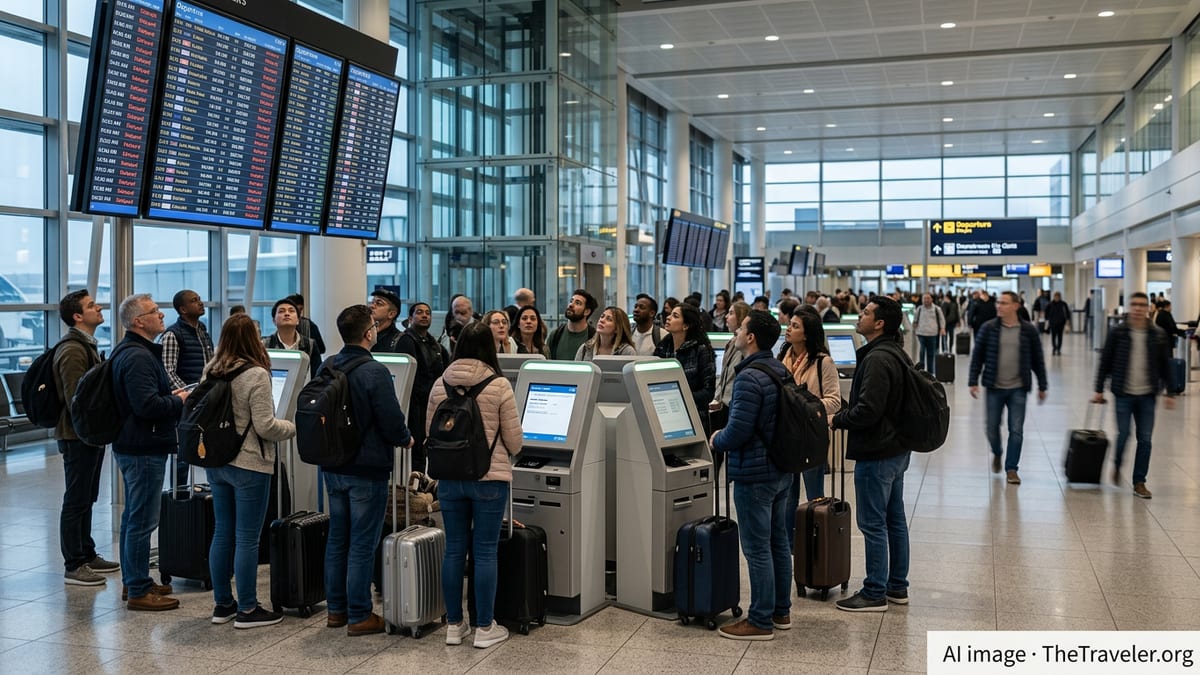
Jet Fuel Spike Pushes Airlines to Raise Fares Fast
The latest escalation of conflict with Iran at the end of February has sent oil markets into turmoil, with Brent crude jumping sharply as shipping through the Strait of Hormuz comes under threat. Analysts say a significant share of global jet fuel supply originates from the wider Middle East energy complex, magnifying the impact on aviation costs when the region is destabilized.
Industry data over the past week show jet fuel prices rising far faster than crude, in some hubs doubling from levels seen before the strikes began. Aviation analysts warn that the increases have pushed fuel costs above break even thresholds for many carriers, leaving them little choice but to push through higher ticket prices and revive fuel surcharges on international routes.
Major network airlines in the United States and Europe are already signaling that consumers will bear the brunt. Executives at large US carriers have cautioned investors that recent gains in profitability are at risk if fares do not rise quickly enough to offset the surge in fuel, while European groups such as Lufthansa and British Airways owner IAG have seen share prices fall on concern that higher oil will erode margins.
Low cost and leisure focused airlines, which tend to operate with thinner cushions and more price sensitive customers, appear particularly exposed. Some budget carriers in Europe and Asia are warning of capacity cuts or slower growth plans if fuel remains elevated through the peak northern summer season, a scenario that would further tighten supply and add upward pressure on fares.
Rerouted Flight Paths Add Time, Cost and Complexity
Beyond the spike in fuel prices themselves, large swathes of airspace around Iran and parts of the Gulf region have become effectively unusable for many commercial flights. Safety driven route changes are pushing aircraft to skirt conflict zones and congested corridors, adding as much as 90 to 120 minutes to some long haul journeys linking North America and Europe with Asia.
Longer flight times translate directly into higher fuel burn and crew costs, compounding the impact of more expensive jet fuel. Airlines are also facing higher war risk insurance premiums on routes that remain near the periphery of the conflict, along with the operational strain of reworking schedules, securing new overflight permissions and managing crew duty limits on extended sectors.
For travelers, the operational complexity is starting to show up as reduced seat availability on popular transcontinental and connecting routes, particularly those that historically relied on Middle East hubs as convenient transfer points. With capacity constrained and costs rising simultaneously, fare search engines are registering sharp jumps in quoted prices for itineraries that touch or bypass the region.
Airports from Dubai to Doha and Istanbul are working to restore disrupted schedules, yet the uncertainty around airspace closures and shifting military activity has made long term planning difficult. Network planners at global airlines are drawing up contingency maps that route traffic over the Caucasus, Central Asia or the eastern Mediterranean, but each alternative adds mileage, time and expense.
North America and Europe See Rapid Fare Increases
In the United States, early signs of the impact are emerging on both domestic and international tickets. While many travelers booked spring trips before the conflict escalated, searches for last minute and early summer departures from major hubs such as New York, Chicago and Los Angeles now return noticeably higher prices, especially on flights to Europe, the Middle East, South Asia and Australia.
Travel agencies report that US bound itineraries originating in Europe are also climbing in cost as airlines attempt to recoup higher operating expenses on transatlantic routes. Carriers that previously marketed aggressively discounted economy and premium economy fares on off peak days are quietly pulling the lowest buckets from sale or introducing new fuel surcharges that appear as separate line items during booking.
Across the Atlantic, passengers in the United Kingdom and Germany are feeling similar pain. European carriers dependent on relatively fuel efficient short haul operations within the continent now face a double hit when they operate longer stage length flights to North America, Africa and Asia under the new routing patterns. Analysts in London and Frankfurt warn that if oil remains above the psychologically important 100 dollar threshold per barrel, base fares on many long haul routes could settle at levels 15 to 25 percent higher than last year.
Rail and coach operators in parts of Europe are already reporting a modest uptick in demand from price sensitive travelers looking for alternatives on regional journeys. However, for intercontinental trips there is little substitute for air travel, leaving most long distance passengers with limited options beyond adjusting dates, downgrading cabin class or postponing travel altogether.
Latin America and Asia Pacific Travelers Caught in the Crossfire
The impact of the Middle East conflict is radiating far beyond the main transatlantic market. In Brazil and Mexico, where currencies have already been battling volatility and inflation pressures, higher dollar denominated fuel costs are squeezing airlines that had only recently rebuilt international networks after the pandemic slowdown.
Latin American carriers serving Europe and Asia often rely on thin profit margins and carefully balanced joint ventures. Several have begun to warn of potential fare hikes and capacity rationalization on long haul services if jet fuel prices remain at current levels. For Brazilian and Mexican travelers planning trips to the United States or Europe, that could translate into significantly more expensive tickets and fewer choices of departure times and connection points.
In Asia Pacific, hub carriers in Singapore and other Southeast Asian markets are grappling with the dual challenge of higher fuel and the need to adjust traditional routings that cross West Asia. Singapore based airlines, which have built their business models around efficient east west connectivity, are monitoring whether sustained cost increases will dampen demand from price sensitive leisure travelers and small businesses.
Some Asian carriers serving North America are experimenting with polar or trans Pacific routings to avoid the most volatile airspace, a move that can add hours to total journey times on certain city pairs. Travel consultants say this is starting to reshape how passengers from countries such as Singapore, India and Indonesia think about their options to reach Europe or the US, with more itineraries funneled through northeast Asian, Central Asian or even African hubs.
Travelers Scramble for Strategies as Uncertainty Mounts
With the situation in the Middle East still fluid and energy markets reacting to each new development, the trajectory of airfares over the coming months remains uncertain. Industry forecasts that only weeks ago projected another year of steady post pandemic normalization have been hastily revised to account for the possibility of prolonged disruption to oil supplies and critical air corridors.
For now, travel advisers are urging passengers who must fly to book earlier than usual and to build flexibility into their plans. Many airlines are reintroducing or expanding changeable fare options, but at higher base prices that reflect the new cost environment. Frequent flyers are being encouraged to consider using miles for long haul trips before award charts and carrier imposed surcharges are adjusted to reflect the fuel shock.
Budget conscious travelers across the United States, Europe, Latin America and Asia are turning to tools that track fare volatility and alert users to sudden drops, though analysts caution that in a structurally higher cost environment, bargain deals are likely to be rarer and shorter lived. Families and small businesses in particular may find that trips which once felt routine now require more careful budgeting and trade offs.
Airline executives and regulators alike acknowledge that the ultimate path of ticket prices will hinge on how quickly political and military tensions ease and whether energy markets stabilize. Until then, passengers from Boston to Berlin, São Paulo to Singapore and Mexico City to Munich may find that the simple act of booking a flight has become a far more expensive and uncertain proposition.