

More news on this day
The escalating conflict involving Iran and its neighbors is sending shockwaves through global aviation, with widespread airspace closures across the Gulf leading to thousands of flight cancellations and forcing major carriers such as British Airways, Emirates, and Qatar Airways to operate only limited services through key hubs in Dubai, Abu Dhabi, and Doha.
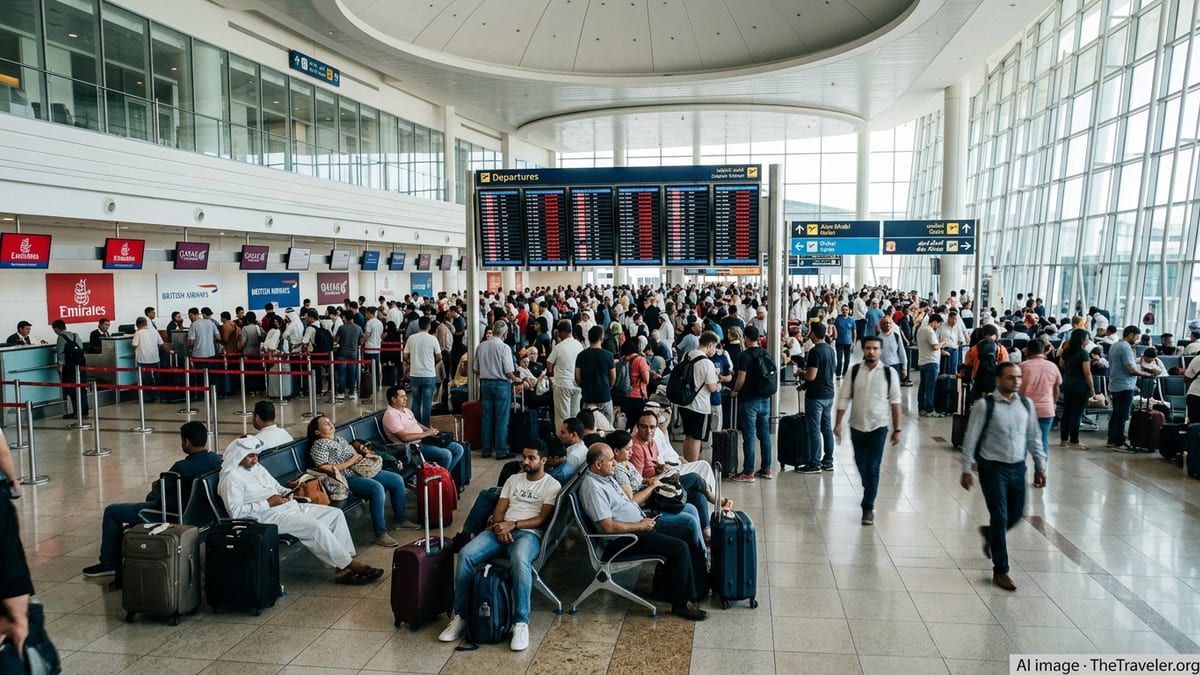
Airspace Closures Slam Gulf Hubs and Global Routes
Airspace restrictions imposed across parts of the Middle East since late February have severely disrupted traffic through some of the world’s busiest connecting hubs, including Dubai International, Abu Dhabi’s Zayed International, and Doha’s Hamad International. Authorities in the United Arab Emirates, Qatar, and several neighboring states have kept large portions of their skies closed or tightly controlled as the regional conflict continues, forcing airlines to cancel or divert hundreds of daily flights.
Analysts say the knock-on effect has been immediate and global. Long haul services linking Europe, Asia, Africa, and Oceania commonly rely on Gulf hubs for both passenger and cargo connectivity. With many overflight routes across Iran, Iraq, and the wider Gulf corridor either suspended or heavily constrained, airlines have had to reroute via longer, more southerly or northerly tracks, adding hours to journeys and slashing overall capacity.
Data from aviation trackers and regional regulators shows that since the first strikes at the end of February, thousands of flights touching Middle Eastern airspace have been canceled outright, while many more have experienced significant delays or unplanned diversions. The disruption has rippled far beyond the region, with airports from Europe to South and Southeast Asia reporting stranded passengers and sharply reduced frequencies on routes that rely on Gulf carriers.
Industry groups warn that as long as airspace closures remain in place across the Gulf and parts of the Levant, airlines will face higher fuel bills, reduced schedules, and intense operational complexity, with global passengers bearing the brunt in the form of longer trips, missed connections, and limited rebooking options.
British Airways Slashes Middle East Network
British Airways has enacted some of the most sweeping schedule cuts among European carriers, sharply curtailing its presence in the region in response to safety concerns and volatile airspace conditions. On March 10, the airline confirmed it had canceled all flights to and from Doha, Amman, Bahrain, and Dubai until later in the month, while services to and from Abu Dhabi are suspended until at least later in the year.
The London based carrier has also halted flights on several other key routes, including to Tel Aviv and parts of the Gulf, citing a need to prioritize passenger safety and operational certainty as missile and drone threats continue. Customers on affected flights are being offered rebooking, vouchers, or refunds, but British Airways has repeatedly urged travelers not to go to the airport unless they hold a confirmed, operating flight.
Travel agents report that the cancellations have created a significant bottleneck for passengers who typically rely on British Airways’ extensive codeshare ties with Gulf airlines for onward journeys to Asia, Africa, and Australasia. With few alternative seats available on remaining services, particularly during peak holiday periods, many customers are facing days-long delays in finding new itineraries back to the United Kingdom or onward to third countries.
Consumer advocates in Europe say the situation underscores gaps in cross border passenger protection when conflicts rapidly upend air travel. While European regulations provide compensation for certain cancellations, airlines are exempt when disruptions stem from extraordinary circumstances such as war. That leaves many travelers entitled only to refunds or rerouting, rather than additional financial redress for extended hotel stays and lost vacation time.
Emirates and Etihad Focus on Limited Corridors
In the United Arab Emirates, home carriers Emirates and Etihad Airways have pivoted to tightly controlled operations as they work with authorities to reopen corridors in and out of Dubai and Abu Dhabi. Emirates initially suspended all flights to and from Dubai at the height of the initial strikes before gradually restoring a reduced network. As of this week, the airline is operating a constrained schedule, prioritizing repatriation, core trunk routes, and connections that can safely avoid closed airspace.
Etihad, based at Zayed International in Abu Dhabi, has followed a similar path. Commercial flights from Abu Dhabi were largely suspended in the early days of the crisis, with only occasional repositioning and emergency services permitted. Limited passenger operations have since resumed on select routes, but the schedule remains a fraction of normal capacity and is highly subject to change as airspace permissions evolve.
Travel industry advisories emphasize that both carriers continue to warn passengers not to travel to the airport without confirmed bookings, noting that walk up changes are rarely possible given tight load factors on the few flights that are operating. Travelers with tickets through mid March are being offered fee free date changes or vouchers in many cases, though refunds may still take weeks to process due to the sheer volume of disrupted itineraries.
For the wider tourism economy of Dubai and Abu Dhabi, the interruption has come at a critical time. Visitor numbers to the UAE reached record levels in 2025, and hotels entered this year with strong forward bookings. Now, occupancy forecasts are being hastily revised downward as new arrivals slow and tens of thousands of would be visitors defer or cancel trips amid heightened security warnings and uncertainty over flight availability.
Qatar Airways Constrained by Airspace Closure
Qatar Airways, one of the region’s most globally connected carriers, has been hit particularly hard by the closure of Qatari airspace. The airline confirmed that its regular scheduled operations remain temporarily suspended, with Hamad International Airport effectively operating under a standstill for normal commercial traffic. Only a very limited number of special services, including repatriation flights and select long haul corridors coordinated with regulators, are currently taking off or landing.
Officials in Doha have stated that missile threats and recent damage near key aviation infrastructure have left them with little choice but to keep the skies closed while defenses and safety protocols are reassessed. The impact has been immediate for travelers in Asia, Africa, and Europe who depend on Doha as a one stop gateway. Longstanding high frequency routes between Doha and cities across India, Southeast Asia, and sub Saharan Africa have been halted or sharply reduced, severing a major artery of global connectivity.
For stranded passengers, Qatar Airways has been organizing limited repatriation operations to bring citizens and residents home and to move foreign visitors out of the country where possible. However, the combination of closed airspace, slot restrictions at alternative airports, and lingering security risks means that many travelers have been stuck for days awaiting an available seat.
Tourism experts warn that the longer Doha’s airport remains effectively shut for normal traffic, the greater the long term damage to Qatar’s positioning as a premier transit hub and stopover destination. Years of investment in Hamad International and the national carrier’s global network have helped put the country on the world tourism map; a protracted closure could prompt some travelers to shift loyalties permanently to alternative routes once stability returns.
Global Travelers Face Uncertainty and Higher Costs
The ramifications of the Middle East conflict for ordinary travelers are now being felt from London and Frankfurt to Johannesburg, Mumbai, and Sydney. With airlines cutting capacity and rerouting around conflict zones, many trips that previously required a single connection through Dubai, Abu Dhabi, or Doha now involve longer itineraries, additional stops, or complete rebookings on different carriers.
In several markets, national regulators report significant numbers of passengers stranded abroad after flights operated by Emirates, Qatar Airways, and Etihad were canceled or rescheduled at short notice. Aviation authorities in Asia have cited tens of thousands of travelers affected on services to and from Gulf hubs in just the first week of the crisis, with tour operators scrambling to charter extra capacity or shift customers onto remaining flights operated via alternative gateways such as Istanbul or Riyadh.
Travel advisors say customers should brace for elevated fares and limited availability in the coming weeks, even if additional corridors reopen. Reduced schedules through the Gulf, coupled with longer routings and increased fuel burn, are pushing up operating costs at a time when demand for alternative paths between Europe and Asia remains strong. Many corporate travel managers are already revising itineraries to avoid routings that depend heavily on Middle Eastern airspace until the security outlook becomes clearer.
For now, airlines and regulators are urging passengers with upcoming journeys touching the region to monitor their bookings closely, sign up for carrier alerts, and maintain flexible plans. With airspace closures still in effect over key parts of the Gulf and no firm timeline for a full restoration of normal traffic, the only certainty for travelers is that disruption and uncertainty are likely to persist well beyond the immediate headlines.