

More news on this day
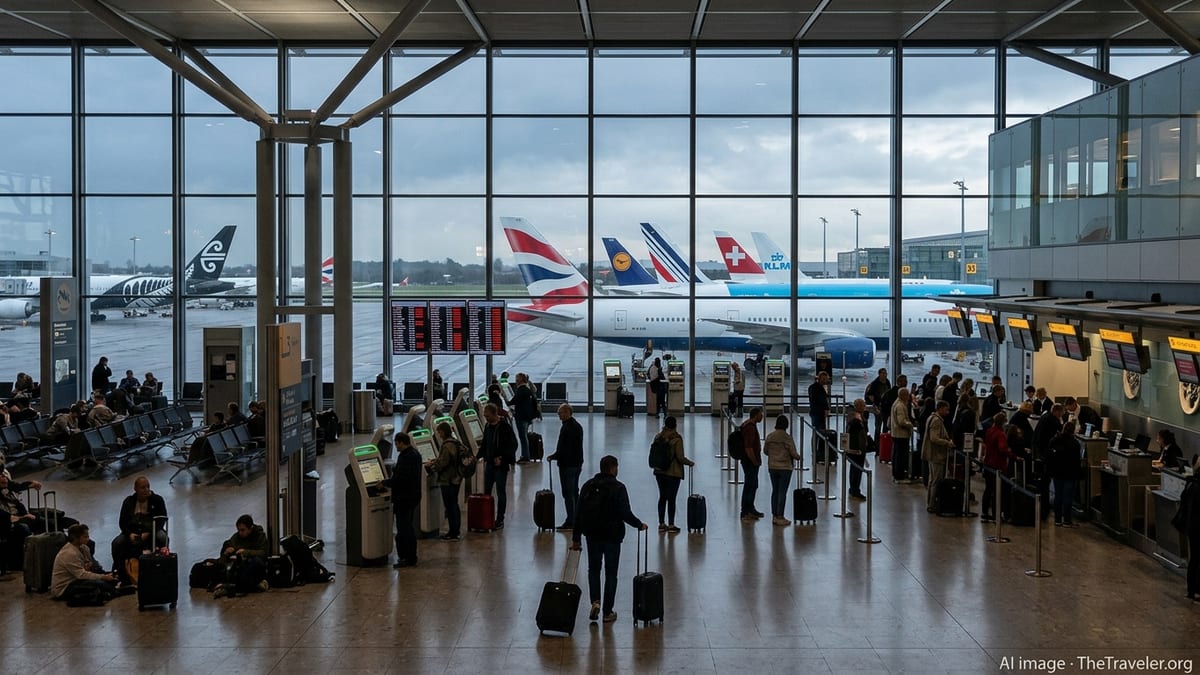
New Zealand has joined the United Kingdom, Germany, France, Switzerland, Fiji and several other countries in facing unprecedented flight cancellations and schedule upheaval, as a rapidly escalating conflict centered on Iran and the wider Middle East shuts key airspace corridors and forces major airlines to suspend services across the region.
Get the latest news straight to your inbox!
Escalating Conflict Closes Key Air Corridors
Publicly available government and industry reports indicate that the latest phase of the Iran war, following coordinated strikes in late February 2026, has led to the closure of airspace over Iran, Iraq, Israel, Qatar, Bahrain, and parts of the United Arab Emirates. Several of the region’s largest hubs, including Dubai International and Doha’s Hamad International, have seen widespread disruption or full closures, interrupting what are normally some of the busiest long-haul connections between Europe, Asia and Oceania.
The disruption has cascaded well beyond the immediate conflict zone. Estimates from economic and aviation analyses suggest that thousands of flights have been cancelled and many more rerouted, with global traffic patterns redrawn almost overnight. Airlines that once relied on efficient Middle East stopovers are now diverting north or south of the region, adding hours to flight times and significantly increasing fuel burn and operating costs.
These sudden route changes come on top of longer term restrictions on Russian and Ukrainian airspace, leaving carriers with few viable alternatives. The result is a highly congested set of corridors across Central Asia, Africa and the Indian Ocean, raising the risk of further knock-on delays as air traffic control systems adjust to new volumes and routings.
Aviation risk assessments published in recent weeks describe a fluid security and insurance environment. War-risk premiums for flights traversing or approaching the Gulf region have reportedly surged, and underwriters are demanding wide detours or full suspensions on routes judged too exposed to potential missile or drone activity.
European Flag Carriers Halt Services Across the Middle East
Major European airlines including British Airways, Lufthansa, Air France, KLM and Swiss have become focal points of the latest round of cancellations. Timetable data, airline travel advisories and industry circulars reviewed over the past fortnight show broad suspensions on services to cities such as Dubai, Abu Dhabi, Doha, Tel Aviv, Amman and Bahrain, along with reductions or pauses on some onward connections to Asia and Africa that previously routed through the Gulf.
British Airways has reportedly cancelled all flights to several Middle Eastern destinations, including Dubai and Abu Dhabi, with some suspensions extending well into the year. Travel forums and aviation bulletins suggest that tickets are being refunded or rebooked, but that alternative routings via other hubs are limited and frequently sold out, leaving many travelers stranded or facing enforced stopovers in Europe.
Lufthansa Group carriers have also sharply curtailed operations. According to airline updates and specialist freight market summaries, flights by Lufthansa and Swiss to Tel Aviv, Beirut and parts of the Gulf have been suspended for safety and insurance reasons, while services that once used Dubai as a key junction have been rerouted or temporarily halted. Air France and KLM have implemented similar measures, adjusting schedules on a rolling basis as airspace notices and security guidance evolve.
European aviation analysts note that while some carriers are technically able to overfly certain parts of the region, risk committees are increasingly reluctant to approve routes where insurance terms assume a high probability of potential damage. That caution, combined with airport closures and air traffic control restrictions, has pushed many airlines toward blanket suspensions rather than incremental cuts.
New Zealand and Pacific Travelers Face Indirect Fallout
For New Zealand, the disruption is less about direct links to the Middle East and more about the loss of critical transit points to Europe and parts of Africa. Official economic briefings from Wellington explain that many New Zealanders heading to the United Kingdom or continental Europe rely on connections through Dubai, Doha or other Gulf hubs. With those airports restricted or closed and airlines suspending Middle East sectors, itineraries that once involved a single stop may now require two or more connections through Asia or North America.
New Zealand authorities have highlighted that this shift is contributing to a spike in cancellations, missed onward connections and lengthier journeys. Public advisories point to a sharp increase in global flight disruptions affecting New Zealand travelers, with thousands of services impacted worldwide and a significant share of long-haul networks needing to be reconfigured.
Air New Zealand is contending with its own pressures. Domestic media coverage and interviews with the carrier’s leadership in recent days indicate that the airline expects to cancel around 1,100 flights between mid-March and early May, affecting more than 40,000 passengers. While a portion of these cuts stems from capacity and operational constraints, the conflict-driven surge in jet fuel prices is also cited as a key factor squeezing margins and forcing a rethink of schedules.
Across the wider Pacific, countries such as Fiji are feeling similar effects as regional carriers and tourism boards confront a more expensive, less predictable long-haul environment. Travelers bound for Europe from island nations that traditionally routed through the Gulf are now being pushed toward alternative hubs in East Asia, Australasia or North America, often at higher prices and with longer total travel times.
Global Aviation Network Strains Under Rerouting
Beyond the immediate cancellations, the conflict is testing the resilience of the global aviation network. Analyses of recent flight-tracking data show that airlines are bending routes around the Middle East, threading narrow corridors over the Indian Ocean, Central Asia and parts of Africa. These changes not only lengthen flights but also crowd airspace that was previously less heavily used, placing added pressure on air traffic management systems.
Aviation and economic commentaries on the 2026 Iran war describe the Middle East disruption as a major new shock layered on top of existing stresses from the pandemic recovery and earlier geopolitical crises. Several Middle East hubs collectively handle a sizable share of global international traffic, and their partial or total shutdown has effectively removed a central “bridge” in the worldwide route map.
Freight operations are also being affected. Logistics market updates note that many cargo carriers have either suspended services to certain Middle Eastern destinations or sharply reduced capacity, citing both airspace closures and maritime insecurity around the Strait of Hormuz. Shippers are being warned to expect longer lead times, higher costs and an elevated risk of sudden schedule changes on Asia–Europe and Asia–Africa lanes.
Industry observers caution that even if some airspace begins to reopen, insurers may be slow to relax war-risk pricing, and airlines may be hesitant to rush back into contested skies. That suggests that rerouting patterns, higher operating costs and reduced frequencies on some long-haul sectors could persist long after the most intense phase of the conflict eases.
Travelers Face Uncertainty, Higher Costs and Longer Journeys
For individual travelers, the most immediate effects are uncertainty and disruption. Reports from passenger forums and travel agents describe a patchwork of cancellations, rolling schedule changes and crowded rebooking channels, particularly on routes linking Europe with Oceania and Asia. Some travelers who booked months in advance are now finding their connections via the Gulf unworkable, with limited alternatives available at short notice.
Publicly available guidance from airlines and travel insurers emphasizes the importance of monitoring bookings closely, updating contact details and checking for eligibility under travel waivers or flexible change policies introduced in response to the unrest. However, policy wording varies widely, and in many cases war-related events fall under general exclusions, reducing the scope for full refunds beyond statutory passenger rights in the departure jurisdiction.
Higher fares are emerging as another consequence. With aircraft taking longer routes and burning more fuel, and with capacity constrained by airport closures and risk thresholds, airlines have fewer seats to sell on some of their most in-demand long-haul sectors. Analysts suggest that this imbalance is likely to keep prices elevated, particularly during peak northern summer travel months, unless the conflict de-escalates and key Middle Eastern hubs can safely resume near-normal operations.
For now, travelers in New Zealand, Europe, the Pacific and beyond are being advised through public channels to build extra time into their journeys, remain flexible about routing and transit points, and be prepared for last-minute notifications about cancellations or major schedule changes as the situation in the Middle East continues to evolve.