

More news on this day
The latest escalation of conflict in the Middle East is rippling across the global travel system, triggering sweeping airspace closures, mass flight cancellations, and longer, more expensive journeys between key regions.
Get the latest news straight to your inbox!
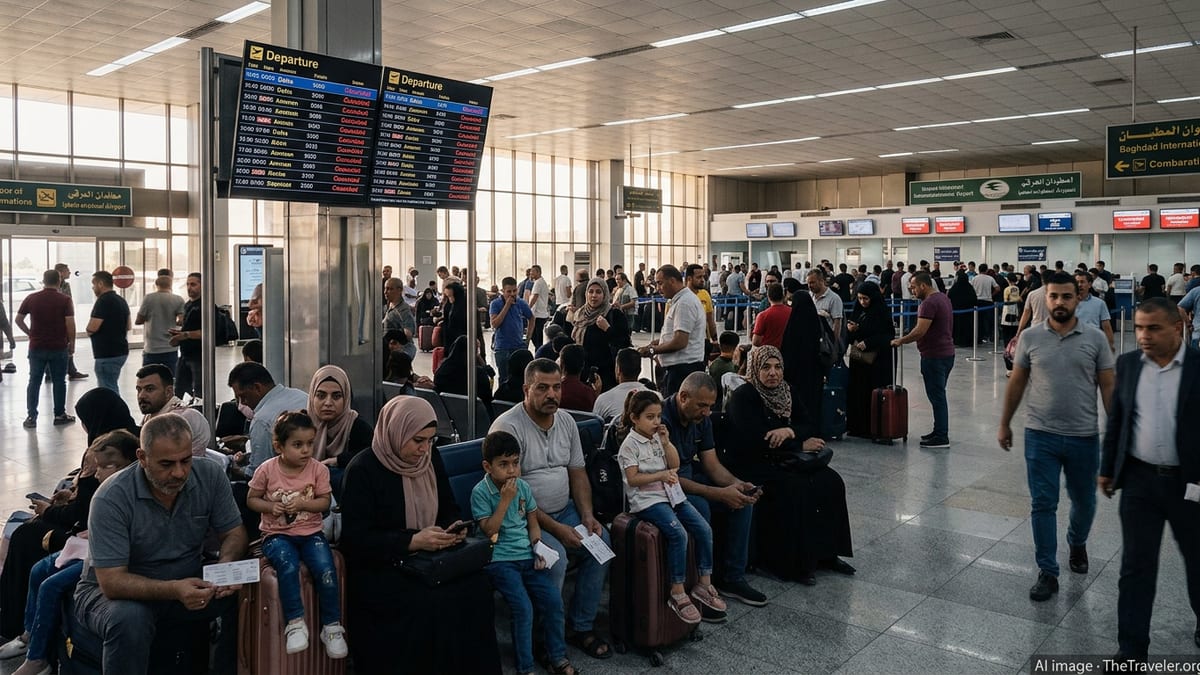
Airspace Closures Hit Key Global Transit Hubs
Publicly available flight tracking and aviation analytics show that the most recent strikes involving Iran, Israel and Gulf states have forced multiple countries to close or heavily restrict their airspace. Airports in major transit hubs across the region, including the Gulf, have faced temporary shutdowns or reduced operations as airlines divert planes away from perceived risk corridors.
Reports indicate that hundreds of flights were disrupted within hours of the first strikes, with closures affecting routes that normally connect Europe and Africa with Asia and Australasia. Data cited in recent coverage suggests that around 90,000 passengers a day typically transit through leading Gulf hubs alone, highlighting the scale of disruption when these airports are hit or their surrounding airspace becomes constrained.
According to European aviation monitoring assessments, around 1,000 or more flights per day are now being rerouted to avoid conflict zones and closed flight information regions. This has turned what were once some of the world’s most efficient east west air corridors into fragmented patchworks of permitted and restricted routes.
In parallel, U.S. and European travel advisories for countries such as Iran, Israel and Lebanon remain at their highest warning levels, reinforcing the operational decisions by many airlines either to suspend direct services or to avoid overflying the region entirely.
Longer Routings Drive Delays and Higher Costs
With significant portions of Middle Eastern airspace constrained, airlines are lengthening flight paths between Europe, North America and Asia. Industry and government travel alerts describe long haul routes being pushed either far south over the Arabian Peninsula and Africa or north through Turkey, the Caucasus and Central Asia.
Some travel intelligence briefings estimate that these diversions add between 3 and 6 hours to typical journeys, depending on the city pair and the degree of airspace avoidance required. For travelers, that has translated into missed connections, additional nights in transit hotels and growing uncertainty about arrival times even when flights are technically still operating.
For airlines, the consequences are financial as well as operational. Extended routings increase fuel burn at a time when carriers are already contending with volatile energy prices and higher war risk insurance premiums. Logistics advisors note that many airlines have introduced temporary fuel surcharges on tickets touching the region, while cargo operators report elevated security surcharges on freight moving via alternative gateways.
Despite these pressures, European network data suggests the global system remains broadly resilient, with overall traffic volumes slightly higher than a year ago. However, planners caution that capacity is being redistributed, with certain corridors absorbing much of the traffic that once flowed via the Middle East’s busiest hubs.
Western and Regional Airlines Suspend and Trim Services
Published airline statements and industry analyses show that major U.S. and European carriers have taken a cautious stance on flying into or over conflict affected areas. Several leading transatlantic airlines have suspended routes to destinations such as Tel Aviv, Beirut and Tehran, and sharply reduced frequencies to some Gulf and Saudi cities whenever overflight of Iranian or Iraqi airspace would be required.
Recent advisories from travel and aviation consultancies highlight schedule changes by large U.S. carriers, including the suspension of selected services to Dubai and the decision to avoid Iranian airspace entirely. According to these reports, some marquee long haul routes have been paused at least through mid April, with reassessments expected as the security situation evolves.
European groups such as Air France KLM, Lufthansa and Austrian Airlines are also operating a patchwork of suspensions and re-routings. Public schedules show that certain flights to the Middle East have been temporarily pulled, while others operate on significantly altered flight paths that skirt contested airspace, adding flight time and complicating crew rostering.
Gulf based carriers have generally sought to maintain a higher level of service, but they too have pared back selected routes and adjusted timings. Aviation analysts point out that while hubs in the United Arab Emirates and Qatar remain partially operational, limitations on nearby airspace and insurance conditions have reduced flexibility, particularly for overnight banked connections.
Knock On Effects for Cargo, Cruise and Overland Travel
The crisis is not limited to passenger aviation. Freight and logistics bulletins describe simultaneous strain across air cargo, ocean shipping and inland transport networks connected to the Middle East. Renewed threats to shipping in the Red Sea and the Strait of Hormuz have pushed container lines to divert vessels around the Cape of Good Hope, lengthening voyages and disrupting port rotations from Europe to Asia.
Air cargo operators are contending with constrained capacity as freighters are rerouted away from certain airspaces and as some regional airports scale back cargo operations. Industry situation reports from late March describe 48 to 72 hour backlogs at alternative air gateways, where cargo once bound for Gulf hubs is now funneled through secondary airports in Saudi Arabia, Oman or East Africa.
The disruption is also spilling over into other travel segments. Cruise itineraries that typically call at Gulf ports have been hastily amended, shortened or repositioned, while tour operators have postponed or restructured group trips that would have required transits through conflict adjacent countries. Overland routes are feeling pressure too, with some governments tightening controls at key land border crossings to manage security risks.
These overlapping strains are adding friction throughout global supply chains. Perishable goods, pharmaceuticals and time sensitive components are particularly exposed, increasing the likelihood of knock on effects in consumer markets far from the Middle East itself.
Travelers Face Uncertainty, Advisories Urge Caution
For individual travelers, the most visible impact has been uncertainty. Time magazine and other outlets report that hundreds of thousands of passengers have been stranded or delayed in recent weeks, stuck in airports or hotels as airlines work through rolling cancellations and rebookings.
Updated government advisories from the United States, Europe and other regions continue to urge citizens to avoid non essential travel to several Middle Eastern countries and, in some cases, to leave while commercial options remain available. Guidance emphasizes that severe disruptions to air links could complicate any future evacuation or repatriation efforts.
Consumer advocates underscore that passengers whose flights are canceled due to airspace closures are generally entitled to rebooking or refunds under aviation consumer protection rules, though the process can be slow when airlines are dealing with large volumes of affected travelers. Many travel risk advisories recommend that passengers maintain flexible itineraries, closely monitor airline notifications, and consider travel insurance policies that cover geopolitical disruption.
With no clear timeline for a de escalation of the conflict, analysts expect the Middle East to remain a volatile chokepoint for global aviation and travel flows. Routes may reopen and close with little notice as military activity, diplomatic efforts and commercial risk assessments continue to evolve, leaving airlines and travelers alike to navigate an unusually fluid landscape.