

More news on this day
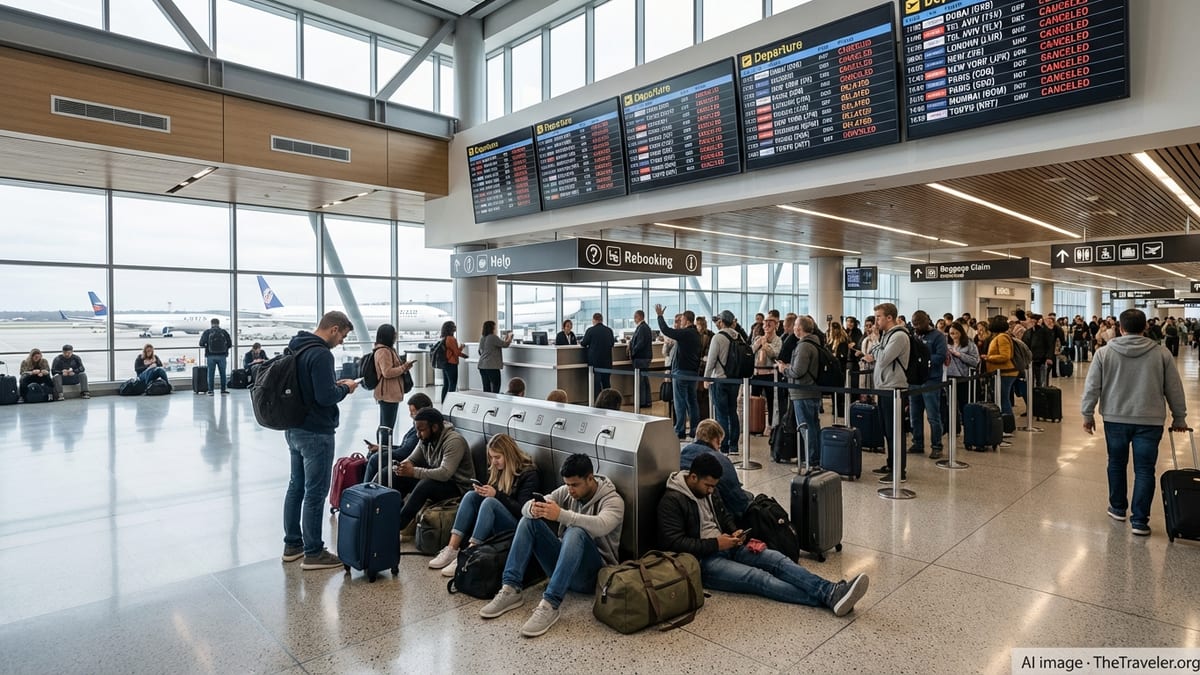
Air Canada has suspended all flights to Dubai and Tel Aviv as the Middle East military crisis deepens, extending travel chaos for thousands of passengers now facing disrupted journeys well into March 2026.
Escalating Conflict Shuts Key Middle East Gateways
The latest round of U.S., Israeli and Iranian military strikes has triggered one of the most significant airspace shutdowns in the Middle East in years, forcing airlines worldwide to cancel or reroute flights. Dubai and Tel Aviv, two of the region’s most important aviation hubs, have been hit particularly hard as authorities restrict civilian traffic in response to heightened security risks.
Regional airspace closures that began on February 28 have rippled through the global network, prompting mass cancellations and diversions over the weekend. Dubai International, typically one of the world’s busiest airports, saw operations curtailed as carriers halted services and aircraft were repositioned away from the Gulf corridor.
With Israeli authorities also maintaining a closure of national airspace, Ben Gurion Airport near Tel Aviv remains off limits to most commercial flights. Airlines are coordinating closely with regulators and defense officials as they reassess the viability of overflying or serving multiple Middle Eastern destinations in the short term.
Industry analysts warn that even a short-lived crisis in this corridor can have an outsized impact on global connectivity. Routes linking North America and Europe to South Asia, Africa and Australasia frequently depend on Middle East hubs, placing additional pressure on alternative gateways and long-haul carriers as the situation evolves.
Air Canada Freezes Dubai and Tel Aviv Operations
Against this backdrop, Air Canada has moved to halt all flights to and from Dubai and Tel Aviv, citing the deteriorating security picture and operational uncertainty across the region. The flag carrier’s travel advisory, updated in recent days, confirms that services to both cities are suspended while the conflict continues to affect airspace safety and airport operations.
The latest guidance indicates the airline is working on a rolling basis, initially pausing flights through to March 23, 2026, with the timeline subject to further revision depending on developments on the ground. The carrier had already been operating Tel Aviv on a reduced and cautious schedule following previous tensions, and it had temporarily adjusted its Toronto–Dubai service during earlier phases of the regional crisis.
Air Canada is emphasizing that the decision is driven by safety considerations for passengers and crew and by restrictions beyond the airline’s control. With both Dubai and Tel Aviv subject to airspace constraints and sudden changes in military posture, maintaining a predictable schedule has become untenable in the near term.
The suspension removes a key non stop link between Canada and the Gulf, as well as a direct bridge to Israel for both leisure and business travelers. Corporate clients with regular traffic to technology, finance and energy hubs in the region are being urged to review contingency plans and consider alternative routings where available.
What Affected Air Canada Passengers Can Expect
For customers holding tickets to Dubai or Tel Aviv on Air Canada during the affected period, the airline has activated a flexible rebooking and refund policy. Travelers whose flights are canceled are being offered options that typically include rebooking at a later date, shifting to an alternate destination where feasible, accepting a travel credit or requesting a refund.
Passengers are being advised not to travel to the airport in Dubai or Tel Aviv and instead to manage their bookings through Air Canada’s digital channels or customer contact centers. Those who purchased packages through Air Canada Vacations are directed to work with that division for tailored solutions that may involve hotel and ground arrangements as well as flights.
Capacity constraints are likely to remain a challenge. With other carriers also reducing or suspending services into the region, seats on remaining flights via alternative hubs are expected to be limited and fares may rise on certain corridors. Travel agents report strong demand for routings that bypass Middle Eastern airspace altogether, adding complexity to ticket changes and group travel planning.
Travelers already overseas and relying on onward connections through Dubai in particular may face several days of disruption. Many will need to overnight in intermediate hubs in Europe, North Africa or South Asia, while others may opt to postpone non essential trips until after the anticipated March 23 review point.
Wider Shockwaves Across Global Aviation
Air Canada is far from alone in its response. Major Gulf carriers, European airlines and other North American operators have all curtailed services in recent days as air defense systems remain on high alert and military overflights increase. Some have grounded flights entirely to Dubai, Abu Dhabi, Doha and Tel Aviv, while others operate only limited rescue or repositioning services.
The closures of key Middle Eastern airspaces have forced airlines to chart longer detours around conflict zones, adding hours to flight times on some intercontinental routes. This not only raises fuel costs but also complicates crew duty planning, aircraft rotations and cargo flows for sectors that depend on just in time deliveries.
Global passenger numbers are expected to take a measurable hit while the crisis persists, especially for business and religious travel to the region. Tour operators specialising in Gulf stopovers and Israel tours have paused departures, and travel insurers are reexamining coverage related to war and civil unrest exclusions in affected countries.
Despite the turmoil, aviation authorities stress that commercial safety protocols are functioning as intended. Carriers are coordinating route decisions through real time threat assessments, intelligence briefings and formal notices to air missions, which guide decisions on which corridors must be avoided or closed entirely for civilian traffic.
What Travelers Should Do Now
For travelers with bookings to Dubai, Tel Aviv or itineraries transiting the Middle East between now and late March, the most important step is to stay closely in touch with airlines or travel agents. Schedules are shifting by the hour, and automatic notifications may not capture every re routing or aircraft change as airlines adapt to evolving restrictions.
Passengers are urged to regularly check their reservations and ensure contact details are up to date so that last minute changes are communicated promptly. Where travel is discretionary, postponing trips or rerouting through alternative hubs in Europe, North America or East Asia may reduce uncertainty and overnight delays.
Industry experts also recommend reviewing travel insurance policies and any coverage provided by credit cards. Some policies exclude disruptions tied directly to war or military action, while others may offer limited benefits such as accommodation and meal allowances during extended delays or route changes.
With Air Canada and many of its global peers now looking toward March 23, 2026, as an early target for reassessing their schedules, travelers should be prepared for the possibility that suspensions could be extended if the security situation fails to stabilize. Until then, flexibility and patience will be essential for anyone planning to cross through one of the world’s most strategically sensitive air corridors.