

More news on this day
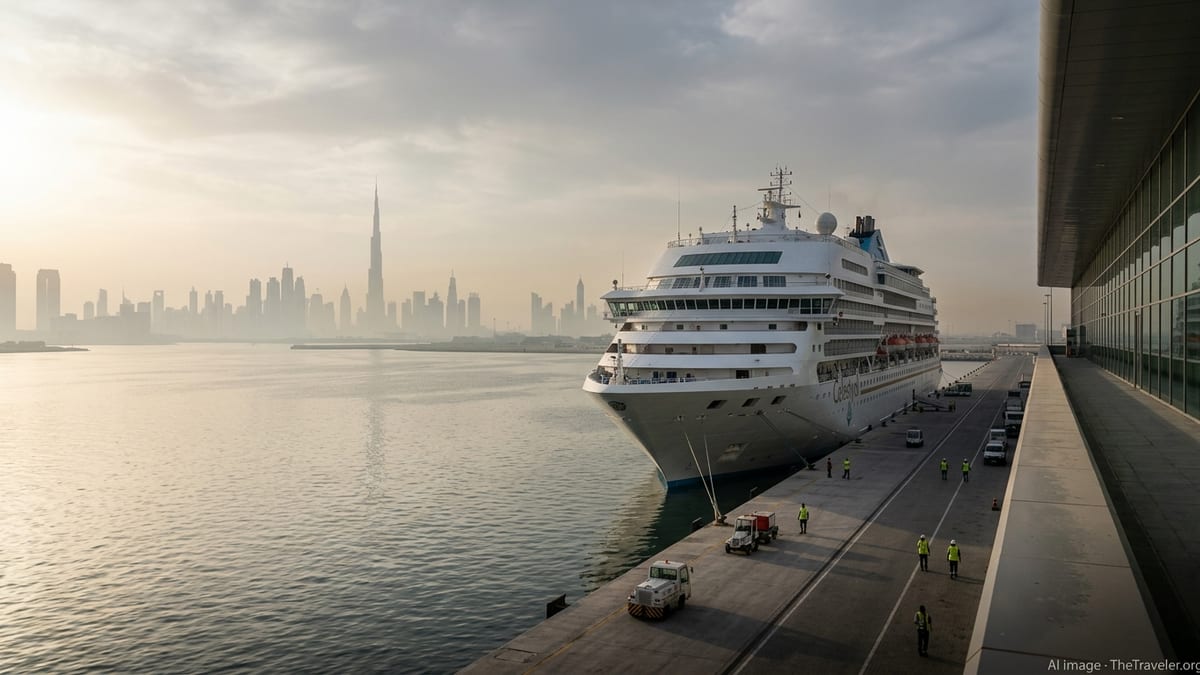
Celestyal Cruises has halted its ambitious Greece to Arabian Gulf program, canceling sailings touching Greece, Dubai and Qatar after a sharp escalation of military tensions in the Persian Gulf left multiple cruise ships and thousands of passengers stranded in the region.
Get the latest news straight to your inbox!
Escalating Gulf Tensions Disrupt Celestyal’s Winter Season
The latest flare-up in the wider Middle East conflict has rapidly reshaped cruise operations in and around the Persian Gulf. Publicly available information indicates that the closure of the Strait of Hormuz and a widening military confrontation have made routine passenger sailings in the area difficult or impossible. Cruise lines that had been promoting the Gulf as a rising winter-sun destination are now being forced to suspend or radically alter their programs.
Among the most affected is Celestyal Cruises, the Greece-based line that recently expanded beyond its core Aegean itineraries into longer repositioning voyages and Arabian Gulf cruises. The company’s flagship Gulf deployments on Celestyal Journey and Celestyal Discovery had been scheduled to run multi-night itineraries between Athens, Dubai, Doha and ports in Oman and Egypt across the 2025 to 2027 seasons. Those plans have been overtaken by fast-moving events.
According to published coverage and itinerary data that remained online until the latest crisis, Celestyal’s Athens to Doha and Dubai routes were designed as showpiece sailings linking classic Eastern Mediterranean ports such as Kusadasi and Sharm El Sheikh with overnight calls in Dubai and Doha. With the Persian Gulf now at the center of a live security emergency, those sailings are no longer viable in their original form.
Industry analysis suggests that any cruise itinerary requiring passage near the Strait of Hormuz, or extended stays in ports such as Dubai and Doha, currently carries heightened operational risk. As a result, Celestyal has joined several larger competitors in cutting short its Arabian winter season and withdrawing ships from the conflict zone.
Stranded Passengers and Early Termination of Gulf Voyages
The abrupt nature of the security crisis has left some Celestyal guests unexpectedly marooned in the region. Recent reporting describes Celestyal Journey at dock in Doha with hundreds of passengers awaiting disembarkation plans while regional air links are disrupted and demand for outbound seats rises sharply. These operational challenges mirror wider travel turmoil as airlines reroute or cancel flights serving Gulf hubs.
Information made public by the line indicates that guests on canceled sailings are being offered either full refunds or future cruise credit. Onboard teams have been tasked with helping travelers secure hotel rooms, transfers and new flight arrangements where regular commercial connections remain available. However, with airspace restrictions and rapidly changing flight schedules, passengers may face multi-day delays and circuitous journeys home.
Travel forums and social media posts suggest that confusion has been common, particularly among passengers who had combined Celestyal’s Greece to Gulf voyages with independent land stays in the United Arab Emirates or Qatar. Some travelers report struggling to rebook complex open-jaw itineraries or to retrieve value from nonrefundable hotel and tour reservations made around now-canceled cruise departures.
For those still booked on upcoming Gulf sailings that have not yet departed, the situation remains fluid but the trend is clear. Based on recent schedule changes, Celestyal is shutting down its Arabian Gulf season ahead of plan, meaning that itineraries involving Dubai or Doha in the coming weeks are very likely to be canceled or heavily modified, even if formal notifications have not yet reached every customer.
What the Cancellations Mean for Greece Departures
The suspension of Gulf sailings has immediate implications for Celestyal’s Greece-linked itineraries. The line’s Athens-based repositioning cruises, marketed as “Ancient Athens to Dazzling Doha” and the reverse routing back to Piraeus, were intended to bridge Celestyal’s core Eastern Mediterranean season with its new Arabian program. These voyages used the Suez Canal and Red Sea to connect Greece with the Gulf, calling at Egyptian and Omani ports before reaching Dubai and Doha.
Earlier regional instability in the Red Sea had already led Celestyal and several other operators to rework repositioning routes, in some cases sailing ships around Africa instead of through the Suez corridor. The latest Persian Gulf crisis effectively removes the end points of those journeys, leaving Athens departures without a safe or commercially meaningful terminus in the Gulf.
Industry observers note that Celestyal is likely to pivot its hardware back toward more traditional Eastern Mediterranean and Aegean itineraries from Piraeus and other Greek ports once ships can be repositioned out of the Gulf. This could result in additional Greek Isles or “three continents” style cruises being added or extended later in the year, although concrete replacement schedules have not yet been widely published.
For travelers departing from Greece, the key practical change is that any long-haul sailing that previously included Dubai, Doha or wider Persian Gulf calls should now be treated as uncertain. Passengers holding bookings that start or end in Athens but rely on a Gulf turnaround port should prepare for cancellations, rerouting or a shift to a different style of Eastern Mediterranean itinerary.
Options and Rights for Affected Celestyal Guests
While specific terms vary by booking channel and fare type, publicly available information from Celestyal and travel agency advisories points to a few consistent options for impacted travelers. Guests on voyages that the line has canceled outright are generally being offered a choice between a full refund of the cruise fare and a future cruise credit, sometimes with a bonus value or onboard credit to encourage rebooking.
Travelers who arranged flights, hotels and shore excursions independently face a more complex picture. Cruise-only refunds do not automatically cover third-party travel arrangements, leaving passengers reliant on travel insurance, flexible airline policies or goodwill gestures from hotels and tour operators. Many insurers treat geopolitical conflict and war-related disruptions differently from weather or technical cancellations, so travelers are encouraged to review their policy language carefully.
Advisories from consumer groups emphasize the importance of documenting all communications with the cruise line and other providers, including cancellation notices, receipts and any written confirmation of compensation or alternative arrangements. For bookings made through travel agents, travelers may find it easier to manage rebooking and claims via the agency rather than dealing with multiple suppliers directly.
Given the uncertain security outlook, prospective cruisers who are considering shifting to Celestyal’s Greece-only or Eastern Mediterranean departures should pay close attention to deposit rules and final payment dates. Choosing flexible airfares and accommodation with free or low-cost cancellation can also mitigate the risk of further regional disruptions.
Planning Future Cruises Amid Ongoing Middle East Volatility
The halt of Celestyal’s Greece, Dubai and Qatar-linked sailings underscores how quickly geopolitical tensions can upend even well-established cruise programs. The Gulf had been positioned as a bright spot for winter cruising, with new itineraries, upgraded ships and aggressive pricing designed to attract European and international travelers seeking warm-weather alternatives to the Caribbean.
Travel industry analysis now points to a near-term shift away from the Persian Gulf and adjacent conflict zones, with lines redeploying ships back to the Mediterranean, Northern Europe, the Caribbean and other comparatively stable regions. For Celestyal, this likely means refocusing on its historic strength in Greek and Aegean cruising while monitoring conditions for any future return to the Gulf.
For travelers, the episode highlights the value of building flexibility into long-haul cruise plans. Booking air directly with airlines on fares that allow changes, adding robust travel insurance that clearly covers political unrest, and avoiding nonrefundable pre- and post-cruise stays in volatile regions can all reduce exposure when itineraries collapse at short notice.
Despite the current turmoil, demand for cruising remains strong, and Celestyal’s core Greek Isles product continues to operate outside the immediate conflict zone. However, as the Middle East crisis continues to evolve, travelers are likely to favor itineraries that stay well clear of the Persian Gulf and rely on ports with more predictable security and air connectivity.