

More news on this day
A fast-escalating conflict centered on Iran and the wider Gulf region is triggering sweeping changes to global air traffic, with United Airlines now joining American, Delta and Southwest in suspending selected flights and revising routes, as airspace closures and military activity over the Middle East ripple across both international and domestic schedules.
Get the latest news straight to your inbox!
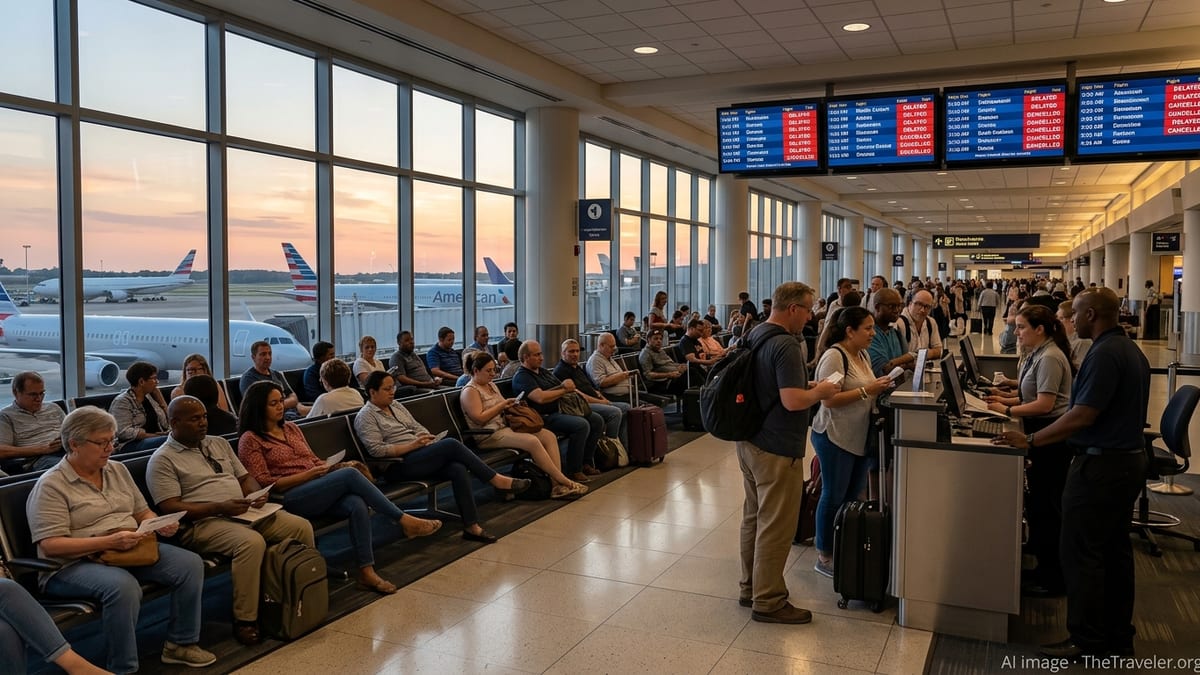
How the New Crisis Closed Key Middle East Skies
According to published coverage of the 2026 Iran war and the related Strait of Hormuz crisis, a series of strikes and counterstrikes since late February has led several Middle Eastern countries, including Iran, Iraq, Israel, Kuwait, Qatar and parts of the United Arab Emirates, to close or severely restrict portions of their airspace to civilian traffic. Regional reports describe missile attacks on military and infrastructure targets, as well as interception activity near major hubs, prompting aviation authorities to prioritize safety and sharply curtail normal overflights.
Publicly available reporting indicates that these closures followed joint United States and Israeli military actions against Iranian targets and subsequent Iranian responses. In parallel, there has been a sharp reduction in commercial traffic through the Strait of Hormuz and adjacent Gulf air corridors, which normally carry a significant share of Europe to Asia and Asia to North America long haul traffic. With several of the most direct and fuel efficient paths now constrained, airlines have been forced into lengthy detours.
Independent aviation trackers and travel advisories show that major Gulf hubs such as Dubai, Doha and other regional airports have seen mass cancellations or suspensions of regular operations. Even where airports remain technically open, fluctuating restrictions on overflight permissions and the risk of sudden airspace shutdowns have made reliable scheduling difficult, contributing to knock on delays far beyond the Middle East itself.
What United, American, Delta and Southwest Are Changing
United Airlines has expanded a series of “Middle East unrest” travel waivers in recent weeks, according to publicly available customer notices and tracking forums, allowing passengers booked on affected routes between the United States and airports in the region to change travel dates or reroute without standard change fees. At the same time, schedule data and operations updates show that United has suspended or significantly reduced services touching the most heavily impacted hubs, while rebalancing capacity through alternate European and Mediterranean gateways where possible.
American Airlines and Delta Air Lines, which also operate extensive long haul networks linking North America with Europe, Asia and Africa, have introduced similar measures. Published airline updates and investor briefings note suspensions of services to Tel Aviv and other regional destinations, the use of technical fuel stops on some routes to avoid closed airspace, and the extension of flexible rebooking policies for passengers whose itineraries cross the wider Middle East region.
Southwest Airlines does not fly to the Middle East but is experiencing indirect operational pressure. Publicly available information on recent US disruption patterns shows that weather events and constrained aircraft and crew availability have collided with the global knock on effects of rerouted international flights. Congestion at certain US hubs used by partner and codeshare carriers, as well as crew scheduling challenges when inbound international services arrive late, have contributed to added delays and occasional cancellations on domestic networks, including Southwest’s.
Across all four airlines, schedule adjustments are ongoing rather than one time. Flight tracking data illustrates rolling changes to departure times, aircraft types and routings as carriers respond to evolving airspace notices, fuel cost swings and airport conditions on a day by day basis.
Global Ripple Effects: Longer Routes, Higher Costs, Wider Delays
With large sections of Middle Eastern airspace either unavailable or restricted, many intercontinental flights that would normally pass over the Gulf, Iraq or Iran are being routed along more southerly or northerly tracks. Aviation analysts cited in recent business and travel reports note that these longer routings can add hours to flight times between Europe and South or Southeast Asia, between Asia and North America, and on some Africa bound services.
These detours mean higher fuel burn and additional crew costs, which industry commentary links to rising fares and ancillary fees in some markets. Recent financial briefings from major US carriers acknowledge that jet fuel prices have jumped since the onset of the crisis, adding hundreds of millions of dollars in expenses industry wide, even as strong demand has so far kept overall revenue projections relatively stable.
For travelers, the most visible effect is heightened unpredictability. When a heavily used corridor closes or a major hub airport limits operations, aircraft and crews can end up out of position, creating a domino effect across global networks. Publicly accessible flight statistics from early March show thousands of cancellations and widespread delays, not just on routes touching the Middle East, but also on flights within Europe, Asia and North America that depend on tightly sequenced aircraft rotations.
Some carriers have sought to mitigate the disruption by adding special services or temporary routes that bypass closed regions, such as additional flights via Mediterranean or Red Sea hubs. However, these measures take time to implement and do not fully offset the systemic stresses created by a sudden and prolonged closure of such a critical aviation crossroads.
What Travelers Need to Do Right Now
Current travel advisories and airline communications emphasize that passengers should not assume their flight is operating as originally booked, even if it does not directly serve the Middle East. Because many route changes and equipment swaps are being made with limited notice, itinerary checks on the day of departure and again a few hours before heading to the airport are strongly recommended.
United, American and Delta have all issued region specific flexibility or waiver policies tied to the Middle East unrest, allowing eligible travelers to change dates or, in some cases, reroute through different cities without standard change penalties. Details vary by airline, route and travel date, and may be updated frequently, so travelers are advised to review the latest policy language on official channels before making adjustments.
For those with complex itineraries that involve separate tickets, such as a domestic US flight connecting to an international service operated by a different carrier, experts quoted in public forums and consumer coverage recommend building in longer connection times. With delays and rerouting now common, tight self made connections have become significantly riskier, especially at busy hubs handling large numbers of disrupted long haul passengers.
Travel insurance policies that include coverage for trip interruption and missed connections may offer some financial protection, but published consumer guidance stresses the importance of reading exclusions carefully. Many standard policies treat geopolitical conflict and government mandated airspace closures differently from weather or mechanical issues, so compensation for hotels or alternative transport is not guaranteed.
Short Term Outlook for Spring and Summer Travel
Security analysts and aviation specialists cited in recent public reports suggest that the Middle East airspace disruption could extend for weeks or even months, depending on the trajectory of the conflict and ongoing military operations around the Strait of Hormuz. The United States has recently begun an aerial campaign aimed at reopening the strait and stabilizing sea lanes, but there is no clear timetable yet for a full restoration of pre crisis air routes.
For airlines, the near term planning focus appears to be on building more resilient schedules that do not rely on currently inaccessible corridors. That includes shifting capacity to alternative transatlantic and transpacific routes, adjusting aircraft assignments to reflect longer stage lengths, and coordinating with alliance partners to share lift where possible. These moves may protect overall network connectivity but can also reduce frequencies on certain city pairs, particularly secondary markets.
Travel industry observers expect that, heading into the peak northern summer season, passengers may see fewer nonstop options on some long haul routes and more one stop itineraries through airports that offer stable overflight paths. Booking early and maintaining flexibility on travel dates and routing is likely to become more important for securing preferred schedules.
While domestic US flying remains broadly stable compared with the sharp disruption seen at Middle Eastern hubs, the continued interaction of severe weather, crew availability and international rerouting means that United, American, Delta and Southwest are operating with limited slack. Travelers planning trips over the coming months are being encouraged by widely available public guidance to build in contingency time, monitor developments in the region closely and remain prepared for last minute schedule changes as the crisis evolves.