

More news on this day
Escalating conflict in the Middle East, surging oil prices and sudden airspace closures are rippling through global aviation, triggering a sharp selloff in Thai Airways shares and reshaping the cost and convenience of flying to Thailand and onward to Europe and the Middle East.
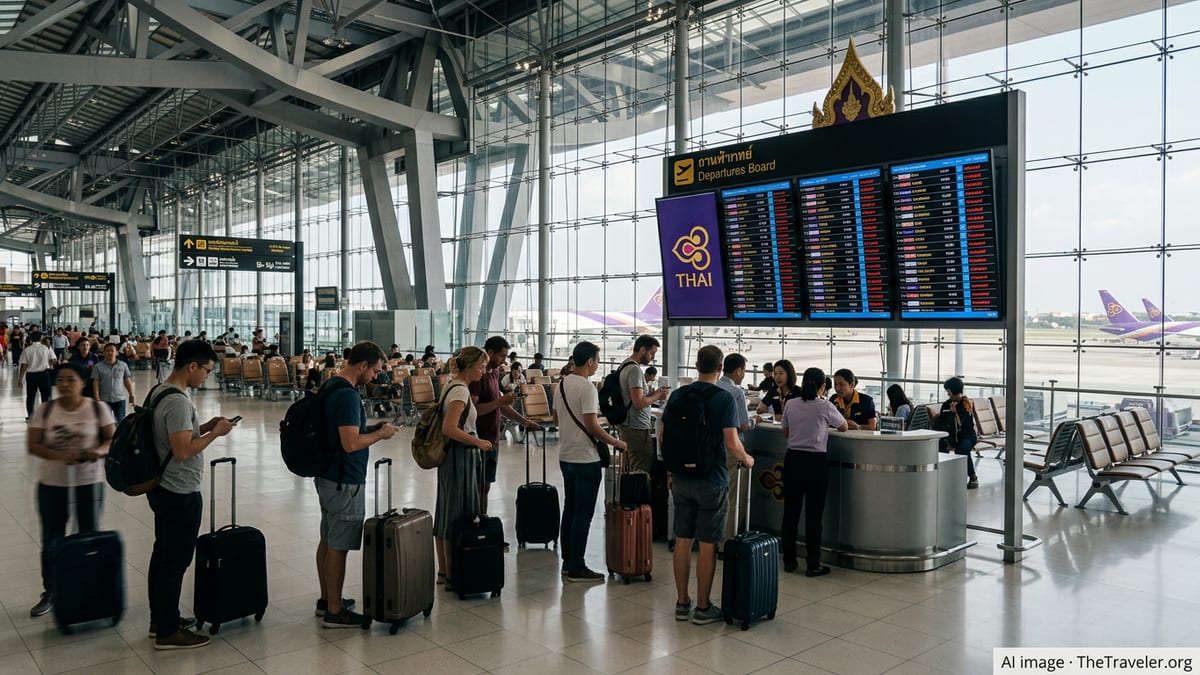
Thai Airways Stock Slides Amid War Jitters and Cost Shock
Thai Airways International has been thrust back into turbulence just days after reporting a strong turnaround profit for 2025. Earlier this week, Thai airline stocks sold off sharply as investors priced in the twin blows of soaring fuel prices and weakening demand on key long-haul routes. Thai Airways shares dropped almost 10 percent in a single trading session, erasing part of the gains driven by the carrier’s 2025 net profit of nearly 31 billion baht.
The reversal in sentiment reflects how quickly the outlook has darkened since the outbreak of full-scale hostilities between Iran, Israel and the United States at the end of February. Brent crude prices have jumped from the low 70s to above 80 US dollars per barrel in a matter of days, raising operating costs for fuel-intensive long-haul airlines. Analysts warn that each incremental rise in jet fuel eats directly into Thai Airways’ margins, just as it was rebuilding its balance sheet after restructuring.
While the airline has hedging strategies and fuel surcharges at its disposal, these tools only partially offset a sudden spike in benchmark prices. Thai Airways has previously disclosed that its earnings are highly sensitive to oil, and market analysts now expect downward revisions to 2026 profit forecasts if elevated prices persist into the second half of the year. For investors, the sector is once again being treated as high risk.
Compounding the financial pressure is renewed uncertainty over demand from Europe and the Middle East, two regions that have underpinned Thailand’s tourism recovery. Broker research notes that weekly booking indicators to Thailand and through Bangkok have softened as travellers react to headlines about the conflict, even as peak-season travel traditionally begins for European visitors escaping winter.
Airspace Closures Push Fares to Record Highs
The closure or restriction of key Middle Eastern air corridors has immediately upended flight patterns between Europe and Asia. Gulf hubs that normally act as bridges on popular one-stop routes from Europe to Bangkok have faced shutdowns or severe curbs, forcing airlines either to cancel services or take longer detours around conflict zones. The Civil Aviation Authority of Thailand reports that fares on some Europe bound routes from Bangkok have effectively doubled as capacity tightens.
Thai Airways, which operates non-stop flights between Bangkok and major European cities, has suddenly found itself at a premium. On the high-demand Bangkok to London route, one-way economy fares on Thai Airways have jumped from around 30,000 baht to more than 70,000 baht as passengers scramble for seats that bypass the troubled Middle East corridor. Similar spikes are being seen to other European gateways, with last-minute tickets especially expensive.
This fare surge reflects both the extra cost of rerouting flights for many carriers and a sharp reduction in the number of available seats as Middle Eastern airlines trim or suspend services. Passengers who once relied on competitive one-stop options via the Gulf are now competing for limited non-stop or alternative one-stop itineraries via Asia or Europe, driving prices higher across the board.
Travel industry analysts say the current price shock, layered on top of already elevated post-pandemic fares, risks dampening demand if it extends beyond a few weeks. Corporate travel managers report that some firms are postponing non-essential trips to Europe, while leisure travellers are either shortening itineraries or deferring long-haul holidays until there is more clarity on both security and costs.
Operational Disruptions but Thai Airports Remain Open
Despite the headlines, Thailand’s major airports remain fully operational. Airports of Thailand, which manages six key international airports including Bangkok’s Suvarnabhumi and Don Mueang, confirmed that while more than a hundred flights were affected over the first conflict weekend, there were no mass strandings and operations continued under enhanced monitoring. The bulk of disruptions involved airlines directly serving the Middle East or overflying affected airspace.
Thai Airways itself has so far reported limited schedule cancellations on its European network, as it does not rely heavily on Iranian or Israeli airspace. However, flight times on some routes may lengthen as air traffic controllers and carriers adjust routings to give wide berth to conflict zones and military operations. Passengers should expect potential schedule changes, tighter connection windows and aircraft swaps as airlines juggle fleets.
Aviation authorities in the region are coordinating on overflight permissions and contingency planning in case the crisis widens or new airspace restrictions are imposed. Thailand’s regulators have also reiterated safety as the overriding priority, signalling that further short-notice diversions or cancellations remain possible if the security assessment changes.
For now, airport operators stress that passengers transiting Bangkok are not facing systemic disruption. Check-in queues and security screening times are largely normal, though officials advise travellers to arrive earlier than usual for long-haul departures in anticipation of extra document checks and operational adjustments by airlines.
What Travellers to and from Thailand Need to Know
For travellers planning journeys to Thailand or using Bangkok as a hub to Europe or the Middle East, the new environment demands more flexibility and higher budgets. Ticket prices on many long-haul routes have risen sharply and can change day by day as airlines recalibrate capacity and fuel surcharges. Travellers may find that booking further in advance and staying flexible on dates, times and even gateway airports within Europe can help manage costs, but they should be prepared for significantly higher fares than in early 2025.
It is also crucial to monitor bookings closely. Airlines are frequently updating schedules, rerouting flights, or adjusting departure times to account for longer flight paths around closed airspace. Travellers should ensure their contact details are up to date with both the airline and their booking platform, and should check flight status regularly in the 24 hours before departure. Those with tight connections through Bangkok or other hubs may want to allow longer layovers to reduce the risk of misconnecting.
Travel insurance has regained importance. Policies that cover trip interruption, missed connections, and significant delays due to geopolitical events or airspace closures can offer some financial protection in a volatile environment. Passengers should read the fine print, as not all policies treat conflict related disruption in the same way, and some may exclude war or acts of terrorism.
On the ground in Thailand, tourists currently face minimal direct impact beyond higher airfare. Hotels, attractions and domestic flights are operating normally, and there are no widespread security advisories affecting major tourist destinations. However, the broader economic drag from higher energy costs could filter through to consumer prices over time, potentially making some aspects of travel less affordable if the crisis endures.
Regional and Long-Term Implications for Thai Airways
Beyond the immediate stock market reaction and fare spikes, the Middle East conflict and oil shock pose strategic questions for Thai Airways and Thailand’s wider aviation sector. The airline had been in expansion mode, with plans to add new aircraft and routes in 2026, including additional European destinations and more capacity to high-growth markets in China and India. Persistently higher fuel costs could force a rethink of that growth trajectory, delaying fleet decisions or slowing frequency increases.
At the same time, the current crisis underscores both the risks and potential advantages of Thailand’s position outside the conflict zone. If Middle Eastern hubs face prolonged disruption, Bangkok could attract more transfer traffic as a stable alternative connecting point between Europe, South Asia and the Pacific. To capitalise on this, Thai Airways would need to balance network expansion with disciplined cost control in a more expensive fuel environment.
For Thailand’s tourism authorities, the stakes are high. Long-haul visitors from Europe and the Middle East spend more on average than short-haul arrivals, and any prolonged downturn in these markets could weigh on growth just as the industry was approaching pre-pandemic volumes. Policymakers are watching the situation closely, aware that a sustained oil price spike and weaker global economy could slow visitor arrivals in late 2026 and beyond.
For now, travellers can still reach Thailand from most major markets, but they are paying more for the privilege and facing a more unpredictable journey. How long this phase lasts will depend not on airlines, but on the course of events far from Bangkok’s runways.