

More news on this day
Escalating conflict involving Iran, the United States and regional allies in and around the Strait of Hormuz is rippling through global aviation, forcing large-scale flight cancellations, complex rerouting and a sharp slowdown in tourism across key Gulf hubs including the United Arab Emirates, Qatar and Oman.
Get the latest news straight to your inbox!
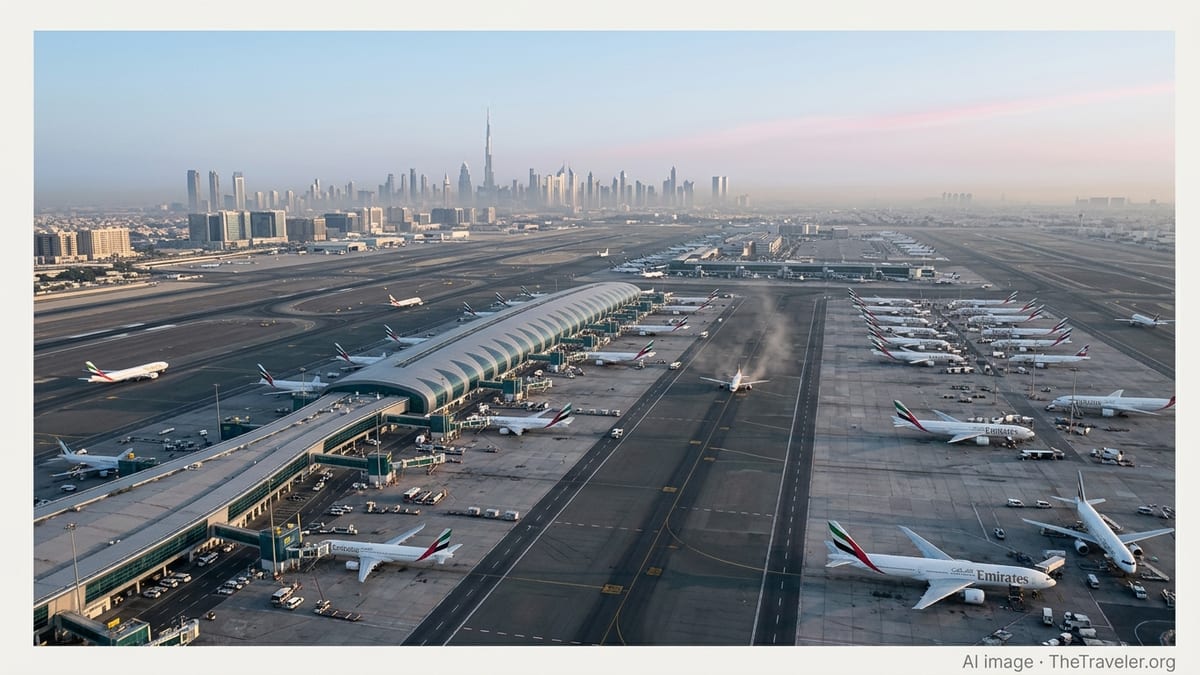
Airspace Closures Turn Gulf Hubs into Bottlenecks
Publicly available airspace notices and industry briefings show that since the Iran conflict intensified at the end of February 2026, large portions of Gulf airspace have been restricted or closed, particularly over Iran and several neighboring states. Qatar, Bahrain, Kuwait and others imposed sweeping closures, while airlines began avoiding Iranian airspace altogether. This has effectively reshaped the aerial map of the Middle East, placing significant pressure on remaining open corridors.
Analysts tracking flight data report that tens of thousands of services to and from the broader Middle East have been canceled or rerouted in recent weeks, with some coverage describing the disruption as the airline industry’s most severe operational test since the Covid 19 pandemic. Long haul routes connecting Europe and North America to Asia are being detoured around the Gulf, adding hours of flying time, higher fuel burn and new scheduling challenges.
Advisories from logistics and security consultancies indicate that Saudi Arabia’s airspace has emerged as one of the only major regional routes still broadly available for commercial overflights. Carriers are increasingly funneled across Saudi territory to avoid the Strait of Hormuz and parts of the Gulf, consolidating traffic on narrower corridors and amplifying congestion and delay risks.
The cumulative impact is a cascade of missed connections, aircraft and crew out of position, and uncertainty for travelers who rely on Gulf hubs as a bridge between continents. Travel planners describe a rapidly shifting network in which schedules can change with limited notice as risk assessments are updated.
UAE Tourism Hit by Flight Cuts and Rerouting
The United Arab Emirates, home to major global carriers and some of the world’s busiest airports, has been among the hardest hit by the flight disruption. Dubai International Airport and Abu Dhabi International Airport normally function as high frequency transit hubs for Europe Asia and Africa Asia itineraries. With airspace restrictions and conflict risks concentrated around the Strait of Hormuz, these hubs face reduced connectivity and volatile schedules.
Reports from aviation tracking services and airline customer communications show that leading Gulf carriers have trimmed frequencies, consolidated routes and adjusted flight paths to steer clear of contested skies. Reduced schedules into Dubai and Abu Dhabi have weakened the flow of short stay visitors who combine business trips with tourism, as well as long haul leisure travelers who use the cities as destinations in their own right.
Industry commentary suggests that hotel occupancy and forward bookings in Dubai and Abu Dhabi are under pressure as corporate travel programs limit non essential trips and individual travelers postpone discretionary holidays. The UAE’s extensive resort infrastructure on the Gulf and Arabian Sea coasts, which depends heavily on reliable long haul air links, now faces an environment of higher fares, longer journeys and greater perceived risk.
At the same time, the country’s position as a logistics and cruise gateway has been complicated by heightened security concerns around the nearby shipping lanes. With commercial shipping flows through the Strait of Hormuz sharply reduced and war risk insurance costs elevated, cruise lines and tour operators are reassessing itineraries that traditionally showcase Gulf ports and city stopovers.
Qatar’s Hub Role Weakens Amid Limited Operations
Qatar’s Hamad International Airport and its national carrier play an outsized role in connecting Europe, Africa and the Americas to South and Southeast Asia. The closure of Qatari airspace at the onset of the crisis, followed by only a partial and tightly controlled reopening, has significantly constrained that hub model. Publicly available notices from Qatari authorities describe a phased return of emergency and limited capacity routes, but regular commercial operations remain far below pre crisis levels.
According to published travel forums and airline updates, Qatar based services have been notably inconsistent, with repeated cancellations even after announcements of limited flight resumptions. Travelers attempting to transit Doha report long rebooking times, uncertain departure dates and difficulty securing alternative routings as surrounding airspace also remains constrained.
The disruption is reverberating through Qatar’s broader tourism aspirations. The country has invested heavily in positioning Doha as a stopover and events destination following the 2022 World Cup, with new museums, waterfront developments and resort projects. With the current crisis, that strategy faces a setback as safety concerns and limited air links undermine short break and conference travel.
Economic analyses circulated by regional think tanks warn that if the airspace restrictions and Strait of Hormuz tensions persist, Qatar’s tourism revenues and transit fees could fall meaningfully in 2026, challenging growth plans that rely on steady expansion of passenger volumes through the Doha hub.
Oman Faces Isolation as Gulf Corridors Contract
Oman, traditionally marketed as a quieter alternative to its high rise neighbors, is also experiencing mounting travel disruption tied to the crisis. Muscat and Salalah, key gateways for adventure and cultural tourism, sit on the fringe of the Strait of Hormuz and the Arabian Sea routes that are now central to risk calculations for airlines and cruise operators.
Regional port and logistics bulletins describe a sharp slowdown in traffic involving Omani ports, as shipping companies divert vessels away from the Strait of Hormuz and reconsider regional calls. These maritime decisions have knock on effects for air travel, with fewer cruise passengers and business travelers feeding into Omani airports and coastal resorts.
Oman Air and other carriers have historically offered alternative routings during periods of regional tension, helping to keep at least some connectivity intact. In the current conflict, however, the concentration of risk around Hormuz and the broader Gulf means that rerouting options are more limited. International visitors looking for itineraries that combine the UAE and Oman, a common pattern for multi country Gulf trips, are finding that cross border journeys are harder to arrange or come with higher costs.
Tourism operators in Oman that focus on desert trekking, coastal camping and heritage sites are increasingly dependent on travelers willing to undertake longer, indirect routes via safer third country hubs. Travel industry commentary suggests that this may favor higher spending niche visitors over mass market tourism, altering demand patterns if the crisis endures.
Global Travel Ripple Effects Extend Far Beyond the Gulf
While the most visible disruption is in Gulf airports and resorts, the consequences for global travel reach much farther. Data from flight tracking and airline scheduling platforms indicate that carriers across Europe, Asia and North America have reworked routes to avoid both the Strait of Hormuz and adjacent conflict areas, often combining diversions already in place in the Red Sea and eastern Mediterranean with new detours around Iran and the central Gulf.
These longer routes translate into added fuel consumption and higher operating costs at a time when energy markets are already volatile. Energy market coverage links the near halt of tanker traffic through the Strait of Hormuz and targeted attacks on regional energy facilities to a sharp rise in oil and gas prices. Higher jet fuel costs are expected to feed through to airfares globally, affecting travelers with no direct connection to the Middle East.
Security and risk advisories for corporate travelers now list much of the Gulf as a high risk zone, prompting multinationals to shift meetings online and delay in person visits. Travel management companies report that some firms have temporarily suspended employee travel through affected hubs, routing essential trips via alternative centers in Europe, Central Asia or Africa instead.
Tourism boards and airlines outside the region are watching the situation closely, aware that prolonged disruptions could reconfigure long haul demand and hub dominance for years to come. As of late March 2026, publicly available information portrays a travel landscape in flux, with the Strait of Hormuz crisis and Iran US tensions redefining how people and goods move across one of the world’s most important crossroads.