

More news on this day
Escalating conflict in Iran, ongoing instability around Israel and Lebanon, and repeated airspace disruptions across the Middle East are rapidly reshaping global travel patterns, pushing many long-haul tourists to lock in what they view as a shrinking set of comparatively stable options for summer 2026.
Get the latest news straight to your inbox!
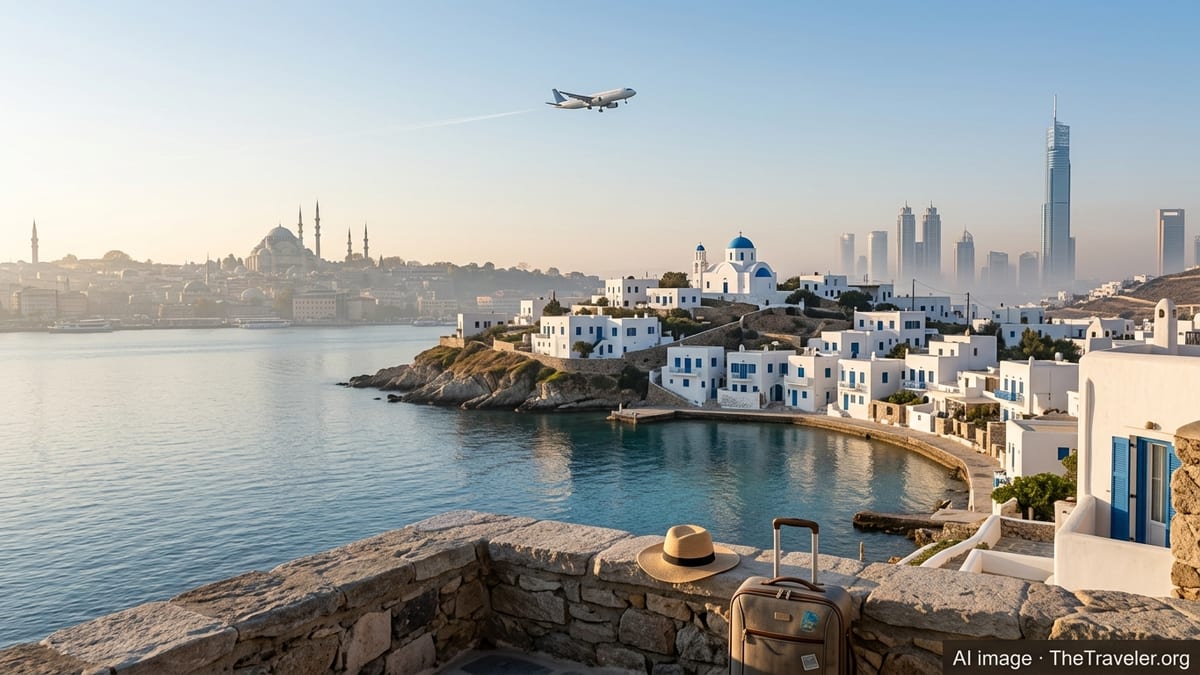
A Region on Edge Disrupts Global Holiday Maps
The widening conflict involving Iran, maritime disruption in the Strait of Hormuz, and spillover tensions around the Eastern Mediterranean are now affecting far more than energy markets. Published coverage shows widespread flight cancellations, rerouted aircraft and temporary airport shutdowns from the Gulf to South Asia, leaving airlines and travelers scrambling to redraw routes at short notice. Industry analysts note that aviation has become an early pressure point of the crisis, with insurance, fuel costs and crew safety all under renewed scrutiny.
Travel risk advisories issued in early March 2026 point to intermittent missile and drone activity affecting parts of the region, including incidents that briefly curtailed operations at major Gulf hubs. While many services have resumed, the episode has underscored how quickly a single escalation can paralyze international air corridors. For tour operators, the result is a cascade of rescheduling, with group trips postponed or rerouted away from perceived flashpoints.
At the same time, global economic uncertainty linked to surging oil prices is feeding directly into travel behavior. Higher airfares and wider concerns about regional instability are prompting many holidaymakers to shorten flight times, avoid multi-stop itineraries and seek destinations that combine strong infrastructure with a reputation for political and social stability. Against this backdrop, Turkey, Greece and Dubai have emerged as three of the most heavily scrutinized choices for summer 2026.
Turkey Balances Perception Risks With Scale and Experience
Turkey enters the 2026 high season with one of the world’s largest tourism infrastructures and decades of experience handling mass-market summer demand along its Aegean and Mediterranean coasts. Government projections released in recent months point to tourism revenues rising toward the high sixty billion dollar range by 2026, a signal of confidence that visitor flows will continue despite the unsettled regional environment. Large resort zones around Antalya, Bodrum and Izmir are designed to operate as self-contained holiday ecosystems, something many travelers now interpret as a form of built-in resilience.
Yet the country faces headwinds of its own. Trade and sector reports from 2025 highlighted a dip in arrivals at key points of the year, as inflation and currency volatility fed a perception of Turkey as an unexpectedly expensive destination. Hospitality businesses have responded with promotional pricing, aggressive early-booking discounts and efforts to lock in tour operator contracts for 2026 before economic conditions shift further. For cautious travelers, these measures translate into a wide spread of price points, from all-inclusive mass resorts to smaller, value-focused properties inland.
Security perceptions remain a sensitive variable. Publicly available risk assessments tend to draw a distinction between border areas affected by regional tensions and the main holiday corridors on the Aegean and Mediterranean, where incidents have been rare in recent seasons. As a result, travel professionals tracking bookings describe a pattern in which travelers may avoid complex, cross-border itineraries but still consider direct flights into coastal Turkish airports for straightforward resort stays.
Greece Sees Surge in Bookings Amid Search for Stability
Greece, which sits to the west of the most acute flashpoints, is benefiting from what several European travel analyses describe as a “stability dividend.” Tourism data for 2025 showed record arrivals and revenues, supported by a diversified mix of island and mainland destinations. Early booking figures for 2026, published by Greek hotel and digital marketing platforms, indicate sharp increases in pre-bookings to islands such as Kos and Paros, with some markets reporting triple-digit percentage growth compared with the previous year.
The shift reflects both push and pull factors. On one side, travelers are actively avoiding itineraries that rely on volatile airspace or multi-country overland routes. On the other, Greece offers membership in the European Union and the eurozone, extensive Schengen air links and a regulatory framework that has recently tightened safety requirements for accommodation, including small short-term rentals. Sector reports point to these rules as evidence of an institutional focus on visitor safety, even as they create new obligations for property owners.
There are still vulnerabilities. Certain iconic destinations, notably Santorini and Mykonos, have experienced localized downturns tied to seismic activity or saturation effects, reminding travelers that no destination is entirely insulated from natural or economic shocks. However, the broader Greek tourism map has widened, spreading demand to less crowded islands and mainland regions. For summer 2026, this diversification is being interpreted by many tour planners as a buffer against localized disruption and one reason Greece is being positioned as a “safe bet” in a turbulent neighborhood.
Dubai’s Hub Status Tested but Not Broken
Dubai, long marketed as a politically neutral crossroads between East and West, has been at the center of recent aviation turmoil. In recent weeks, reports documented how missile and drone threats, as well as regional conflict dynamics, briefly disrupted operations at Dubai International Airport, one of the world’s busiest hubs for international passengers. Specialized travel advisories referenced partial suspensions and phased resumptions of flights, highlighting the city’s exposure to external shocks despite its reputation for order and efficiency.
Even so, Dubai’s tourism metrics through 2025 tell a story of remarkable resilience. Official visitor statistics show the emirate welcoming roughly 19.6 million overnight international guests last year, its third consecutive record and a level that surpasses pre-pandemic highs. Hotel occupancy averaged above 80 percent, underlining sustained demand from both leisure and business segments even as regional tensions flared periodically.
Analysts attribute this durability to a combination of factors: diversified source markets, a strong events calendar, and an aviation sector with the capacity to reconfigure routes quickly when neighboring airspace is disrupted. Policy initiatives such as multi-year tourist visas and ongoing investment in new attractions have reinforced perceptions of Dubai as a place that can absorb shocks rather than collapse under them. For summer 2026, many travel planners still view the city as a viable hub or standalone destination, provided travelers remain flexible about potential schedule changes.
Why “Safe Bet” Does Not Mean Risk Free
The framing of Turkey, Greece and Dubai as “last safe bets” for summer 2026 captures the anxiety of a travel public confronting war headlines and volatile energy prices. Yet travel risk specialists caution that safety is not a fixed category. All three destinations sit within a broader region experiencing historic geopolitical strain, and each faces distinct internal pressures, from economic inflation in Turkey to infrastructure stresses and extreme weather events in Dubai.
What sets these destinations apart, according to publicly available tourism and economic data, is not immunity from crisis but a combination of scale, infrastructure and crisis-management capacity. Large airports capable of rapid rerouting, diversified tourism economies that do not depend on a single source market, and regulatory frameworks that emphasize visitor safety all contribute to perceptions of relative security. In practical terms, this means travelers are more likely to find functioning hotels, alternative connections and clear guidance if something goes wrong.
For travelers weighing summer 2026 options, the emerging pattern is one of cautious pragmatism. Many are shortening booking windows for long-haul trips tied to volatile routes, while committing earlier to destinations perceived as institutionally robust. Turkey’s coastal resorts, Greece’s broader portfolio of islands and regions, and Dubai’s role as a high-capacity hub are central to that recalibration. None can guarantee a trouble-free season, but in a Middle East crisis that has turned flight paths and holiday maps into moving targets, they currently stand out as the places many global travelers are most willing to bet on.