

More news on this day
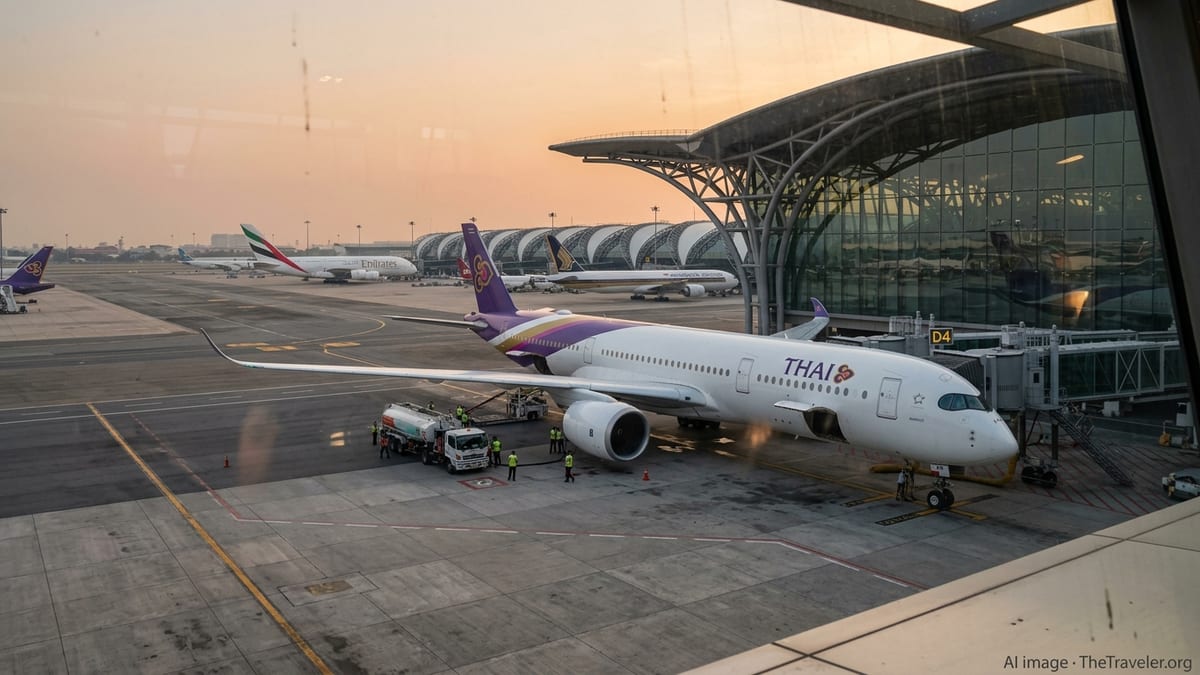
A sudden surge in global jet fuel prices driven by the war in Iran and severe disruption in the Strait of Hormuz is rippling through Asia’s skies, pushing Thai Airways to raise fares and rework its operations in ways that could weigh on Thailand’s tourism recovery in the months ahead.
Get the latest news straight to your inbox!
Middle East Shock Pushes Jet Fuel and Oil Prices Higher
The latest conflict involving the United States, Israel and Iran has severely disrupted oil flows from the Persian Gulf, particularly through the Strait of Hormuz, a chokepoint that handles around one fifth of the world’s seaborne crude. Publicly available data show Brent crude has recently surged back above 100 dollars a barrel, after spiking even higher in mid March, as tanker traffic slowed and key refineries and export terminals across the region were targeted.
Analysts tracking energy markets indicate that the price of refined products such as kerosene, diesel and jet fuel has risen even faster than benchmark crude. Jet fuel prices in major trading hubs have climbed to their highest levels since at least 2022, reflecting both tighter supplies and higher risk premiums on shipping routes that skirt the Gulf. Aviation fuel, which typically accounts for around a quarter of an airline’s operating costs, is suddenly absorbing a significantly larger share of budgets.
Reports by international economic observers describe the current spike as more than a temporary blip. With attacks on energy infrastructure in countries such as Saudi Arabia, Qatar and the United Arab Emirates and near total disruption at times in the Strait of Hormuz, forecasters now see a real possibility that oil and jet fuel prices remain elevated for much of 2026. That prospect is already reshaping airline planning across Asia.
Thai Airways Confronts Rising Costs and Tight Capacity
Thai Airways International, Thailand’s flag carrier, is among the Asian airlines now scrambling to respond. Company financial statements released in late February highlighted exposure to fuel price volatility and outlined new hedging positions extending through the quarters of 2026, aimed at partially insulating the airline from further spikes. Even with hedging, however, the sudden jump in spot jet fuel prices is expected to raise the carrier’s unit costs this year.
Local business media and aviation blogs report that Thai Airways has begun increasing ticket prices on long haul routes, particularly between Bangkok and major European gateways. Some publicly available fare data indicate that one way economy tickets on the Bangkok to London route have more than doubled from low season levels earlier this year, as the airline adjusts base fares and fuel surcharges while also contending with limited seat supply.
Management commentary referenced in domestic financial research points to what is described as overwhelming demand on European and certain Asian routes, partly because many travelers are avoiding connections through Middle Eastern hubs that sit closer to the conflict zone. With competitors from the Gulf temporarily constrained by airspace closures and operational disruptions, Thai Airways is shouldering additional transfer traffic, leaving fewer discounted seats and reducing scope to absorb higher fuel costs without raising prices.
Tourism to Thailand Faces New Price Pressures
Thailand’s tourism sector entered 2026 still in recovery mode, with visitor numbers improving but not yet back to pre pandemic peaks and spending per visitor under close scrutiny by policymakers. Studies published in 2025 by Thai economic think tanks and securities analysts already flagged rising competition from other Asian destinations and a slower than expected return of some key source markets as potential headwinds.
The latest fuel driven airfare increases risk becoming a fresh drag. Higher ticket prices to Bangkok and regional resorts make Thailand less affordable for cost sensitive travelers from Europe, Australia and parts of Asia. Industry research on airports and tourism infrastructure published last year showed that international passenger growth was expected to moderate in 2025 and 2026 even under stable fuel price assumptions; the current spike adds another variable that could temper demand further.
Market observers note that the impact will not be uniform. High spending visitors may absorb higher fares, especially if Thailand is perceived as a safer or more accessible alternative to destinations closer to the Middle East. Budget travelers and large tour groups, however, are more likely to switch to nearer destinations or postpone trips if package prices climb significantly. That could affect beach destinations and secondary cities that rely heavily on charter flights and price sensitive segments.
What Travelers Can Expect in the Coming Months
For travelers planning trips to Thailand in 2026, the most immediate effect is likely to be higher airfares and fewer low cost options, especially on long haul routes from Europe and North America. Publicly visible booking data and online discussions already point to sharply higher economy class prices on some dates, with premium cabins holding up even better amid tight capacity.
Travel industry analysts suggest that, if jet fuel remains expensive, airlines serving Thailand will continue to adjust by increasing fuel surcharges, trimming marginal frequencies and prioritizing routes with the strongest demand and yields. That could mean reduced choice of departure cities or less convenient flight times for some travelers, although Bangkok is expected to retain extensive connectivity as a major regional hub.
Travelers may see more dynamic pricing, with sharper swings between peak and off peak fares as airlines try to match capacity to demand while managing fuel exposure. Those willing to be flexible on dates and routings, or to fly via secondary hubs in East and Southeast Asia rather than the Middle East, may still find relatively competitive prices, but last minute bargains are likely to be scarce.
How Thailand and Its Flag Carrier May Adapt
Thai policymakers and tourism agencies have been promoting a shift toward higher value, longer staying visitors who spend more per trip and place less emphasis on rock bottom airfare. Strategic documents published over the past year describe plans to enhance sustainability, improve infrastructure and diversify source markets, which could help cushion the blow from more expensive flights.
For Thai Airways, the current environment is accelerating longer term restructuring efforts. Public filings highlight ongoing fleet renewal, with more fuel efficient widebody aircraft gradually replacing older jets, as well as investment in digital tools to optimize route planning and load factors. Improved fuel efficiency reduces exposure to price swings over time, even if immediate relief is limited.
Industry commentary indicates that cooperation with other Asian carriers through code shares and alliances may deepen as airlines look to maintain network breadth without bearing all the fuel and operational risk alone. If the Middle East conflict stabilizes and oil flows normalize later in the year, some of the current pressure on fares could ease. For now, though, travelers eyeing Thailand are being advised by many travel advisors and consumer outlets to book early, remain flexible and budget for higher flight costs than they might have expected only a few months ago.