

More news on this day
Escalating conflict centered on Iran, Israel and the wider Gulf is rapidly reshaping global leisure travel, with Turkey, Dubai and the Maldives emerging as front-line casualties of airspace closures, mass flight cancellations and new government warnings.
Get the latest news straight to your inbox!
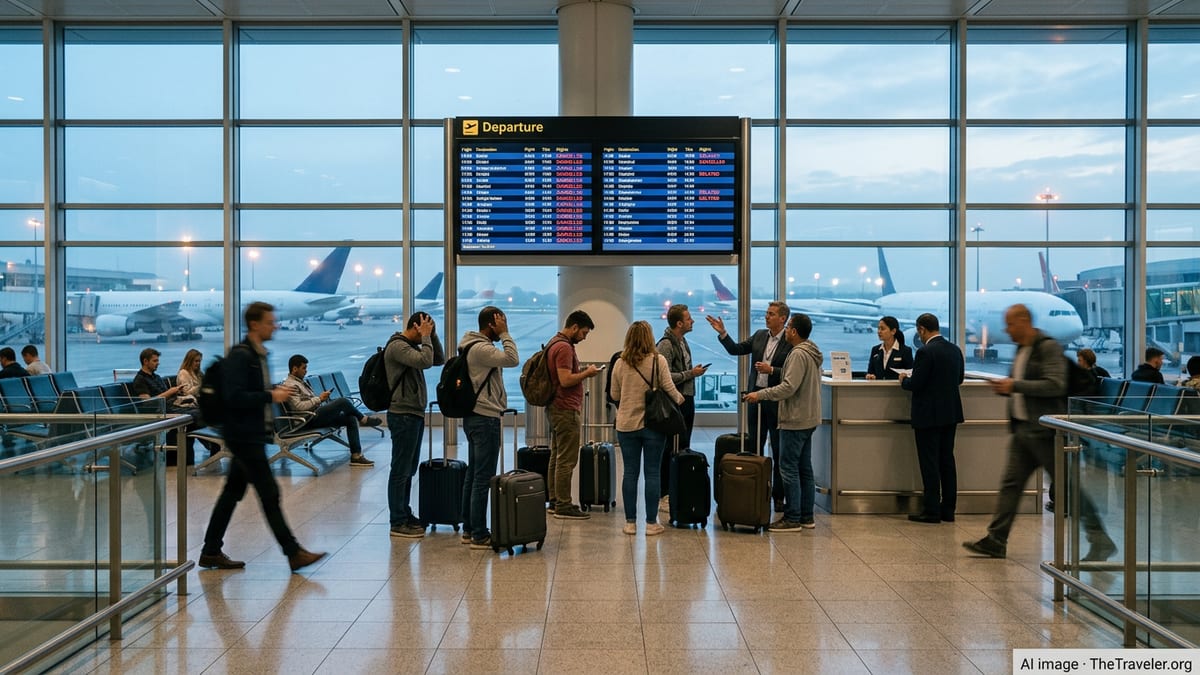
Gulf Airspace Closures Ripple Across Popular Winter-Sun Routes
The latest phase of the Middle East crisis, triggered by strikes between the United States, Israel and Iran from February 28, 2026, has produced the most severe aviation shock to the region since the pandemic. Key Gulf hubs including Dubai, Abu Dhabi and Doha have faced partial shutdowns or heavily restricted operations, forcing airlines to ground or reroute thousands of flights across the busy Europe Asia corridor.
On peak days in early March, analysts estimate more than 3,000 services were cancelled or diverted as airspace over Iran, Iraq, Qatar, Bahrain, Kuwait and parts of the United Arab Emirates was temporarily closed. For leisure travelers planning spring escapes to the beaches of Turkey or onward connections to the Maldives via Gulf hubs, the disruption has translated into abrupt itinerary changes, missed departures and long delays at alternative airports.
Major carriers in the region have begun cautiously rebuilding their schedules, but many are still operating at sharply reduced capacity, prioritizing repatriation and essential travel over new holiday bookings. With routes redrawn around conflict zones, flight times on remaining services between Europe and South Asia have lengthened by up to two hours, pushing up fuel costs and ticket prices just as demand for Easter and early summer trips was peaking.
Travel data firms say the combination of operational uncertainty, volatile fares and dramatic media images of missile interceptions over the Gulf has sent a chill through booking channels. Tour operators in Europe report a surge in inquiries about rerouting via alternative hubs in Istanbul, Athens or Central Europe, and a growing number of customers opting to defer Middle East itineraries altogether.
Dubai’s Tourism Boom Stalls as Hotel Bookings Unravel
Dubai entered 2026 riding record visitor numbers and double digit growth in hotel occupancy, positioning itself as one of the world’s hottest city break and stopover destinations. That momentum has faltered within days as security concerns and airspace restrictions upend the carefully calibrated model that relies on seamless connectivity through Dubai International Airport.
Local tourism officials and hotel operators say cancellations began spiking within hours of reports of Iranian missile and drone attacks aimed at targets in the United Arab Emirates. Corporate groups from Europe and Asia have postponed events, while leisure travelers, particularly families, are asking agents to switch their spring holidays to perceived safer options in the Mediterranean or Southeast Asia.
City hoteliers have responded with heavy discounting, cutting rates to fill suddenly empty rooms just as the high season normally crests. Industry reports suggest some upscale properties have dropped nightly prices by up to 30 percent compared with February levels, a sharp reversal after two years of rising yields and near full occupancy on popular dates.
Despite reassurances from Emirati authorities that air defenses are intercepting most incoming threats and that key tourism districts remain calm, the psychological impact on would be visitors is clear. Travel agents in the United Kingdom and Germany say Dubai, once marketed as a safe bet for winter sun, is now generating more nervous questions than almost any other destination on their books.
Maldives Hit by Transit Disruptions and Nervous Long Haul Travelers
The Maldives, geographically distant from the fighting but deeply dependent on Gulf connectivity, has become an unexpected victim of the Middle East crisis. The vast majority of high spending visitors from Europe and parts of Asia typically reach the Indian Ocean archipelago via one or two stops through Dubai, Doha or Abu Dhabi, using Gulf carriers to bridge the long distances.
As flights through those hubs were curtailed, tourist arrivals to the Maldives dropped sharply. Official figures for the first week of March show a fall of more than 23 percent compared with the same period a year earlier, a dramatic reversal after a strong start to 2026. Resort operators report groups stranded in transit when onward connections were cancelled and an uptick in last minute no shows on stays that had been prepaid months in advance.
In response, the Maldivian government has formed a special cabinet committee to monitor Middle East tensions and their impact on tourism, highlighting how seriously the island nation views the threat to its economic lifeline. Aviation authorities have warned travelers that changing routings at short notice could mean longer journeys and possible overnight stays in third country hubs as airlines reconfigure their networks.
Some European carriers and Asian airlines are exploring or expanding seasonal nonstop services to Malé to bypass the Gulf entirely, but such capacity is limited and often priced at a premium. For now, many would be visitors are choosing to delay or downgrade trips, trading remote private island retreats for destinations closer to home with more stable air links.
Turkey Balances Perception Risk With Alternative Routing Advantage
Turkey occupies a complex position in the unfolding travel map. On one hand, the country shares the broader regional instability narrative in the eyes of some Western travelers, who often lump the wider Middle East and its periphery together when assessing risk. On the other hand, Turkish airports and airlines are benefiting from their location just outside the most heavily restricted air corridors, allowing them to market Istanbul as a safer, still functioning bridge between Europe and Asia.
Tourism businesses along Turkey’s Mediterranean and Aegean coasts say they have fielded a wave of questions from clients anxious about proximity to the conflict and possible spillover. While there have been no direct attacks on Turkish tourist centers, images of missile launches and regional military deployments have prompted some families to cancel or switch to Spain, Portugal or Croatia for their summer beach holidays.
At the same time, Turkish Airlines and other carriers using Istanbul’s mega hub have stepped in to capture traffic displaced from Dubai and Doha, adding capacity on select routes where airspace remains open. Aviation analysts note that some tour operators are actively steering long haul clients through Istanbul, pitching it as a routing that avoids the most volatile Gulf airspace while still offering onward links to destinations such as the Maldives or Southeast Asia.
For Turkey’s tourism sector, the coming months will hinge on whether this repositioning succeeds in offsetting perception driven cancellations. Early booking data for July and August shows a softer than expected pace from some Western European markets, even as arrivals from Russia and parts of the Middle East remain resilient.
Travelers Rethink Risk, Seek Flexibility and Alternative Hubs
The broadening fallout from the Middle East crisis is accelerating deeper shifts in traveler behavior that began during the pandemic. Industry surveys indicate that tourists who previously prioritized price and convenience are now increasingly factoring geopolitical risk, medical capacity and evacuation options into their destination choices, particularly for long haul trips to Turkey, Dubai and the Maldives.
Airlines in North America and Europe have responded with a series of flexible booking waivers for passengers due to travel to or via major Middle Eastern airports in March. These policies typically allow customers to change dates or reroute journeys without standard penalties, and in some cases to cancel for a full refund, though fare differences can still apply on new itineraries.
Travel advisors say clients are showing a marked preference for routes that can be rebooked or refunded quickly if conditions deteriorate, and for packages that include comprehensive insurance with clear coverage for conflict related disruption. There is growing interest in itineraries that avoid single critical hubs, spreading connections across multiple airports in Europe or Asia rather than relying solely on Dubai or Doha as the pivot point.
For destination marketing organizations in Turkey, the Gulf and the Maldives, the challenge now is to reassure skittish travelers without downplaying the genuine operational risks posed by a still fluid conflict. With airlines warning that schedule volatility could persist for weeks, the 2026 high season for these marquee sun and city destinations will likely be defined as much by flexibility and contingency planning as by beaches and skylines.