

More news on this day
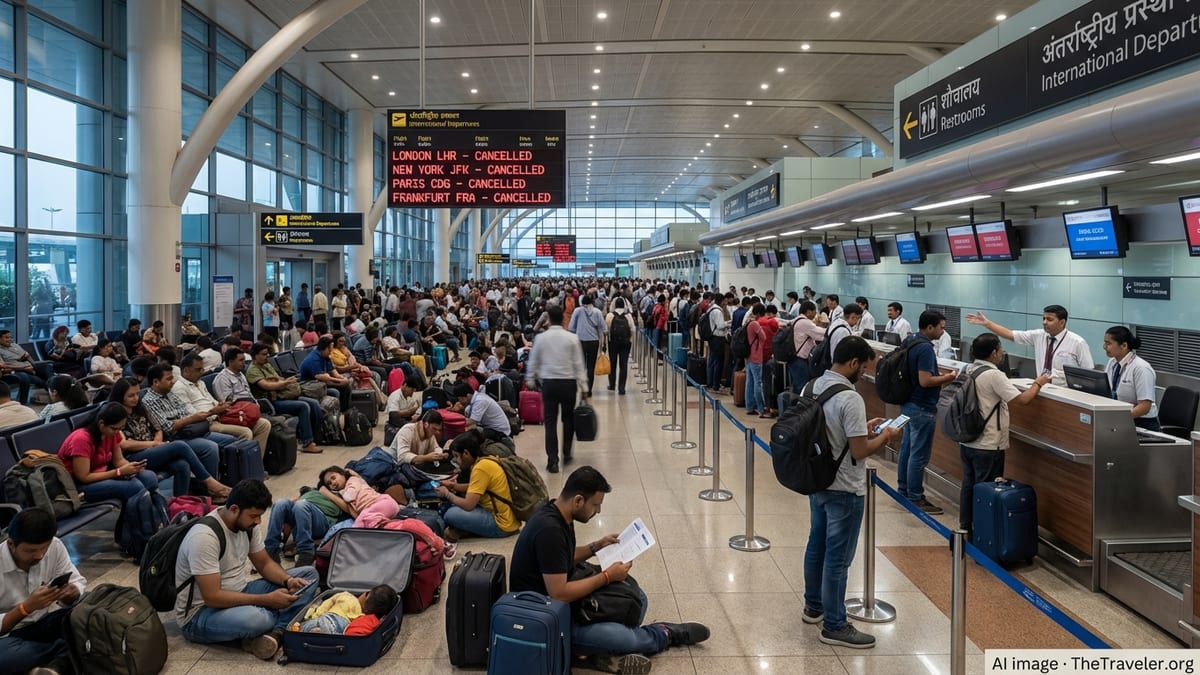
Mumbai’s Chhatrapati Shivaji Maharaj International Airport was plunged into turmoil on Saturday evening as at least 57 flights were abruptly cancelled amid escalating tensions in the Middle East and widespread airspace security restrictions, disrupting major international routes to London, New York, Paris and other global hubs and leaving thousands of passengers stranded and scrambling for alternatives.
Middle East Conflict Shuts Key Air Corridors
The cascading disruption at Mumbai is the latest ripple effect of a rapidly worsening security situation across parts of the Middle East and the Gulf, where airspace closures and restrictions have forced airlines to reroute or ground long-haul services. Indian authorities have warned carriers to steer clear of affected corridors after a sharp escalation in hostilities involving Iran, Israel and the United States, prompting aviation regulators to flag what they describe as a significant increase in security risk along traditional transcontinental flight paths.
Routes from India to Europe and North America typically traverse Middle Eastern skies, making them especially vulnerable when those corridors are shut or heavily restricted. Airlines that depend on these overflight permissions have had to either plot lengthy detours that are operationally difficult at short notice or cancel services altogether. For Mumbai, one of India’s busiest international gateways, the knock-on effect has been immediate and severe.
By early Saturday night, airport officials confirmed that 24 arrivals and 33 departures had been cancelled, with the tally still rising as airlines reassessed their schedules. Several other flights were forced to divert to airports elsewhere in India or in the region before Mumbai’s operators told carriers they could no longer accept additional diverted traffic due to a shortage of parking stands.
The turmoil underscores how exposed South Asia’s aviation network is to volatility in West Asia, where even a brief closure of key airspace can upend long-haul connectivity. Industry analysts say that with conflict zones expanding and risk assessments changing by the hour, planners are running out of viable routing options that remain both safe and commercially sustainable.
Flag Carriers Axe London, New York and Paris Services
Among the most disruptive cancellations for Mumbai travellers were high-demand long-haul departures operated by India’s full-service and low-cost carriers. Air India, which had already announced a sweeping suspension of some international services for March 1, extended its cuts to include marquee links from Mumbai to London Heathrow, New York’s JFK and Newark, as well as Frankfurt and connections feeding into Paris-bound routes through its wider network.
IndiGo’s flagship Mumbai to London service was also grounded, removing a popular nonstop option for business and leisure travellers bound for the United Kingdom. The cancellations from Mumbai formed part of a wider national pullback, with Indian airlines collectively scrubbing hundreds of international flights scheduled for Sunday as they grappled with the closure of large swathes of Middle Eastern airspace.
Air India executives repeated that safety considerations were paramount and that the airline was acting on evolving intelligence and regulatory guidance from India’s Directorate General of Civil Aviation. The regulator has advised operators to avoid identified conflict zones at all flight levels, a restriction that effectively renders some of the most fuel-efficient great circle routes unusable until conditions improve.
Low-cost carriers focusing on Gulf traffic have been hit as well. Akasa Air confirmed that its services between India and Abu Dhabi, Doha, Jeddah, Kuwait and Riyadh would be suspended at least until early next week, affecting thousands of migrant workers and visiting families who depend on frequent, competitively priced flights between Mumbai and the Gulf.
Passengers Sleep on Floors as Airport Reaches Breaking Point
Inside Mumbai Airport’s international terminals, the impact of the cancellations was visible within hours. Long lines formed at airline counters as passengers jostled for information, rebooking options and hotel vouchers. With many services scrubbed at short notice, some travellers only discovered that their flights had disappeared from departure boards when they arrived at check in.
By late evening, terminal seating areas were overflowing, with families stretched out on the floor, trying to sleep amid announcements and the glow of information screens. Travellers reported waits of several hours to speak with airline staff, many of whom were themselves struggling to keep up with constantly changing operations plans and limited guidance on when normal schedules might resume.
Overseas passengers transiting through Mumbai were particularly hard hit. Some had already flown in from other Indian cities en route to London, New York or European destinations, only to find their onward legs cancelled with no immediate alternatives. Several airlines said that given the scale of the crisis, there were few spare seats on remaining international services, while the possibility of rerouting via Southeast Asia or other indirect paths was constrained by aircraft availability and crew duty limits.
Airport authorities said they were coordinating with airlines to prioritise vulnerable travellers, including the elderly and families with young children, for accommodation and assistance. However, with hotels near the airport quickly filling up, many passengers resigned themselves to spending the night in the terminal, clutching boarding passes that were suddenly useless.
Spiralling Fares and Limited Alternatives
For those still hoping to leave Mumbai over the weekend, the cost of escape has climbed sharply. Online travel agencies and fare trackers showed one way economy tickets to London on the few remaining operating services from India surging to as high as the equivalent of around 1,700 US dollars on Saturday afternoon, with prices on some Gulf routes also spiking as capacity vanished.
Travel agents said that even experienced corporate travellers were shocked by the scarcity of options. With multiple Indian and foreign carriers cancelling or radically rerouting flights, the usual workarounds such as connecting via the Gulf, Istanbul or major European hubs have become unreliable or financially prohibitive. Some passengers have opted to defer their trips entirely rather than pay inflated last minute fares that may still be subject to disruption.
The crunch has revived questions about the resilience of India’s long haul aviation model, which relies heavily on a handful of strategic corridors. As airlines rushed to recalculate flight times and fuel loads for longer detours that loop south of active conflict zones, they faced the challenge of operating schedules that were planned for far shorter great circle distances only days earlier.
Aviation consultants warn that sustained closure of key Middle Eastern airspace would not only keep fares elevated but also threaten the viability of some thin long haul routes, as carriers weigh whether passengers will tolerate both higher prices and extended journey times. For now, most airlines are treating the current wave of cancellations as a short term safety response, but they acknowledge that further changes are possible if tensions escalate.
Regulators and Airlines Weigh Next Steps
As the disruption played out in terminals, attention turned to how long the present pattern of cancellations might last. India’s civil aviation regulator has said it is in continuous contact with airlines and international partners as it monitors security developments and the status of airspace closures. While no firm timeline has been offered, officials have stressed that the avoidance of high risk zones will remain non negotiable.
Airlines are conducting rolling risk assessments, drawing on intelligence briefings and guidance from global aviation bodies. Their operations teams are modelling alternate routings that skirt conflict areas, evaluating whether the additional flying time, fuel burn and crew costs can be absorbed without making flights uneconomical. In many cases, they face a difficult choice between cancelling services outright or operating with severe delays and schedule knock on effects.
For passengers in Mumbai hoping to travel to Europe or North America in the coming days, the advice from travel professionals is to stay in close contact with airlines, avoid heading to the airport until flight status is confirmed and be prepared for last minute changes. Many carriers are offering free rebooking, date changes and in some cases full refunds, but the process of processing such a large volume of disrupted journeys is expected to stretch well into next week.
In the meantime, Mumbai Airport remains a vivid example of how swiftly a distant geopolitical flashpoint can paralyse one of the world’s busiest aviation markets. Until Middle Eastern skies reopen and security assessments stabilise, thousands of would be travellers from India’s financial capital face an uncertain wait before they can resume their journeys.