

More news on this day
Rapidly escalating conflict centered on Iran is rippling across the Gulf, with Saudi Arabia now joining Iraq, Iran, Bahrain and Oman in a widening crisis that has prompted U.S. embassies to blast out urgent security alerts, order Americans to shelter in place or depart immediately, and warn of mounting disruptions to flights, ports and overland routes throughout the region.
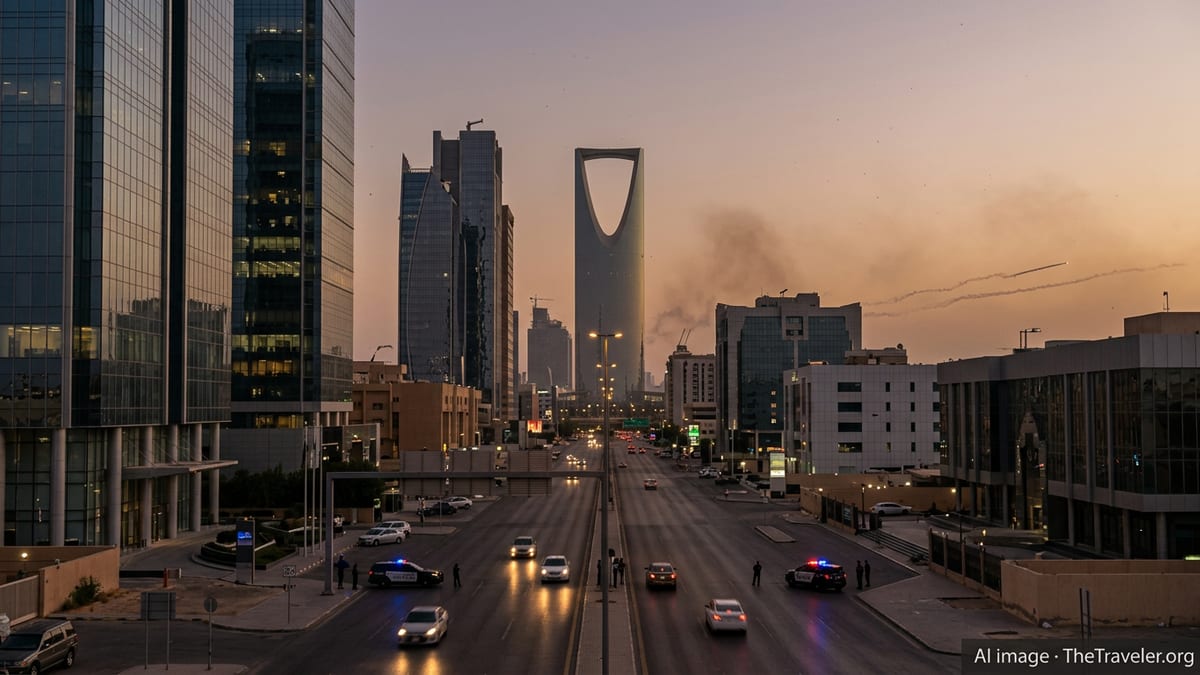
Embassies Issue Urgent Alerts as Missile Threat Grows
Since U.S. and Israeli forces launched coordinated strikes on Iran on February 28, 2026, Gulf countries have been hit by waves of retaliatory drones and missiles targeting American interests and critical infrastructure. Saudi officials confirmed that the U.S. Embassy compound in Riyadh was struck by suspected Iranian drones on March 3, sparking a fire but causing no reported casualties. In Iraq’s Kurdish region, Iranian salvos have repeatedly targeted the U.S. Consulate in Erbil and nearby coalition facilities, while Bahrain and Oman report interceptions and impacts near strategic ports and energy assets.
U.S. embassies in Saudi Arabia, Iraq, Iran, Bahrain and Oman have responded with near-daily security alerts, warning of continuing missile and unmanned aerial vehicle threats, possible follow-on attacks against diplomatic facilities, and rapidly shifting local curfews and movement restrictions. Messages pushed out via email, SMS and social media are urging Americans to review emergency plans, stay away from government buildings and known Western gathering spots, and be prepared to move quickly if safe departure options emerge.
The State Department has activated a rare, globally focused “worldwide caution,” underscoring the broader risk to Americans in the Middle East and beyond. Officials stress that real-time embassy alerts, rather than baseline travel advisories alone, now provide the clearest picture of fast-changing on-the-ground conditions as air defenses engage incoming missiles across multiple countries.
Ordered Departures and Shelter-in-Place Instructions
In Washington, the State Department has ordered the departure of nonessential U.S. diplomatic staff and family members from missions across the region, including the embassy in Riyadh and posts in Iraq and Oman. Additional personnel in Bahrain and other Gulf states have been authorized to leave, making this one of the largest drawdowns of American diplomats in the Middle East since the Iraq War.
For private citizens, the language is stark. Security messages from embassies in Saudi Arabia, Iraq, Iran, Bahrain and Oman urge Americans to “depart immediately” using commercial options where available, or to shelter in place if fighting or airspace closures make travel unsafe. In Saudi Arabia, Americans in Riyadh, Jeddah and Dhahran were instructed to remain indoors, avoid embassy compounds and monitor local media after the drones struck the diplomatic complex. In Iraq, similar alerts have told U.S. nationals to avoid the Green Zone and other areas that could be targeted in additional strikes.
In several affected countries, waiting out the violence is increasingly the only realistic option. Local authorities have at times imposed movement bans during active air raids, while the risk of misidentification at roadblocks or checkpoints adds to the danger of overland travel. U.S. officials are urging citizens to ensure that travel documents are up to date, assemble “go bags” with essentials, maintain charged phones and battery packs, and enroll in the Smart Traveler Enrollment Program to receive direct embassy updates if internet or cellular service degrades.
Airspace Closures and Grounded Flights Paralyze Travel
Airspace restrictions across the Gulf are now at the heart of the crisis for travelers. Several Gulf states, including Saudi Arabia, Bahrain and Kuwait, have intermittently closed or severely restricted their airspace in response to incoming missile and drone activity and air defense operations. National carriers in Saudi Arabia and neighboring countries have suspended routes across key regional corridors, particularly flights touching Iraq, Iran, Bahrain, Oman and other conflict-adjacent destinations.
The result is a patchwork of cancellations, last-minute diversions and extended reroutings that have left airports jammed with stranded passengers. Travelers report overnight queues at ticket counters in Riyadh, Dammam and Manama as airlines struggle to rebook passengers around shuttered skies. Where flights are still operating, they often follow elongated paths skirting the northern Gulf and the Strait of Hormuz, adding hours to journey times and tightening crew scheduling constraints.
In Oman and Bahrain, commercial disruptions are compounded by attacks near major ports and logistics hubs. Drone strikes on Omani port facilities and missile threats in Bahrain’s airspace have forced some carriers and cargo operators to suspend operations entirely. Aviation analysts warn that as long as Iranian projectiles continue to threaten regional air corridors, insurance costs and risk assessments may keep airspace effectively closed even without formal government declarations, making rapid normalization of flights unlikely.
Scramble for Exit Routes Across Land and Sea
With skies unreliable or off-limits, many Americans and other foreign nationals are turning to overland and maritime routes to escape the region. In the northern Gulf, highways linking Kuwait, Iraq and Turkey have seen surges in traffic as travelers attempt to reach airports in cities whose airspace remains open. In the lower Gulf, bridges and causeways, including the vital link between Bahrain and Saudi Arabia, have become critical pressure valves for those trying to move from hard-hit states to comparatively safer hubs.
These ad hoc exit corridors are themselves under considerable strain. Reports from travelers describe multi-hour backups at border checkpoints, fuel shortages along key desert routes and sporadic closure of crossings during periods of heightened alert. In Oman and along Saudi Arabia’s Gulf coast, some travelers have explored options to leave by sea, boarding ferries or chartered vessels toward less affected ports, though maritime traffic through the Strait of Hormuz is also sharply reduced due to security concerns.
U.S. officials say they are working with allied governments to organize assisted departure flights and overland convoys where feasible, prioritizing the most vulnerable citizens and those in locations facing active bombardment. Travelers are being advised to avoid unofficial evacuation offers and to coordinate only through embassy channels or trusted employers, particularly as criminal groups may seek to exploit the chaos with scams or high-risk smuggling operations.
What the Crisis Means for Future Travel to the Gulf
The conflict is already reshaping the travel landscape across the Middle East, even for destinations not directly under fire. Industry analysts expect a sustained downturn in tourism and business travel to Saudi Arabia, Iraq, Iran, Bahrain and Oman, as well as to nearby hubs like the United Arab Emirates and Qatar, as travelers reassess risk and insurers raise premiums on trips and operations in the region.
Airlines and tour operators that had invested heavily in the Gulf’s pre-crisis tourism boom are now in triage mode, cutting capacity, waiving change fees and adjusting schedules on a rolling basis. Major hotel brands report a wave of cancellations from corporate travelers and meetings planners, while travel management companies are redirecting long-haul itineraries away from Gulf transit points where possible. Some carriers have begun repositioning aircraft to European and Asian routes less exposed to Middle Eastern overflight risks.
For prospective travelers, officials and experts say the key takeaway is that conditions are fluid and could shift quickly with little warning. Those with nonessential trips to Saudi Arabia, Iraq, Iran, Bahrain and Oman are being urged to defer travel until security and airspace conditions stabilize. Travelers with unavoidable journeys are advised to build in extensive contingency time, purchase flexible tickets that allow rerouting, and remain in close, daily contact with airlines, employers and embassies as the crisis continues to unfold.