

More news on this day
A widening conflict centered on Iran and neighboring Gulf states is rapidly reshaping global travel in early 2026, as airspace closures, surging fuel prices and sweeping security advisories trigger unprecedented flight cancellations, higher airfares and widespread uncertainty for travelers worldwide.
Get the latest news straight to your inbox!
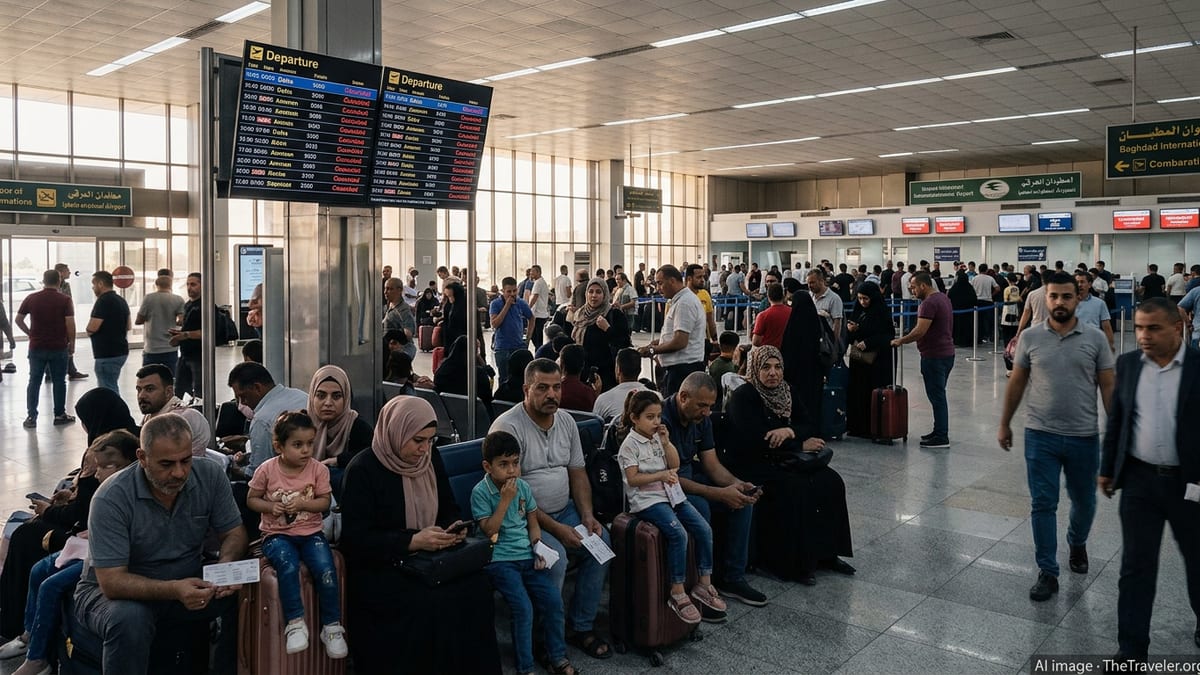
Airspace Closures Turn a Regional War into a Global Flight Shock
What began as a regional military confrontation has quickly become a global aviation crisis. Publicly available flight-tracking data and industry analyses indicate that airspace over Iran, Iraq, Syria, Israel and parts of the Gulf has been sharply restricted or closed, effectively shutting one of the world’s busiest long-haul corridors linking Europe, Africa and Asia. Major Gulf hubs that once functioned as seamless transit points are now operating at sharply reduced capacity or have suspended parts of their operations.
Reports summarizing the economic impact of the 2026 Iran war describe how missile and drone attacks, along with the temporary closure of the Strait of Hormuz, disrupted airports and energy infrastructure across the region. Several Gulf states and Israel closed their airspace after large-scale strikes, forcing airlines to divert or cancel flights at short notice. Aviation-focused outlets note that the central Middle East corridor has in practice ceased to function for routine commercial overflights, compelling carriers to redesign global schedules in real time.
The scale of the disruption is drawing comparisons with the early months of the COVID-19 pandemic. Industry tallies cited in recent coverage suggest that tens of thousands of flights linked to the Middle East conflict have been canceled worldwide so far in 2026, stranding passengers as far away as Europe, North America and East Asia. Analysts highlight that a relatively concentrated conflict has had outsized consequences because the affected hubs previously handled a substantial share of global connecting traffic.
Repatriation operations are underway on multiple fronts. Cruise operators have arranged charter flights from Dubai to return guests after ships were unable to depart as planned, while governments are using a mix of commercial seats and special flights to help citizens leave high-risk areas. For ordinary travelers, the immediate effect is a sharply reduced choice of routes through the Middle East, widespread schedule changes and lengthy delays in reaching or departing the region.
Skyrocketing Fares as Fuel Prices and Detours Bite
As airlines scramble to reroute around closed airspace, the costs of staying aloft are rising sharply. Analysis from aviation and energy observers shows that the closure of the Strait of Hormuz and attacks on oil infrastructure have driven global benchmark oil prices sharply higher since early March 2026. Trade and logistics briefings report Brent crude moving past 120 dollars a barrel, while jet fuel costs have climbed even faster, in some cases doubling from late 2025 levels.
Airline cost models suggest that fuel already accounts for roughly 20 to 35 percent of an airline’s operating expenses. With fuel prices spiking, carriers are introducing emergency surcharges, trimming capacity and prioritizing the most profitable routes. Independent calculators and aviation newsletters tracking the fallout estimate that average long-haul fares between Europe and Asia have risen by around 18 to 25 percent since January, with some high-demand city pairs seeing even steeper increases.
Detours around the Middle East are compounding the problem. Industry guidance and route-mapping exercises show many flights that once crossed Iran and neighboring states now looping north over Central Asia or south via Egypt and East Africa. These diversions can add several hours to a journey and require up to 15 to 25 percent more fuel per rotation, according to recent technical briefings. The added cost is feeding directly into ticket prices, especially for business and last-minute travelers.
Travelers are feeling the impact on both cash and time. Data shared by fare-watch platforms and travel agencies points to price spikes on alternative corridors such as transpacific routes and services via northern Europe, as demand is displaced from the traditional Gulf hubs. In some markets, promotional fares have disappeared altogether for spring and early summer, replaced by dynamic pricing that reflects tight capacity and ongoing uncertainty about future airspace availability.
Cancellations, Stranded Passengers and Tourism Chaos
Alongside soaring fares, outright cancellations have become a defining feature of the 2026 travel season. Global flight-disruption trackers cited by travel-law specialists recorded a sharp jump in cancellations on Middle East and adjacent routes in March, with some estimates suggesting a year-on-year increase of more than 200 percent for key intercontinental corridors. Several flagship European and Asian airlines have suspended services to multiple cities in the region for weeks or months, while major Gulf carriers are operating significantly reduced schedules.
Reports from industry analysts and travel media indicate that some airlines have already announced cancellations or suspensions on dozens of routes touching the Gulf and Levant, extending in some cases to the end of the summer season. British and European carriers have pulled back from destinations including Dubai, Bahrain, Amman and Tel Aviv for extended periods, according to published timetables. Similar measures have been reported by North American and Asian airlines, which have either suspended flights to the region or rerouted them via alternative hubs.
The effect on tourism has been immediate. Destination marketers and hotel groups report a wave of cancellations for leisure trips to Middle Eastern beach resorts, religious sites and city-break hotspots. Travel advisories and insurance restrictions are discouraging new bookings, while conferences, sports events and large-scale exhibitions scheduled for the region in 2026 are being postponed, relocated or moved online. The timing is especially disruptive for destinations that rely heavily on spring and early summer visitor peaks.
Beyond the region itself, the shock is rippling through tourism-dependent economies that rely on seamless connections via Gulf hubs. Countries in East Africa, South Asia and Southeast Asia that were heavily served by Middle Eastern carriers are now seeing fewer arrivals and longer, more expensive itineraries for the visitors who still come. Travel economists warn that if the conflict and associated airspace closures persist into the high summer season, the combined impact on airlines, hotels, tour operators and local businesses could reach levels not seen since the early 1990s Gulf conflict.
Security Advisories, Insurance Limits and Where Travel Is Most Affected
Alongside operational disruption, a fast-moving security landscape is shaping where people can and will travel. The United States and several other governments have updated or expanded advisories covering a broad swath of the Middle East. According to publicly available summaries of March 2026 guidance, U.S. citizens are being urged to leave multiple countries across the region as soon as commercial options allow, and several destinations, including Lebanon and Yemen, remain under the highest “Do Not Travel” level.
Consumer-facing travel safety roundups compiled from official advisories highlight a long list of affected destinations, including Israel, the West Bank and Gaza, Lebanon, Iraq, Syria and parts of the Gulf. These warnings are not formal bans, but they have concrete consequences. Many insurance policies either exclude cover for trips to places under top-tier advisories or require special waivers and surcharges. Some travelers are finding that their existing policies will not cover cancellations if they book new trips into high-risk zones after advisories have been updated.
Embassy and consular services are also constrained. Immigration and mobility bulletins report that several diplomatic missions across the Middle East have temporarily closed to the public or drastically reduced visa appointments due to security concerns. This means that even travelers hoping to visit relatively stable neighboring states may face extended delays in securing the necessary documents. Business travel, religious pilgrimages and study-abroad plans are all being disrupted as a result.
The net effect is a patchwork map of accessibility. While some tourism-dependent states on the region’s periphery continue to welcome visitors and promote specific resort areas as safe, many travelers are choosing to avoid the broader region altogether. Online booking data, as summarized in trade press coverage, shows a noticeable shift to alternatives in southern Europe, East Asia and the Americas, as consumers seek destinations that feel less exposed to rapidly changing security conditions.
What Travelers Can Do Now: Rerouting, Rights and Risk Management
For travelers planning or already holding bookings, navigating the crisis requires a combination of flexibility and careful attention to small print. Travel-law guides synthesizing airline and government rules advise checking itineraries at least daily in the week before departure, as schedules are being updated frequently in response to new airspace and security developments. Many airlines are offering fee-free changes or vouchers for itineraries routed through the Middle East, especially where flights have been canceled outright.
Passenger rights vary significantly by point of departure. Consumer advocates note that travelers starting in the European Union or United Kingdom may be protected by compensation and care rules when flights are delayed or canceled, although armed conflict and airspace closures can place some disruptions into legal grey areas. Elsewhere, refunds and rebooking options are largely governed by airline policies and any additional coverage purchased through travel insurance or credit cards.
Risk specialists and travel-management firms encourage travelers to diversify routing where possible, choosing itineraries that avoid reliance on a single hub or airspace corridor. For long-haul trips between Europe and Asia, that can mean selecting connections through northern Europe, Central Asia or East Asia, even when the routing seems less direct. While these options are often more expensive in the current market, they may offer greater resilience if Middle Eastern airspace restrictions tighten without warning.
Above all, industry experts stress the importance of documenting every stage of a disrupted journey, from airline notifications to extra accommodation and transport costs. This evidence can be critical when seeking refunds, compensation or insurance payouts in a complex, fast-evolving situation. With the conflict still unresolved and key aviation chokepoints under strain, most forecasts suggest that volatility will remain a defining feature of international travel through at least the coming months.