

More news on this day
Escalating tensions across the Middle East are rapidly reshaping cruise travel in the Arabian Gulf and Red Sea, with cancellations, diverted ships and disrupted air links now affecting thousands of global travelers who expected smooth winter sun sailings from Dubai, Doha and other regional hubs.
Get the latest news straight to your inbox!
Rapid Cancellations Across the Arabian Gulf
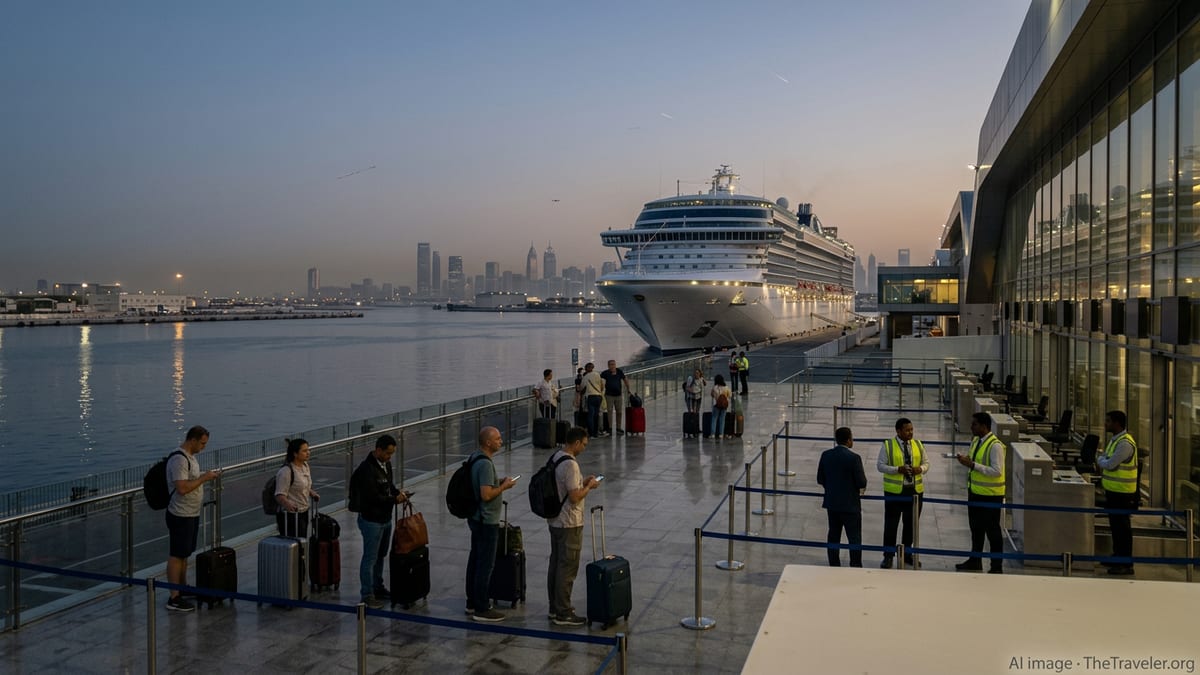
The Arabian Gulf, once marketed as a reliable winter playground for cruise passengers, is experiencing an abrupt pullback as cruise operators suspend remaining 2025 and early 2026 sailings. Recent industry updates indicate that multiple international lines have curtailed or cancelled the balance of their Gulf seasons, citing regional security risks and operational constraints in key waters and nearby airspace.
Coverage from cruise trade publications shows that scheduled voyages visiting ports in the United Arab Emirates, Qatar and Bahrain have been withdrawn in quick succession. Ships that had been positioned in Dubai for week-long Gulf itineraries through early spring are being reassigned to other regions, or are returning to Europe and Asia without passengers on board. These adjustments are leaving travel agents and guests with little advance notice as departure dates approach.
Regional news and specialist cruise outlets report similar decisions by European brands that had planned large deployments to the Gulf for the 2025 to 2026 winter season. Aroya Cruises has cancelled its upcoming Arabian Gulf program entirely, while other lines are understood to be reviewing their long-term presence in the region as they weigh schedule reliability against a fluid security outlook.
Industry commentary suggests that, while the Gulf cruise market had been expanding quickly from homeports such as Dubai and Abu Dhabi, the current wave of cancellations may slow that growth for several seasons. Travelers who once viewed the region as a stable winter alternative to the Caribbean are now grappling with uncertainty over whether advertised itineraries will actually operate.
Red Sea Risks and the Rerouting of Global Itineraries
The latest disruption in the Gulf is closely tied to the broader Red Sea crisis, where attacks on commercial shipping around the Bab al Mandab Strait and Gulf of Aden have already triggered widespread rerouting of cruise vessels. Maritime security assessments over the past year describe a sharp reduction in transit through the southern Red Sea, with the vast majority of cruise ships diverting away from the area.
Trade reports on port and shipping activity note that passenger vessels have been among the first to change course, often abandoning traditional repositioning routes between Europe and Asia that relied on the Suez Canal and Red Sea as a key bridge. Cruise lines began cutting Red Sea ports from world cruises and grand voyages in 2024, and more recent coverage shows those detours hardening into long-term deployment changes as new security incidents emerge.
Documents from industry and maritime risk bodies highlight that navies and insurers continue to treat the corridor as high risk, even during lulls in attacks. This environment has made it increasingly difficult for cruise operators to guarantee safe and predictable passage for both guests and crew. As a result, some lines are sending ships the long way around Africa, while others are redesigning itineraries entirely to keep vessels within the Mediterranean or Asia rather than attempt a risky transit.
For travelers, the consequences ripple well beyond the Red Sea itself. Sailings that once linked Dubai with Mediterranean ports, Indian Ocean islands and Southeast Asia are being reconfigured or removed from sale, narrowing options for complex, multi-region cruise holidays and complicating round-the-world planning.
Airspace Restrictions and Stranded Passengers
The current phase of disruption is not limited to the sea. Recent operational advisories for the Middle East describe widespread airspace closures or restrictions across parts of the Gulf, with several countries temporarily suspending commercial flights. Regional port and logistics bulletins published in early March 2026 note that while many seaports remain open, air travel in and out of some Gulf states is severely constrained.
Travel industry coverage in early March describes how these flight suspensions have created unexpected bottlenecks for cruise passengers ending or beginning voyages in the region. With airlines cancelling services and rerouting away from affected airspace, some travelers have found themselves stuck on board ships or in hotels awaiting alternative arrangements. The knock-on effect has included missed connections, extended stays and complex rebooking processes as cruise operators and travelers work within limited aviation capacity.
Port circulars also reference tighter rules around crew changes and movements between ports, hotels and airports, particularly in the United Arab Emirates and Qatar. While core cargo and container operations continue under heightened security protocols, the reduced flexibility for crew and passenger transfers is adding another layer of complication for cruise scheduling and turnaround operations.
For international travelers, these airspace restrictions mean that even sailings that proceed as planned can be affected by last-minute flight changes. Guests may need to depart earlier than usual, allow additional time in transit hubs, or brace for itinerary adjustments if regional airports remain closed or heavily constrained.
How Cruise Lines Are Repositioning Ships and Seasons
Faced with volatile conditions in the Red Sea and Gulf, many operators are shifting capacity to markets viewed as more predictable in the short term. Industry news outlets report that Costa Cruises, for example, has reprogrammed the Costa Toscana to remain in the Western Mediterranean instead of operating a planned Gulf winter schedule, offering week-long itineraries that focus on southern Europe and parts of North Africa.
Other brands that had intended to base ships in the UAE for the 2025 to 2026 season are now using those vessels in the Canary Islands, Northern Europe, or the broader Mediterranean. Cruise business coverage of deployment plans indicates that companies are prioritizing regions where port access is stable, air connectivity is robust, and insurance conditions are more favorable.
Earlier decisions to remove Red Sea segments from world cruises and long repositioning voyages have now broadened into more systemic changes in where ships spend the winter months. Reports on recent schedule updates highlight that some lines have effectively disconnected their European and Gulf programs, rather than relying on the Red Sea corridor as a through route, reducing future exposure to sudden closures.
While these alterations can provide more certainty for travelers booking Mediterranean or Atlantic sailings, they also reduce the diversity of itineraries on offer. Enthusiasts who valued the opportunity to combine Gulf cities, Suez transits and visits to Egypt or Jordan on a single voyage may find those options restricted or absent for at least the next season.
What Global Travelers Should Watch Before Booking
For travelers considering cruises touching the Middle East, experts quoted in recent travel and cruise coverage emphasize the importance of flexibility and close attention to timing. Many operators are currently taking a conservative approach to the winter 2025 to 2026 season, preferring to cancel or redeploy ships months in advance rather than risk abrupt changes later. This provides some clarity, but it also means that itineraries advertised today may still be subject to revision if the regional security picture shifts again.
Advisory notes from maritime and travel risk analysts suggest that travelers should monitor official travel advisories, insurance conditions and cruise line schedule updates in parallel. Some policies may treat changes linked to geopolitical events differently from standard cancellations, and coverage limits can vary between regions. Travel media reports underline that, in several recent cases, passengers affected by Middle East disruptions were offered rebooking options, future cruise credits or refunds, but the details differed by line and by sailing.
Prospective guests are also being encouraged by industry commentators to consider the complexity of their wider plans. Cruises that rely on tight flight connections through Gulf hubs or that include multiple regional land stays are inherently more exposed to sudden airspace or port restrictions. In contrast, voyages that begin and end in Europe, with only a planned transit through the Suez Canal, may see fewer last-minute changes if lines continue to avoid the highest-risk zones.
Despite the turmoil, cruise demand remains robust globally, and several reports stress that the sector has repeatedly adapted to regional crises by rerouting ships and developing alternative itineraries. For now, however, the combination of Red Sea insecurity, Gulf airspace restrictions and rapidly evolving deployment plans means that travelers eyeing Middle East cruises should treat schedules as provisional, read the fine print carefully and remain prepared for change.