

More news on this day
TUI Cruises has cancelled the second leg of a high-profile repositioning voyage out of the Arabian Gulf, underscoring how rapidly worsening security conditions in the Middle East are disrupting cruise schedules, stranding ships and forcing thousands of holidaymakers to rethink their spring travel plans.
Get the latest news straight to your inbox!
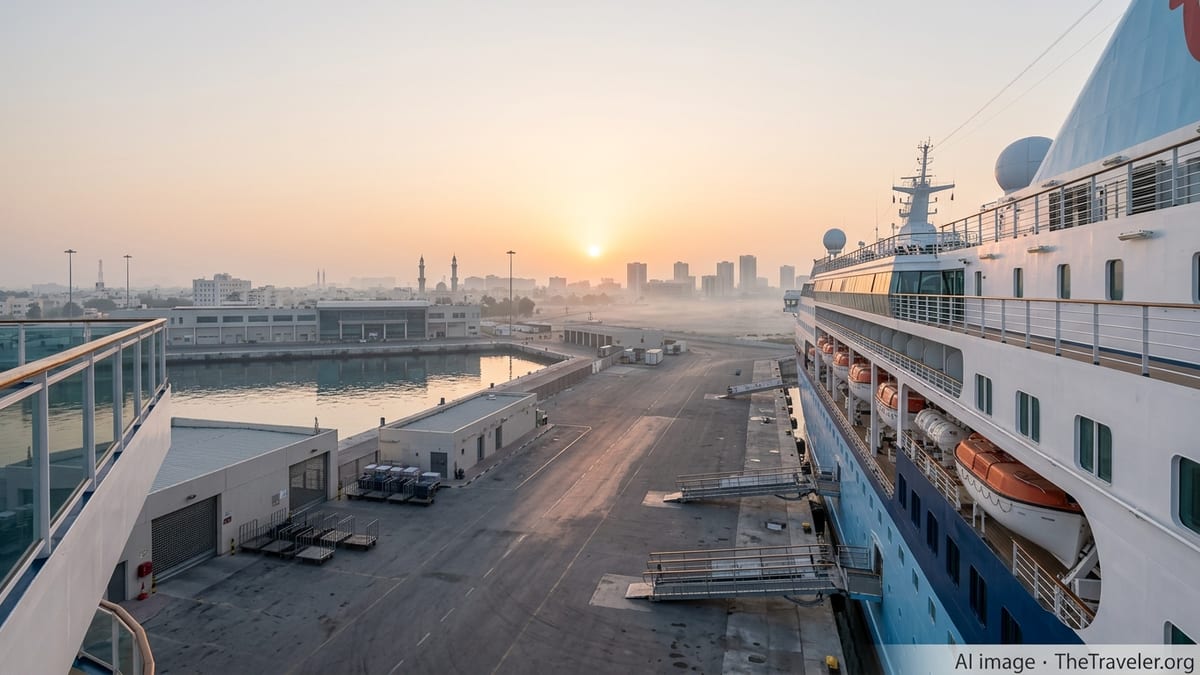
Second Leg Scrapped As Gulf Crisis Deepens
Publicly available information indicates that TUI Cruises has abandoned the onward leg of a planned repositioning voyage that was due to take a Mein Schiff vessel from the Arabian Gulf toward its European deployment, after regional tensions made passage through critical waterways untenable.
The decision follows the wider suspension of TUI’s Arabian Gulf operations for Mein Schiff 4 and Mein Schiff 5, which have remained in Abu Dhabi and Doha respectively as cruise programs in early March 2026 were halted. Reports from industry publications describe voyages scheduled to depart in the first half of March as unable to proceed, with affected sailings either shortened, converted into port stays, or cancelled outright as the situation around the Strait of Hormuz deteriorated.
The cancelled second leg is understood to have been part of a longer repositioning plan that would normally shift tonnage from winter seasons in the Gulf back to the Mediterranean and Northern Europe in time for the late spring and summer market. Instead, the ship’s transition to its next region has been paused, with the original through voyage no longer available to booked guests.
Recent coverage of the 2026 Strait of Hormuz crisis notes that major cruise brands temporarily stopped using the chokepoint altogether, mirroring container lines that have diverted or suspended sailings. Against that backdrop, TUI’s decision to cut the second leg of a repositioning itinerary reflects a broader retreat from contested waters rather than an isolated schedule tweak.
Passengers Face Itinerary Shocks And Rebooking Challenges
For guests booked on the now-cancelled continuation of the voyage, the sudden end of the cruise program in the Gulf has created a cascade of rebooking and refund questions. Travel law analysis in German consumer media has highlighted that, as with other recent short-notice cruise cancellations, standard package travel rules generally apply, with passengers entitled to reimbursement of payments for services not delivered and, in many cases, assistance in arranging alternative travel home.
Reports indicate that guests on affected TUI sailings have remained on board while ships are held in port, with onboard life continuing in a modified form as operators work through the logistics of disembarkation and onward travel. In parallel, cruise lines are adapting their handling of future voyage credits, partial refunds and rebooking offers as they reassess deployment plans for the rest of 2026.
The cancellation of the second leg of a repositioning voyage is particularly disruptive for long-haul guests who had planned extended back-to-back itineraries, using the cruise not only as a holiday but also as a one-way journey between regions. Travel forums show that similar Red Sea and Gulf route cancellations by various lines over the past year have left some travellers scrambling for last-minute long-haul flights when repositioning segments were removed.
Insurance implications are also coming into sharper focus. Commentators note that many standard policies exclude events categorized as war or armed conflict, potentially limiting payouts for additional air or hotel costs incurred because a cruise cannot complete its intended route through a conflict zone.
Strategic Shift Away From Suez And The Red Sea
TUI’s current disruption fits into a longer-running reorientation of cruise deployment away from the Suez Canal and Red Sea corridor. Earlier planning for late 2025 and 2026 already showed the company rerouting several repositioning cruises to avoid the Red Sea, with itineraries for ships such as Mein Schiff 4, Mein Schiff 5 and Mein Schiff 6 redesigned to run around the southern tip of Africa instead of through Suez.
Coverage from cruise specialist outlets over the past year has detailed how multiple TUI repositioning voyages originally scheduled to transit the Suez Canal were cancelled or replaced by new routes calling in the Seychelles, Mauritius, La Réunion, Cape Town and Atlantic islands. Those changes were initially driven by security concerns in the Red Sea, where attacks on commercial shipping prompted many operators to reconsider the safety and reliability of passage.
The abrupt loss of the second leg on the current Gulf-to-Europe repositioning underscores that even contingency plans can be overtaken by sudden escalations. While TUI had already moved to de-risk parts of its network by favoring African and Indian Ocean corridors, the latest crisis in and around the Strait of Hormuz has limited options further, effectively trapping vessels in regional ports until a safe exit strategy is identified.
Industry observers suggest that the episode may accelerate a medium-term reshaping of cruise geography, with winter seasons in the Arabian Gulf subjected to closer risk assessments and more conservative scheduling, and shoulder-season repositioning voyages through sensitive chokepoints becoming rarer.
Broader Shock To Middle East Tourism And Ports
The interruption of TUI’s repositioning plans has knock-on effects far beyond its own passenger base. Gulf tourism hubs such as Dubai, Abu Dhabi and Doha have spent years building cruise terminals, shore excursion infrastructure and hospitality offerings geared toward winter cruise calls and turnarounds. The sudden pause in operations from multiple cruise brands removes a seasonal stream of visitors that feed hotels, restaurants, retailers and local transport providers.
Regional travel trade reports describe a cluster of lines, including TUI, MSC and Celestyal, cancelling or curtailing Middle East sailings as the security climate worsened in late February and early March 2026. With several ships effectively immobilized, ports that had anticipated busy late-season traffic are instead handling extended lay-ups and assisting with complex repatriation efforts.
The economic impact is still being quantified, but industry commentary points to multi-million-euro losses across the wider ecosystem. Cruise visitors typically book pre- and post-cruise stays, day tours into the desert or cultural attractions, and significant retail and dining spend. The removal of a full repositioning leg, often featuring high onboard occupancy, means a substantial volume of that demand has simply disappeared from the regional pipeline this spring.
At the same time, the episode has focused attention on how quickly demand can shift when itineraries are disrupted. Some European ports that usually welcome repositioning voyages in late March and April may now see ships arrive later than planned or not at all, temporarily reducing early-season calls and associated shore-side revenue.
What TUI’s Move Signals For Future Cruise Planning
The cancellation of the second leg of TUI’s repositioning voyage is being viewed by analysts as a signal that cruise operators are willing to sacrifice near-term revenue to protect brand reputation and passenger safety in volatile regions. Public statements from TUI and other lines in recent weeks have emphasized adherence to government travel advisories and the need for flexible planning when key sea routes are affected by military activity.
For travellers, the disruption highlights the importance of scrutinizing itineraries that pass through or near geopolitical flashpoints, particularly when booking long repositioning routes months or years in advance. Travel experts note that while such sailings can offer exceptional value and extended time at sea, they are also more exposed to route changes than closed-loop cruises in more stable waters.
Cruise planners are already exploring alternative concepts to keep ships moving between seasonal markets without relying on contested chokepoints. These include longer southern routes around Africa, segmented voyages that use air bridging between cruise segments, and more frequent redeployment of ships within a single hemisphere to minimize risky crossings.
As the Middle East situation evolves, TUI’s handling of its interrupted repositioning voyage will likely serve as a case study in balancing operational risk, customer relations and network flexibility. For now, the cancelled second leg stands as a clear marker of how swiftly shifting geopolitics can rewrite even well-established cruise migration patterns between the Gulf and Europe.