

More news on this day
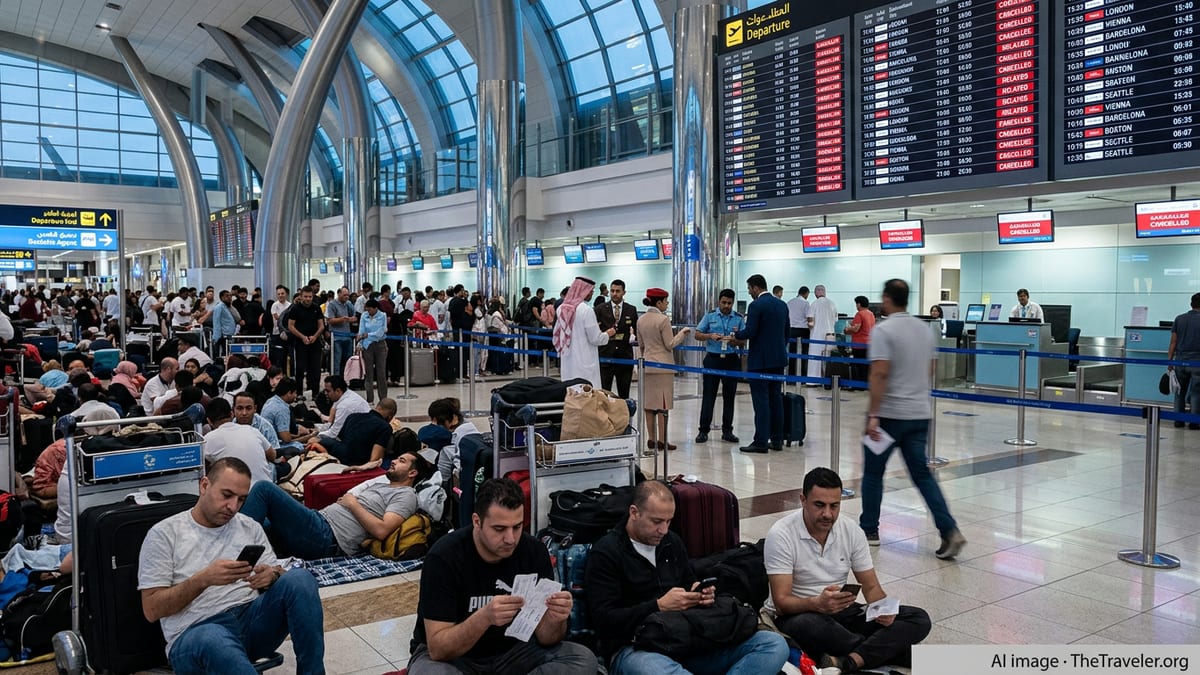
Thousands of travellers have been stranded or forced to reroute journeys across the Middle East as a fresh wave of flight cancellations and delays ripples through major hubs in the United Arab Emirates, Qatar, Saudi Arabia, Bahrain, Israel and neighbouring states, with publicly available operational data pointing to at least 224 cancellations and more than 100 delays affecting carriers including FlyDubai, Gulf Air, SunExpress, Emirates and Qatar Airways.
Get the latest news straight to your inbox!
Regional Airspace Restrictions Ripple Across Major Hubs
Current disruptions are unfolding against a backdrop of heightened regional tensions and intermittent airspace restrictions affecting several Middle Eastern states. Published notices from aviation authorities and travel management advisories indicate that airspace over parts of the United Arab Emirates, Qatar, Bahrain, Israel and surrounding countries has been subject to temporary closures and capacity limits, forcing airlines to suspend or sharply reduce normal schedules.
In practice, this means that many flights which would typically overfly the Gulf or use Dubai, Doha, Abu Dhabi, Riyadh, Jeddah, Manama or Tel Aviv as transit points are being cancelled outright or rerouted via longer paths. These workarounds are adding pressure on already congested alternative corridors, increasing crew and aircraft scheduling complexity and leading to rolling delays well beyond the region itself.
Operational summaries from travel management firms describe a pattern of cascading disruption since late February and early March 2026, as carriers repeatedly adjust timetables to align with evolving safety directives and airport capacity limits. Even when airspace has partially reopened, schedules have generally returned only in a limited form, leaving a significant backlog of travellers seeking rebooking options.
Industry analysts note that the Middle East functions as a critical connective bridge between Europe, Asia, Africa and Oceania. Any sustained reduction in capacity across the Gulf hubs quickly reverberates through long-haul markets, particularly on routes linking South and Southeast Asia with Europe and North America.
Emirates, FlyDubai and Gulf Carriers Cut Back Schedules
Among the most heavily impacted operators are leading Gulf-based airlines, which usually rely on high-frequency connections through their hub airports. Publicly available operational updates and passenger communications show that Emirates has been running a reduced schedule from Dubai, focusing on select trunk routes while suspending or consolidating services to affected destinations.
FlyDubai, the low-cost carrier based in Dubai, has similarly trimmed its network, with multiple departures to regional points in the Gulf, Levant and parts of Western Asia either cancelled or merged into fewer rotations. Travellers report rebookings stretching several days beyond original departure dates as demand for remaining seats outstrips available capacity.
In Bahrain, Gulf Air has adjusted its operations as Manama contends with wider regional airspace constraints. Flights into and out of Bahrain International Airport have faced both outright cancellations and extended delays, particularly on routes intersecting restricted air corridors. Public timetables show aircraft being redeployed to maintain core regional links while some secondary frequencies are removed from the schedule.
These cutbacks, when combined across multiple carriers, underpin the estimate of at least 224 cancellations and more than 100 delays within a short operational window. The figures reflect confirmed schedule changes across a sample of affected airports and airlines, and observers note that the wider, cumulative impact across codeshare and feeder services is likely higher.
Qatar Airways, SunExpress and International Links Disrupted
Qatar Airways, normally one of the region’s largest long-haul connectors, has seen substantial disruption as restrictions on Qatari airspace and surrounding corridors limit the carrier’s ability to operate its traditional hub-and-spoke model through Doha. Public advisories and passenger accounts describe periods where commercial operations were largely paused, followed by tightly controlled resumptions prioritising evacuation and repositioning flights.
These interruptions have led to successive cancellations for many travellers, especially those attempting to transit Doha en route between Europe and Asia or Africa and North America. Rebooking has been complicated by uncertainty around the timing and scope of each new operational window, leading some passengers to seek alternative routings on other carriers or via different regions entirely.
Turkey-based leisure and regional carrier SunExpress has also been swept up in the turmoil. The airline, which typically operates a mix of point-to-point services between Turkey, the Middle East and European holiday destinations, has faced cancellations and delays on flights reliant on Gulf overflight permissions or access to airports experiencing heightened security measures. This has affected both inbound tourism traffic to resort areas and outbound journeys for residents working in Gulf states.
Beyond these carriers, schedule data and media coverage point to additional disruptions among European and Asian airlines that use Middle Eastern hubs as refuelling or transit points. While some have been able to reroute flights to avoid closure zones, such adjustments often add hours to flight times, generating knock-on delays and aircraft rotation challenges across their networks.
Travellers Face Stranded Stays, Complex Rebookings and Higher Costs
For travellers on the ground, the operational numbers translate into long queues, extended stays in hotels and mounting uncertainty over onward plans. Social media posts and first-hand accounts gathered in public forums describe passengers stranded for days in Dubai, Doha, Abu Dhabi and other regional cities as they wait for available seats on a shrinking pool of departures.
Many travellers report that itineraries have been cancelled multiple times as airlines adapt schedules day by day, with some bookings disappearing from online systems before being reissued or rerouted via entirely different continents. In several cases, journeys that would normally involve a single connection have turned into complex multi-stop trips via alternative hubs such as Istanbul, Muscat or European gateways.
These extended detours often come with added costs for meals, accommodation and ground transport, although airlines have provided varying degrees of support depending on the type of ticket, origin of travel and local regulations. Insurance providers are meanwhile assessing a surge in claims related to missed connections, trip curtailment and additional expenses arising from airspace closures and security-related disruptions.
Travel advisers recommend that passengers with upcoming trips to or through the region remain flexible with dates and routings, monitor airline and airport updates frequently, and consider contingency plans such as alternative carriers, different transit hubs or delayed departure dates. Refund and rebooking policies continue to evolve as airlines gauge the duration and severity of the current disruption cycle.
Key Routes Between Europe, Asia and Africa Remain Vulnerable
One of the most notable aspects of the latest disruption is the way it has impacted major intercontinental corridors rather than only local or point-to-point flights. Routes linking the Indian subcontinent and Southeast Asia with Europe, for example, are highly dependent on Gulf stopovers, and a concentrated wave of cancellations from carriers such as Emirates, Qatar Airways and FlyDubai quickly reduces available capacity.
Similarly, connections between Africa and Asia, often routed through Dubai, Doha or Riyadh, have been constrained by cancellations and delays that leave fewer viable options for business and labour travel. Some African and Asian carriers have attempted to absorb displaced demand, but limited spare capacity and their own airspace considerations have capped the extent of this relief.
Israel’s international connectivity has also been affected as Ben Gurion Airport in Tel Aviv confronts both direct security concerns and the knock-on effects of regional airspace restrictions. Adjustments to departure and arrival flows, along with temporary reductions in permissible passenger volumes on some long-haul flights, have contributed to a more fragile operating environment even on routes that remain technically open.
Aviation analysts suggest that as long as regional security conditions remain volatile and airspace access is subject to rapid change, schedules across the Middle East will continue to experience sudden swings. Travellers booking itineraries for the coming weeks are being advised, through publicly available guidance, to prepare for potential last-minute changes and to build greater time buffers into critical journeys.