

More news on this day
International airlines are extending flight suspensions and deepening schedule cuts across the Middle East as the Iran war, airspace closures and damaged airports continue to upend global travel plans into April and beyond.
Get the latest news straight to your inbox!
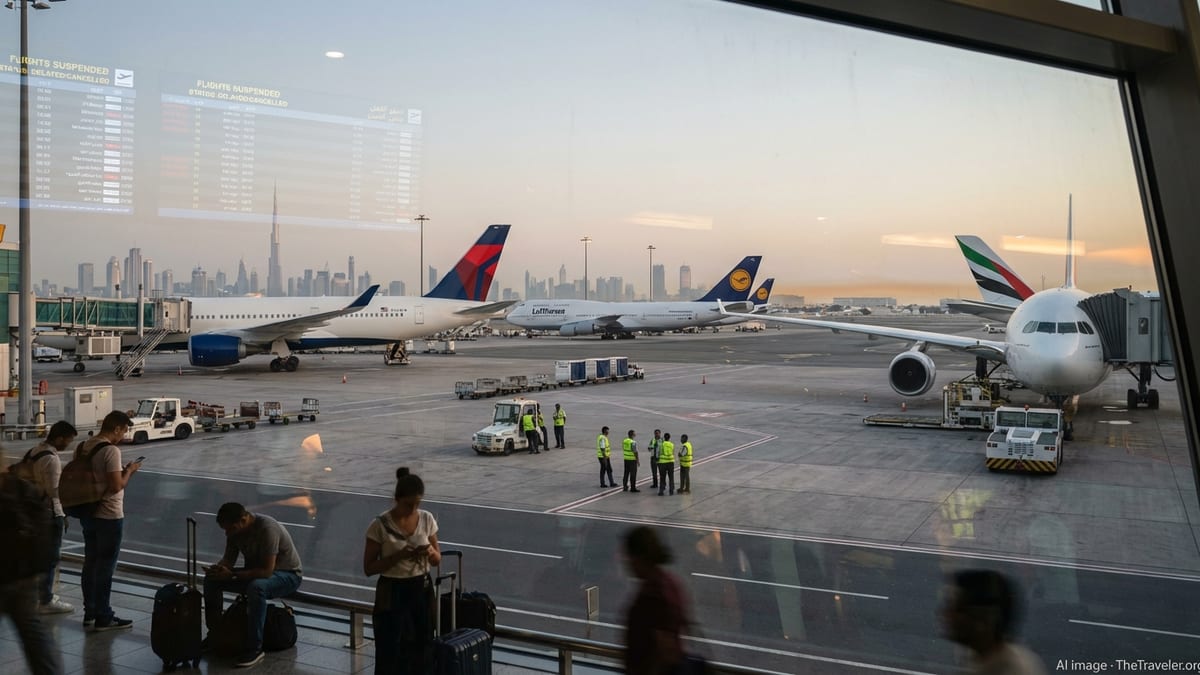
Carriers push back restart dates on key Middle East routes
Published airline updates in late March show that several major carriers now expect disruption on Middle East routes to last well into the northern summer season. Many had initially halted services for days or weeks after the first strikes on Iran in late February, but recent advisories indicate that suspensions around the region are being repeatedly rolled forward.
Air Canada has prolonged the suspension of its services to Dubai and Tel Aviv, with the latest schedule update indicating that flights on both routes remain off the timetable until at least early September. The airline is offering affected passengers the option to reroute to alternative long haul destinations in Europe, India and Africa or to request refunds, highlighting the scale and duration of the disruption on its Middle East network.
In Europe, Lufthansa Group airlines have widened and extended their own withdrawal from parts of the region. Company communications describe a continued suspension of many passenger and cargo flights to Middle Eastern destinations through late October, with limited exceptions and differing restart dates for Tel Aviv operations. The prolonged pause reflects both security assessments and the challenge of reliably planning schedules while airspace corridors remain volatile.
Low cost and hybrid carriers are also adjusting their plans. Travel industry summaries report that airlines such as airBaltic have canceled flights to Tel Aviv into late April and have halted Dubai services until late October, signaling that even point to point leisure routes are being written off for much of 2026.
Regional hubs under strain as airspace remains restricted
The conflict has disrupted not only point to point links but also the broader role of the Gulf and Levant as transit corridors between continents. Analysis of commercial traffic patterns shows that airspace closures across Iran and parts of the Gulf, combined with damage at major airports, have sharply reduced the number of daily flights crossing the region.
Publicly available data on the economic impact of the Iran war notes that airspace restrictions over Iran, the United Arab Emirates, Qatar, Kuwait and Bahrain have triggered thousands of daily cancellations. Operations at Dubai International and Abu Dhabi have been constrained after reported strike damage, while carriers have temporarily grounded or diverted flights in Kuwait and other states pending safety reviews and infrastructure checks.
These disruptions have rippled through neighboring countries. Reports from Pakistan describe dozens of flights canceled on routes linking Islamabad and other cities to Gulf hubs such as Dubai, Doha, Bahrain and Muscat, as airlines react to changing route permissions and congestion at remaining open airports. In Kazakhstan, Air Astana and its low cost unit FlyArystan temporarily halted or diverted Middle East services after the closure of Iranian airspace, underscoring how quickly regional decisions can affect carriers far beyond the immediate conflict zone.
For many airlines, the loss of predictable overflight corridors has also increased flight times and fuel consumption on services between Europe, Asia and Africa. Carriers that continue to operate have been forced to use longer routings that skirt restricted areas, adding cost and complexity at a time when jet fuel prices are already elevated.
National and flag carriers scale back Middle East connectivity
Flag carriers across Asia, Europe and the Middle East are progressively tightening their schedules as the crisis drags on. In India, travel industry outlets report that Air India has extended its suspension of services to multiple Gulf destinations, including the United Arab Emirates, Saudi Arabia, Israel and Qatar, beyond initial cut off dates set in early March. The airline has also rerouted some long haul services to North America via alternative European gateways to avoid closed or high risk airspace.
Pakistan International Airlines has taken similar steps, suspending or reducing flights to several Gulf countries as security conditions deteriorated. Coverage from Pakistani media indicates that the carrier has canceled numerous departures to the United Arab Emirates, Bahrain and other regional markets, leaving aircraft and crews redeployed to more stable routes or held on the ground until conditions improve.
In Europe, historic network airlines have been cautious about restoring services to Lebanon and Israel. Previous suspensions of flights to Beirut and Tel Aviv have been extended multiple times, and some operators continue to keep those routes off sale while they review security guidance. Greek carrier Aegean has issued updated travel advisories detailing ongoing cancellations on routes to Israel, Iraq, Lebanon, the United Arab Emirates and Saudi Arabia, alongside limited rebooking windows for affected passengers.
These moves highlight how national and flag carriers, which often serve politically sensitive markets, are adjusting capacity with an eye to both safety considerations and the financial impact of flying through or into an active conflict zone.
North American and European airlines widen waivers and rebooking options
Major transatlantic carriers are pairing suspensions with expanded flexibility policies as they work through a backlog of disrupted bookings. Travel waiver notices tracked by consumer sites indicate that several North American airlines have repeatedly extended their change fee waivers for travel involving destinations such as Tel Aviv, Amman and Beirut, and for itineraries that transit through key Gulf hubs.
For many passengers, these waivers allow one time changes within a defined window without paying additional fees, provided new trips fall within specified dates or remain on the same carrier. Where travelers opt to shift to different destinations or travel later in the year, they may still face fare differences, but the policies are intended to give some relief in a fast changing environment.
European carriers are adopting similar approaches. Lufthansa Group documents set out detailed rebooking rules for customers booked to or from cities including Tel Aviv, Dubai, Abu Dhabi, Amman, Beirut, Erbil and Dammam, where flights have been canceled or materially rescheduled. In many cases, passengers can move their travel to alternative dates or reroute via other hubs in the group’s network without incurring administrative penalties.
Industry observers note that by clearly signaling extended suspensions and offering structured flexibility, airlines aim to reduce day of travel chaos at airports and manage expectations about when normal service to the Middle East might realistically resume.
What travelers can expect in the coming weeks
With flight suspensions now stretching into late 2026 on some routes, travelers planning to fly to, from or through the Middle East face an extended period of uncertainty. Schedule loading patterns suggest that airlines are reluctant to commit to near term restarts until there is sustained evidence of stability in regional airspace and at major hubs.
Travel experts advise that passengers with existing bookings monitor airline notifications closely, as departure times, routings and even operating carriers can change at short notice. Industry guidance also emphasizes the importance of confirming flight status before heading to the airport and considering flexible tickets or travel insurance products that cover war related disruption, as many standard policies exclude such events.
Despite the challenges, some limited corridors are beginning to reopen on a tightly managed basis, particularly for repatriation and essential travel. However, the overall picture remains one of reduced capacity, higher fares and longer journeys for many international travelers whose itineraries depend on Middle Eastern hubs and overflight routes.
Until there is a durable easing of hostilities and the full reopening of critical airspace, publicly available information from airlines and aviation analysts indicates that extended suspensions and rolling schedule changes are likely to remain a fixture of the global flight landscape.