

More news on this day
Escalating conflict across the Middle East has plunged international aviation into turmoil, with the Australian government issuing sweeping new travel warnings and urging its citizens to stay vigilant as flight delays, cancellations and airspace closures ripple through global routes.
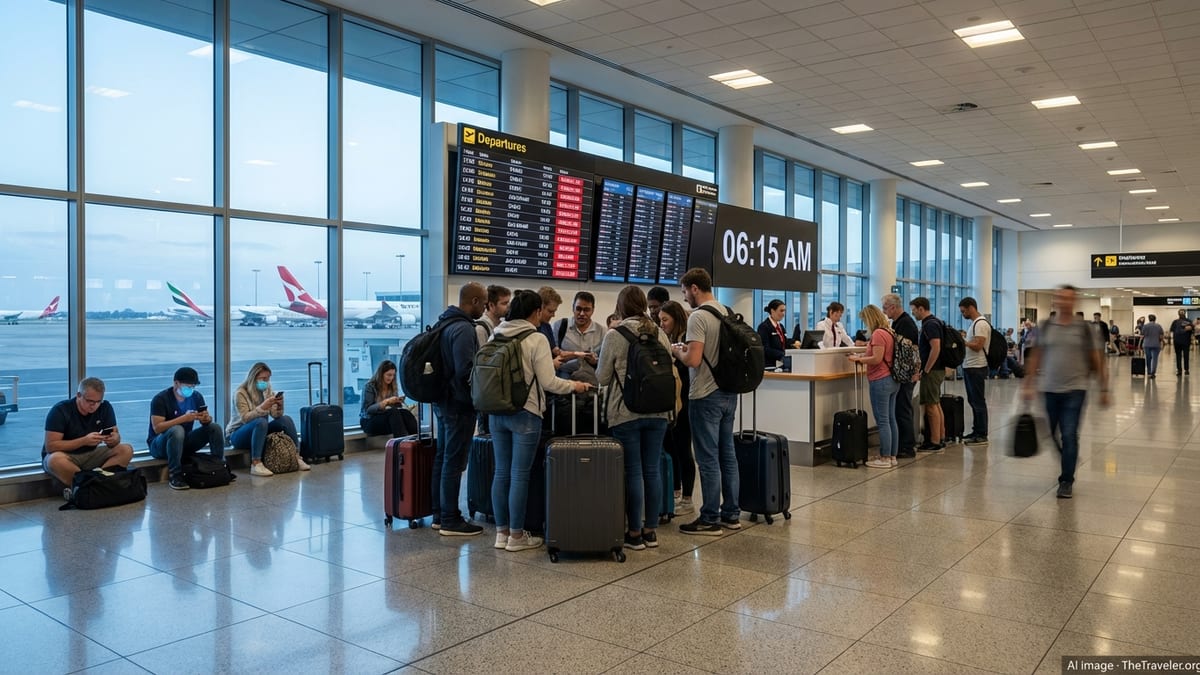
Airspace Closures Throw Global Schedules Into Disarray
Air travel across the Middle East has been severely disrupted after Iranian missile strikes and retaliatory military action prompted key Gulf states to restrict or close sections of their airspace. Major hubs including Dubai, Abu Dhabi and Doha have temporarily suspended or sharply curtailed operations, creating a cascading effect for flights linking Australia to Europe, Africa and parts of Asia.
In Dubai, one of the world’s busiest international airports, flights were halted after an attack that caused damage to airport infrastructure and injured several people. Abu Dhabi’s airport also reported one fatality and multiple injuries following falling debris from intercepted drones. Authorities in the United Arab Emirates described partial airspace closures as an exceptional precautionary measure while air defences responded to incoming projectiles.
Qatar Airways suspended services to and from Doha as regional tensions spiked, while aviation data showed thousands of flights into the broader Middle East cancelled or rerouted over the weekend. Airlines have been diverting long-haul services to avoid Iranian and neighbouring airspace, lengthening flight times and contributing to mounting congestion in already crowded skies.
For Australian travellers, the disruptions are being felt most acutely on popular transit routes to Europe via Gulf hubs. Long-haul journeys that typically rely on seamless connections in Dubai, Doha or Abu Dhabi have been thrown into uncertainty, with many passengers advised not to proceed to airports without checking the latest status of their flights directly with airlines.
Australians Hit by Cancellations, Diversions and Long Delays
Australian carriers and their codeshare partners have scrambled to respond to the fast-changing situation. Virgin Australia has confirmed multiple services to and from the Middle East were turned back mid-flight or cancelled outright, leaving aircraft and crews stranded at airports across the country and forcing last-minute rebookings for hundreds of passengers.
Middle Eastern airlines that serve Australian cities have also imposed widespread cancellations. Emirates, Etihad and Qatar Airways have paused services to their home hubs across at least two days of operations, with some aircraft returning to their point of origin mid‑route as airspace restrictions took hold and security alerts intensified.
Qantas has so far continued operating key long-haul links, including its nonstop Perth–London service, by rerouting around sensitive areas of airspace. However, the airline has warned customers that flight times may be extended and schedules remain under constant review. Travelers connecting through other parts of Asia and Europe have reported significant delays as aircraft are repositioned and timetables reworked.
Airport terminals in Australia and in secondary transit hubs have filled with stranded passengers seeking information, accommodation and alternative connections. Travel agents and airline call centres have seen a spike in demand from Australians trying to reconfigure itineraries to avoid the Gulf region, with some opting to route via Southeast Asia or through North America instead of traditional Middle East gateways.
Government Issues Stark Warnings and Raises Advisory Levels
The Department of Foreign Affairs and Trade has sharply escalated its language on Middle East travel, activating its crisis centre and updating advisories to reflect the new risks. Australians are now being told not to travel to Iran, Israel and Lebanon, and to leave those countries as soon as it is safe to do so while commercial options remain.
Travel advice for several Gulf states, including the United Arab Emirates and Qatar, has been upgraded in response to missile strikes and the direct targeting of civilian infrastructure. Senior ministers have repeatedly described the security environment as highly volatile, warning that further reprisals or miscalculations could trigger additional airspace closures, transport shutdowns and broader regional unrest with little or no notice.
Canberra has already directed the departure of families of Australian officials stationed in Israel and Lebanon, and offered voluntary departures to the dependants of staff in posts across the Gulf. Officials stress that embassies in key locations remain open, but note that consular assistance may be limited if conflict escalates or if airports and border crossings are closed.
Prime Minister Anthony Albanese and Foreign Minister Penny Wong have urged Australians to closely monitor official updates and reconsider non-essential trips to affected destinations. They have acknowledged that many travellers are now effectively trapped in place by closed airspace and cancelled flights, describing the coming days as likely to be difficult and unpredictable.
Security Fears and Insurance Gaps Add to Traveller Anxiety
Beyond immediate delays and cancellations, Australian travellers are grappling with heightened security concerns. Authorities warn that further missile attacks, drone strikes or retaliatory action could threaten civilian areas, critical infrastructure and transport hubs, and that demonstrations and protest activity may flare across multiple countries as tensions climb.
Travel insurers have reiterated that policies often exclude cover for acts of war, military action and some known events. Australians who choose to travel into zones subject to “do not travel” advisories have been cautioned that they may not be covered for losses linked to the conflict, and that providers’ ability to assist could be limited if situations deteriorate rapidly on the ground.
Industry experts say the Middle East’s role as a central aviation crossroads means even Australians with no intention of entering conflict-affected countries are exposed to disruption. Long-haul itineraries booked months ago now face higher risk of last-minute schedule changes, extended layovers or enforced overnight stays as airlines work around shifting security assessments.
Many nervous travellers are responding by postponing trips or seeking to reroute away from the region entirely, even when their particular destination remains relatively stable. Others, already overseas, are weighing whether to cut journeys short and return home before further escalation limits options, while watching both airline announcements and official advisories for signs of easing or renewed tension.
Practical Advice for Australians En Route or Yet to Depart
Officials and travel industry bodies are urging Australians to avoid unnecessary airport trips and to communicate directly with airlines, rather than relying solely on third-party booking sites or generic airport information. With schedules changing hour by hour, rebooking options may be more flexible if travellers work closely with carriers and agents to explore alternative routings.
Australians currently in the Middle East are being asked to keep their contact details up to date with consular authorities and to register for alerts where possible. They are also encouraged to maintain a high degree of situational awareness, follow instructions from local authorities and avoid demonstrations or large gatherings that could quickly become unsafe.
For those yet to depart, travel planners recommend reviewing the fine print of insurance policies, considering whether non-essential travel can be deferred, and building extra time into itineraries to allow for potential diversions or missed connections. Where travel proceeds, carrying essential medications, important documents and a change of clothes in cabin baggage can help mitigate the impact of unexpected overnight delays.
While airlines and governments stress that safety remains the overriding priority, there is broad acknowledgment that the conflict’s impact on aviation could extend well beyond the immediate crisis. For Australians, that means a prolonged period of elevated uncertainty on routes that have become central to how the country connects with the rest of the world, and a renewed imperative to stay informed and prepared whenever travel plans involve the Middle East.