

More news on this day
International airlines are extending suspensions on routes across the Middle East as airspace closures, security concerns, and soaring fuel costs continue to disrupt global travel well into 2026.
Get the latest news straight to your inbox!
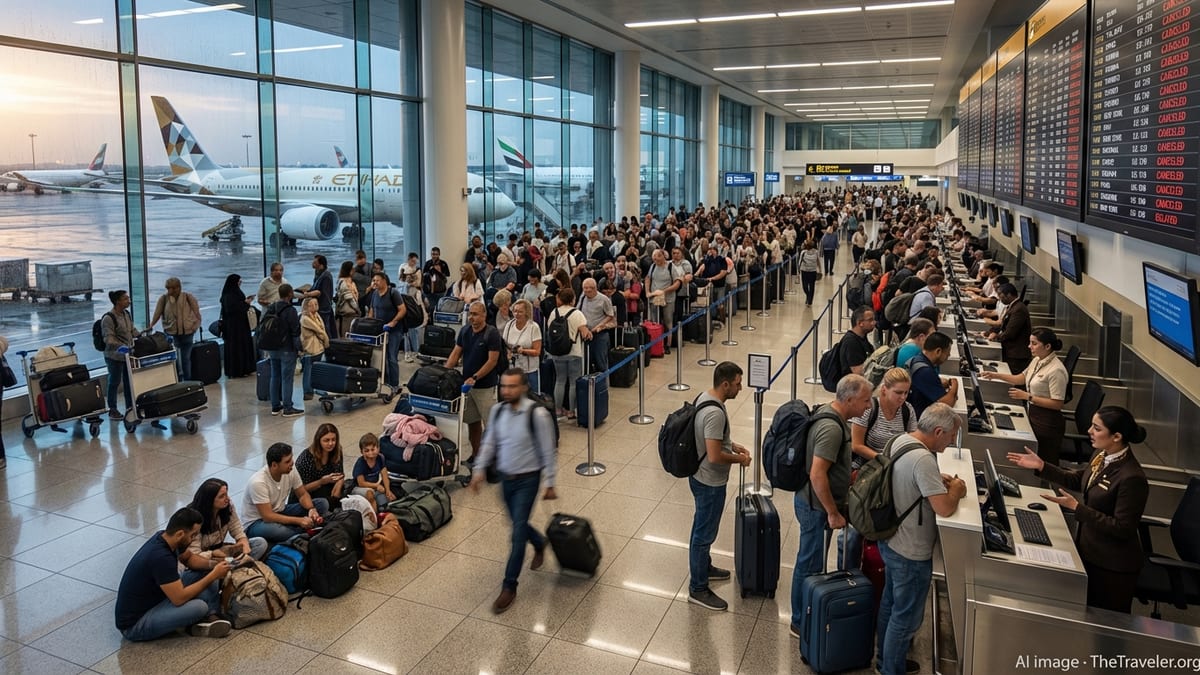
Key routes remain grounded as suspensions stretch into late 2026
Published airline notices and industry analysis show that large parts of the Middle East network remain offline, with several major carriers pushing suspensions months into the future. Aviation data provider IBA recently estimated that total flights to, from, and within the region have fallen by close to 60 percent since widespread airspace closures began at the end of February 2026, illustrating the scale of the disruption for both passengers and airlines.
One of the most extensive moves has come from the Lufthansa Group. Publicly available summaries of the company’s communications indicate that the group has extended the halt on most passenger and cargo services to key Middle Eastern cities, including Abu Dhabi, Amman, Beirut, Dammam, Riyadh, Erbil, Muscat, Tehran, and Tel Aviv, with many suspensions now running through late October 2026. Limited exceptions apply on certain Tel Aviv services, but even these are subject to additional pauses through at least late April and May.
The continuing shutdown of Iran’s main international gateway has added to the regional standstill. Information compiled from airport and airline disclosures indicates that all commercial flights at Tehran’s Imam Khomeini International Airport remain suspended as of March 2026, cutting off one of the region’s major connecting points. Combined with earlier restrictions in neighboring states, the closure has forced many carriers to abandon traditional east–west corridors that once crossed Iran, Iraq, Israel, Jordan, Qatar, Bahrain, Kuwait, and parts of the Gulf.
These extended suspensions mean that what initially appeared to be a short, sharp disruption has evolved into a long-running crisis for air connectivity. For travelers, the practical effect is fewer options, more complex routings, and an increased reliance on the limited number of airlines and corridors still operating.
European and Asian carriers pull back from Tel Aviv, Dubai and other hubs
European and Asian airlines that once depended on Middle Eastern hubs for transfer traffic are now recalibrating their networks. Reports summarizing airline notices from France, the Netherlands, and Germany indicate that several large European groups have suspended flights to Tel Aviv entirely and sharply curtailed operations to Beirut and Amman. Earlier timelines that suggested a gradual resumption during the spring have been repeatedly pushed back as the security picture has worsened.
French and Dutch flag carriers have also taken a cautious stance toward the Gulf. Operational updates cited in regional logistics bulletins describe continued suspension of some flights from Dubai and Riyadh, alongside earlier halts to Tel Aviv and Beirut, with new resumptions described only as “until further notice.” Other European airlines are avoiding Iranian, Iraqi, and Israeli skies entirely, choosing longer detours through Central Asia, the Caucasus, or Africa where overflight rights permit.
The disruptions are increasingly visible in Asia as well. On April 1, 2026, Singapore-based media reported that Singapore Airlines has suspended its Dubai routes until the end of May, attributing the move to heightened Middle East tensions. The carrier has advised customers to keep their contact details updated so they can receive short-notice alerts if suspensions are extended or additional flights are canceled, a sign that schedules may remain fluid for weeks.
Other Asian and Australasian travelers are also feeling the squeeze. Travel forums and airline advisories show that journeys between Southeast Asia, Australia, and Europe are being rebooked off disrupted Middle East hubs and onto alternative connections, most commonly through Istanbul or European gateways. While some Gulf carriers continue to operate selective services, their schedules are thinner than before and subject to last-minute changes driven by airspace availability.
Gulf region reconfigures as some carriers shift operations
Within the Gulf itself, airlines are reshaping operations to cope with closed or restricted airspace. Bahrain’s Gulf Air, for example, has extended a temporary network adjustment that routes more of its operations through Saudi Arabia. A recent announcement distributed through regional business media stated that the carrier will continue operating a temporary pattern from King Fahd International Airport in Dammam until April 2026, using ground transportation and Saudi transit visa facilitation to keep connections viable for its passengers.
Elsewhere, closures and restrictions at Bahrain and Qatar have reduced the dominance of some traditional hubs, at least in the short term. Industry and government travel advisories describe Saudi Arabia as hosting the only major east–west corridor currently available in parts of the region, turning selected Saudi airports into critical waypoints for long-haul flights that would previously have used Doha or Dubai.
Airlines based in the Gulf are also making tactical adjustments to manage risk and capacity. Published operational updates indicate that some carriers have retained a skeleton network of “essential” routes, often focused on repatriation and key business links, while pausing leisure-heavy or secondary destinations. This approach mirrors wider trends in previous crises, but the current environment is complicated by shifting front lines and rapidly changing air traffic control notices.
For foreign carriers that once relied on Gulf hubs as neutral, high-connectivity stopovers, the changing patterns add extra uncertainty. New routings through Istanbul, Central Asia, or southern Europe may offer alternatives in terms of safety and regulatory approvals, but they can also extend journey times significantly and compress seat availability on a smaller set of flights.
Reroutes, fuel prices and war risk drive global knock-on effects
The impact of Middle East suspensions is not confined to the region. Aviation consultancies and airline financial disclosures underline how rerouting around closed airspace is increasing flight times and fuel burn on intercontinental services between Europe, Asia, and Africa. IBA’s recent assessment noted that carriers are being forced into longer routings that drive up operating costs, at the same time as geopolitical tensions keep oil prices elevated.
The squeeze is already visible in markets far from the conflict zone. Recent business coverage from East Asia highlights that some Korean and Vietnamese airlines are cutting or suspending long-haul services that have become unprofitable as fuel costs surge on the back of Middle East instability. These moves are framed partly as capacity discipline, but analysts note that persistent war risk premiums on insurance and fuel are influencing network decisions.
Global carriers with sophisticated fuel hedging programs may be insulated in the short term, but not indefinitely. Industry commentary suggests that once existing hedges expire, sustained high fuel prices and continued detours around Middle Eastern airspace could lead to further timetable reductions, particularly on marginal routes. Low-cost and leisure-focused airlines, which often operate with thinner margins and less hedging, appear especially exposed.
Travelers planning multi-leg itineraries across continents are therefore being advised by consumer advocates and travel agencies to watch schedules closely and allow more time for connections. As more airlines extend suspensions or fine-tune frequencies in response to cost pressures, even routes that do not touch the Middle East may experience indirect disruptions, such as reduced frequencies, downgauged aircraft, or tighter seat availability.
Travelers face prolonged uncertainty and evolving waivers
For passengers, the drawn-out nature of the suspensions is translating into months of uncertainty. Public advisories from aviation regulators and foreign ministries in Asia and Europe urge travelers to monitor airline notifications closely, warning that flights can be retimed, rerouted, or cancelled at short notice as airspace rules evolve. These notices emphasize that safety-driven closures can override published schedules without warning.
Some major carriers have responded by expanding their flexibility policies. Documentation shared on airline and frequent flyer forums shows that large North American airlines, including United Airlines, have repeatedly extended special travel waivers related to Middle East unrest. The validity windows for changing or postponing trips have been pushed further into April and now into mid-June 2026, reflecting expectations that instability and closures could persist for months.
National carriers in affected regions are issuing their own rolling updates. An April 1 statement from Air India, for instance, outlined a tightly controlled schedule of around 30 flights to and from West Asia on that date, alongside guidance for passengers to use self-service tools for rebooking and refunds. The notice stressed that operations to North America, Europe, Australia, and other regions currently remain on schedule, but made clear that West Asia services are being managed on a day-by-day basis.
With no clear end in sight to the Iran conflict and associated airspace restrictions, aviation analysts are cautioning that the present pattern of extended suspensions and last-minute adjustments is likely to remain a feature of global travel for the foreseeable future. For now, anyone with plans involving the Middle East or nearby overflight corridors is being encouraged to build extra flexibility into their itineraries and to expect that today’s timetables may look very different by the time of departure.