

More news on this day
International air travel through the Middle East remains severely disrupted as leading global airlines extend suspensions on routes to key hubs including Dubai, Doha, Abu Dhabi, Tel Aviv, Riyadh and Beirut, citing ongoing regional conflict and airspace closures.
Get the latest news straight to your inbox!
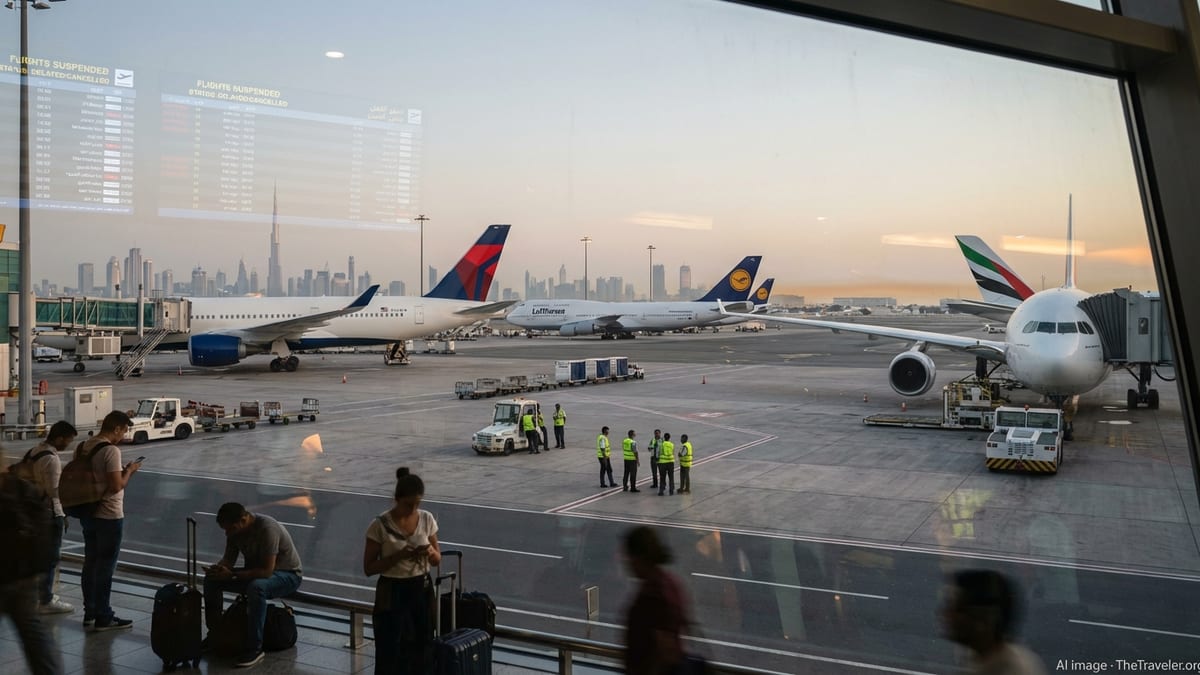
Global carriers push suspension dates further into 2026
Published schedules and customer advisories show that major European and North American airlines are now planning for an extended period of disruption in Middle Eastern airspace. A factbox compiled by international media on March 31 indicated that widespread cancellations and reduced operations continue after a wave of airport closures and missile strikes prompted authorities across the region to shut or restrict skies over several Gulf and Levant states.
Air France has prolonged its suspension of flights to Dubai, Riyadh, Tel Aviv and Beirut until at least April 19, limiting direct links between France and some of the region’s highest demand markets. The carrier is maintaining a limited presence elsewhere in the region but continues to route its long haul services away from Iranian and Iraqi airspace, increasing block times on flights to Asia and parts of Africa.
Lufthansa Group has gone further, with a recently published update indicating that passenger and cargo services to a broad list of Middle East destinations including Abu Dhabi, Amman, Beirut, Dammam, Riyadh, Erbil, Muscat and Tehran are suspended through October 24. Exceptions apply for Tel Aviv, where cargo flights are paused through April 30 and wider group services through the end of May, underscoring the particular security sensitivities around Israeli airspace.
Canadian media coverage also highlights extended suspensions, with Air Canada keeping its Dubai and Tel Aviv routes off the schedule until at least September 7. The airline has outlined rebooking options for affected travelers into alternative European, African and Indian destinations, illustrating how long haul networks are being reshaped around the ongoing crisis.
Gulf hubs and regional airports remain constrained
The disruption stems from a regional security shock that escalated at the end of February, when joint strikes on Iran triggered a wave of retaliatory action and prompted multiple states to restrict access to their skies. Reports from early March described closures or severe limitations at major hubs such as Dubai International, Abu Dhabi’s Zayed International Airport and Doha’s Hamad International, alongside suspensions at airports in Iran and parts of Iraq.
While some facilities have since reopened on a limited basis, flight information services and airline advisories indicate that operations remain far from normal. Travel industry reporting on Dubai suggests that the airport is handling a reduced but steady flow of services in early April, yet numerous Middle East point to point routes from the United Arab Emirates remain paused and passengers are repeatedly urged to confirm their flight status before travelling to the terminal.
Elsewhere, publicly available data on Tehran’s Imam Khomeini International Airport show that all commercial flights are currently suspended as the Iran war continues, effectively cutting off one of the region’s key long haul gateways. Meanwhile, logistics and maritime advisories describing the wider Strait of Hormuz crisis note that airspace has been closed or heavily restricted across several Gulf countries, with knock on effects for carriers attempting to operate even overflight services between Europe, Asia and Africa.
National carriers in the region have also adjusted their schedules. Briefings compiled for shipping and aviation clients in early March indicated that Saudi Arabia’s main airline suspended flights to Bahrain, Kuwait, Amman, Dubai, Abu Dhabi and Doha, while Royal Jordanian halted services to Syria, Iraq, the United Arab Emirates, Bahrain, Kuwait and Qatar, reflecting both direct security concerns and airspace closures beyond their control.
Rerouting pressures and higher fuel costs reshape long haul travel
With large sections of Middle Eastern skies deemed off limits by risk managers, airlines that continue to operate between Europe, Asia and Australasia are being forced onto longer, more northerly routings. KLM, for example, has notified customers that it is avoiding the airspace of Iran, Iraq and Israel, as well as parts of the Gulf region, and has introduced flexible rebooking options for passengers scheduled to travel through mid May.
Industry analysis indicates that this rerouting comes on top of existing detours around Russian and Ukrainian airspace, leaving only narrow corridors available for some intercontinental flights. A recent travel industry report on Lufthansa’s planning suggested that the airline is even considering grounding up to 40 aircraft if the Iran war keeps fuel prices elevated, highlighting how the crisis is feeding directly into the cost base and capacity planning of Europe’s largest carriers.
Carriers in Asia and other regions are facing similar pressures. Reporting from Southeast Asia notes that some airlines are trimming broader networks and cutting domestic flights in response to surging fuel bills linked to the conflict, redirecting aircraft and crews to routes where demand and yields can best offset higher operating costs. These knock on changes mean that even travelers not flying to or through the Middle East may encounter reduced capacity and higher fares in the months ahead.
Global travel media and aviation specialists also point to a shift in traffic flows, with many passengers who previously connected between Europe and Australasia via Gulf hubs now rebooking through Asian or North American gateways. This shift is boosting demand for carriers with stable routings while leaving traditional Middle East super connectors struggling to restore their role as transit powerhouses.
Extended uncertainty for passengers and tourism markets
The prolonged suspensions are leaving thousands of travelers facing cancellations, complicated rebookings and uncertain timelines. In early March, news footage from Dhaka showed passengers stranded after dozens of flights to Gulf destinations, including Dubai, Bahrain, Kuwait and Qatar, were abruptly canceled at the city’s main airport. Similar scenes have been reported in other departure markets that traditionally rely on Gulf carriers for migrant worker and leisure traffic.
Travel advisories and airline notices typically allow affected passengers to rebook without change fees or to request refunds, but seats on alternative routings can be scarce, particularly on peak travel dates. Advisories shared through airline channels and traveler forums repeatedly urge passengers with upcoming journeys to monitor their booking status closely, sign up for alerts, and remain flexible about routing and dates.
Tourism-dependent economies in the wider region are also feeling the impact. Destinations such as Jordan, Lebanon and parts of the Gulf that rely heavily on inbound visitors from Europe and Asia are facing a drop in arrivals as direct services are cut and insurance providers reassess coverage. At the same time, long haul markets that receive large numbers of visitors via Middle East hubs, including East Africa and the Indian Ocean islands, are seeing itineraries disrupted as connecting legs are removed from schedules.
Industry observers suggest that the pace at which airlines are extending suspensions, sometimes by several months at a time, reflects expectations that the security situation and airspace restrictions will not be resolved quickly. For travelers planning trips through the region in 2026, the emerging advice across public travel alerts is to assume continued volatility, consider alternative routings that avoid affected hubs, and factor in the potential for last minute changes even after a ticket is booked.