

More news on this day
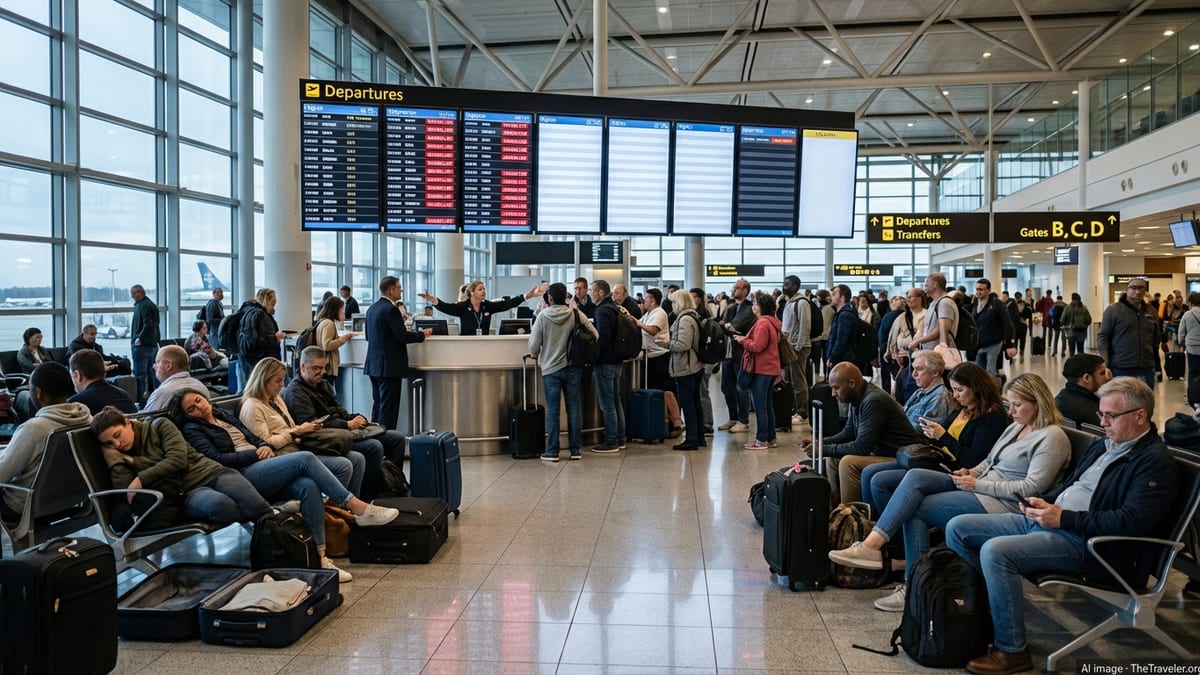
Air travel across the Middle East is entering a sixth week of severe disruption in April 2026, as conflict-related airspace closures and safety advisories continue to fracture key routes between Europe, Asia and Africa.
Get the latest news straight to your inbox!
Conflict Fallout Turns Into Structural Disruption
The shock closure of multiple Middle Eastern airspaces at the end of February, triggered by the outbreak of war involving Iran, the United States and Israel, has evolved into a sustained crisis for global aviation. Regional flight information regions over Iran, Iraq, Israel, Jordan, Kuwait, Qatar, Bahrain and parts of the Gulf were progressively shut or heavily restricted as hostilities escalated, cutting through one of the world’s busiest east–west corridors.
Initial expectations that closures might last days have given way to rolling extensions through March and into April. Notices to Air Missions issued by regional regulators remain in force over several conflict zones, while others have reopened only partially or with narrow humanitarian and evacuation corridors. Industry analyses indicate that airports across the affected states collectively handle a significant share of global connecting traffic, magnifying the knock-on effect far beyond the region.
The result is a patchwork of national rules, military risk areas and airline-specific risk assessments that are reshaping daily operations. Carriers that normally rely on Gulf hubs for efficient one-stop connections between Europe and Asia now face extended flying times, higher fuel burn and complex crew scheduling as they navigate around restricted skies.
A temporary ceasefire agreed in early April has not yet translated into a rapid return to pre-war airspace conditions. Publicly available guidance from regulators and airlines continues to frame the Middle East as a high-risk conflict zone for overflights, underscoring how fragile the situation remains even as intense fighting ebbs and flows.
Regulators Extend No-Fly Advisories Into Late April
In a key signal that the disruption is not about to end, the European Union Aviation Safety Agency has extended its conflict-zone bulletin for the region into the second half of April. The latest advisory, updated on 9 April, calls on European carriers to avoid the airspace of Iran, Iraq, Israel, Jordan, Lebanon, much of the Gulf and parts of Saudi Arabia and Oman until at least 24 April 2026.
The EASA bulletin is formally non-binding, but it carries significant weight in corporate risk calculations and insurance assessments. Many European and Asian airlines are aligning operations with its guidance, effectively treating the swathe of airspace from the eastern Mediterranean through the Persian Gulf as off limits except for essential or specially authorised flights.
National regulators in Asia and elsewhere have issued parallel advisories. For example, travel notices circulated by aviation authorities in Southeast Asia in March warned that Middle East overflights could be subject to sudden rerouting, extended flight times and last-minute cancellations, urging passengers to monitor schedules closely. Corporate travel bulletins from major consultancies have echoed these concerns, describing Saudi Arabia’s airspace as the primary remaining east–west corridor that is consistently available.
This regulatory backdrop is driving airlines to adopt conservative routing for the entire month of April. Even as some Gulf and Levant states tentatively reopen segments of their skies, the perception of elevated risk is prompting carriers to wait for longer periods of stability before restoring direct services or resuming use of the shortest flight paths.
Airlines Cut Capacity, Reroute and Reprice
Airlines are adapting to the prolonged closures through a mix of cancellations, extended routings and network reshaping. Major full-service carriers in Europe and Asia suspended services to a range of Middle Eastern destinations in March, then gradually reintroduced a limited number of flights via safer corridors such as Türkiye, Egypt and Saudi Arabia. Publicly available route data show that many eastbound services that previously crossed Iran or Iraq now detour north over the Caucasus or south over the Red Sea and Arabian Peninsula.
On 9 April, updates from European aviation trackers indicated that carriers such as Czech Airlines and leisure operator Smartwings continue to serve destinations like Dubai and Tel Aviv using elongated routings that add up to around 70 minutes to each sector. Analysts estimate that the additional flight time, combined with congestion on alternative airways, is adding several thousand euros in fuel costs per round trip, before factoring in crew and maintenance implications.
Middle Eastern airlines are also recalibrating their networks. Travel industry coverage in early April reported that Qatar Airways remains on a reduced schedule, with flights to and from Doha still curtailed and some regional routes suspended until at least mid or late April. National carriers in Kuwait, Iraq and Lebanon are operating on skeleton timetables or have halted certain international services altogether, reflecting the ongoing closure or severe restriction of their airspace.
European long-haul operators are beginning to rethink their medium-term capacity plans. A 9 April industry report indicated that British Airways intends to reduce frequencies on key Middle East routes once it resumes more regular operations, redeploying aircraft to markets in India and Africa where demand remains strong and routings are less exposed to conflict-zone detours.
Gulf Hubs Struggle to Regain Their Pivotal Role
For decades, Gulf mega-hubs such as Dubai, Abu Dhabi and Doha have been central to the architecture of global air travel. The current crisis has put that role under intense pressure. In the first weeks of the conflict, Dubai International Airport and Abu Dhabi International experienced closures or severe constraints following missile and drone activity, forcing widespread cancellations and diversions. Doha’s Hamad International similarly saw normal traffic suspended when Qatari airspace was shut at the end of February.
By early April, publicly available travel advisories indicated that the United Arab Emirates and Qatar had partially reopened their airspace, allowing limited operations via designated safe corridors. However, capacity at these hubs remains significantly below pre-war levels. Large numbers of transit passengers who would ordinarily be funneled through the Gulf are instead being routed through European, Turkish or Saudi airports, straining those facilities while eroding the competitive advantage of traditional Middle East hubs.
Bahrain and Kuwait, two smaller but strategically located states, have faced even longer closures. Industry updates through 9 April noted that Bahrain’s airspace has only recently begun to reopen, after its national carrier shifted operations temporarily to Dammam in Saudi Arabia. Kuwait’s skies have stayed heavily restricted, with many international services still suspended and airlines citing ongoing overflight prohibitions and security concerns.
These hub disruptions are cascading into airline scheduling and fleet planning. Some Gulf carriers have placed aircraft into short-term storage or reassigned widebody jets to alternative long-haul routes via Africa or southern Asia. Analysts suggest that even if ceasefire arrangements hold, rebuilding the complex web of connecting banks at Gulf hubs will take weeks, and possibly months, once overflight restrictions ease.
Travellers Face Longer Journeys and Persistent Uncertainty
For passengers, the sixth week of disruption is translating into longer journeys, fewer options and ongoing uncertainty about future trips through the region. Reports from consumer travel platforms and aviation data providers highlight a mix of outright cancellations on certain Middle East city pairs and significant schedule changes for flights that remain in operation.
Many airlines have issued flexible rebooking and refund policies for itineraries touching the affected airspace zones, but these waivers are typically time-limited and vary by carrier. Travel advisory notices from governments and corporate travel managers in March and April have urged passengers to avoid non-essential transit via the Middle East, to build in longer connection times, and to expect last-minute aircraft swaps or diversion-related delays.
Global distribution systems show a sharp increase in itineraries that route between Europe and South or Southeast Asia via alternative hubs in Istanbul, Riyadh, Jeddah, Cairo and key African cities. While these options maintain connectivity, they often lengthen total travel time and may require additional visas or security checks, adding cost and complexity for travelers.
With key regulatory advisories now extended into the latter half of April, airline planners and passengers alike are preparing for the possibility that irregular operations could stretch well beyond week six. The pace at which airspace restrictions are lifted, and the confidence of carriers and insurers in returning to previous routings, will determine how quickly the global aviation system can absorb the shock of this prolonged Middle East disruption.