

More news on this day
Air travel across the Gulf showed no sign of stabilizing on March 13 as major airports in the United Arab Emirates, Saudi Arabia and Qatar reported another wave of severe disruption, with at least 565 flights canceled and 712 delayed in a fresh blow to passengers already caught in days of turmoil.
Get the latest news straight to your inbox!
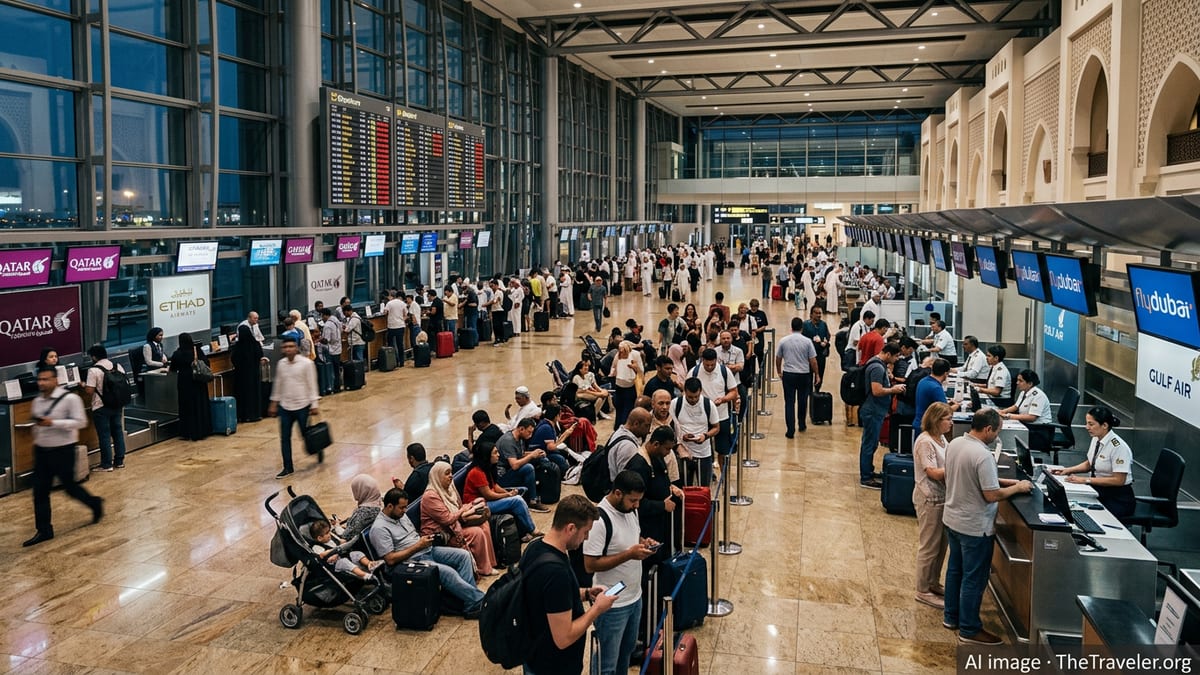
Major Gulf Hubs Buckle Under Mounting Pressure
Dubai International, Abu Dhabi, Doha, Riyadh and Dammam remained at the epicenter of the crisis on Thursday, with operational data showing widespread disruption across departures and arrivals. Aviation tracking platforms indicated that Dubai and Doha bore the brunt of cancellations, while Riyadh and Dammam recorded some of the worst knock-on delays as schedules unraveled throughout the day.
At Dubai International and Abu Dhabi, airlines continued to operate on trimmed schedules, juggling limited slots and altered routings around restricted or congested airspace. Ground handling teams reported mounting congestion at gates and remote stands as aircraft and crew went out of sequence, forcing last-minute swaps and schedule changes.
In Doha, officials worked to clear a growing backlog of connecting passengers after earlier shutdowns choked one of the world’s busiest long-haul transfer hubs. With inbound services reduced or rerouted, even flights able to operate faced difficulty securing onward connections for travelers heading to Europe, Asia and the Americas.
Saudi Arabia’s key gateways in Riyadh and Dammam also struggled to normalize operations. Domestic links that typically provide vital feeder traffic for long-haul services were repeatedly rescheduled, leaving passengers uncertain whether to proceed to the airport or attempt rebooking online and through call centers already stretched to capacity.
Airlines Slash Schedules as Safety and Routing Concerns Persist
Among the hardest-hit carriers were Qatar Airways, IndiGo, Etihad Airways, flydubai and Gulf Air, alongside several regional and international operators that rely on Gulf hubs for long-haul connectivity. The latest figures indicate that the combined total of 565 cancellations and 712 delays was spread across these and other airlines operating through the region’s main airports.
Qatar Airways, which has faced repeated disruptions at its Doha base, continued to prioritize what it described as essential long-haul and repatriation routes while trimming frequencies on others. Passengers reported multiple instances of last-minute aircraft changes and rebookings as the airline sought to consolidate lightly booked flights and optimize scarce operational windows.
Etihad Airways and flydubai, both based in the UAE, extended rolling schedule adjustments first introduced when airspace restrictions intensified earlier this month. The two carriers have been operating a patchwork of services, combining selective resumptions on key trunk routes with continued suspensions where routings remain operationally or commercially unviable.
IndiGo and Gulf Air also reported elevated levels of disruption, particularly on services linking India and South Asia with Gulf destinations, and on intra-Gulf routes that have been especially vulnerable to airspace closures and changing overflight permissions. Industry analysts said the high proportion of short- and medium-haul flights on these networks meant that even short-lived restrictions could cascade into widespread cancellations throughout the day.
Passengers Face Long Queues, Uncertain Itineraries and Limited Support
For travelers, the numbers translated into another difficult day of missed connections, improvised overnight stays and uncertain onward plans. At Dubai, Doha and Abu Dhabi, long lines formed at transfer and ticketing desks as passengers sought alternative routings or refunds. Many described struggling to reach airline call centers or secure timely updates through apps and messaging channels.
Families attempting to travel at the tail end of school holidays and business travelers heading to financial centers in Europe and Asia were among those most affected. Some passengers opted to abandon trips entirely, citing fears that further disruptions in the coming days could leave them stranded far from home or final destinations.
Airlines reiterated that travelers whose flights were canceled would be offered rebooking or refunds, subject to the conditions of each carrier. However, legal experts noted that differing national regulations in the Gulf region, compared with consumer protection regimes in Europe or North America, meant that compensation rules were complex and often poorly understood by passengers expecting standardized payouts.
Hotel capacity around major hubs was also strained as stranded travelers sought last-minute rooms. Local tourism authorities in Dubai and Doha said they were coordinating with airlines to ensure priority accommodation for vulnerable passengers, including families with small children and elderly travelers, though availability varied widely by location and time of arrival.
Operational Recovery Hampered by Airspace and Crew Constraints
Aviation specialists cautioned that the latest tally of cancellations and delays represented only one snapshot of a fast-moving situation shaped by broader regional instability. Prolonged airspace closures and reroutings have lengthened flight times, disrupted crew rosters and pushed aircraft utilization well below normal levels, making a rapid return to full schedules unlikely.
Carriers across the region have been forced to redesign flight paths to avoid restricted zones, adding fuel burn and block time that ripple through daily rotations. Longer sectors require additional flight and cabin crew, while duty-time limits constrain how many legs crews can safely operate before mandatory rest periods, further limiting scheduling flexibility.
Maintenance requirements present another challenge. With aircraft cycling more irregularly than usual, airlines must balance the need to keep as many jets in service as possible with strict safety and inspection intervals that cannot be deferred. Grounding an aircraft for unscheduled checks, even briefly, can remove critical capacity at a moment when spare frames are already scarce.
Airport operators in Dubai, Abu Dhabi, Doha, Riyadh and Dammam have meanwhile continued to adjust runway and gate planning to reflect the volatile traffic picture. While some peak waves have flattened, the unpredictability of late-arriving and diverted aircraft has complicated efforts to sequence departures efficiently, often resulting in aircraft waiting on taxiways for slots or new routings to be confirmed.
Uncertain Outlook as Travelers Weigh Future Plans
With the situation still evolving, airlines have urged passengers with upcoming travel to the region to monitor flight status closely and to consider flexible booking options. Many carriers have introduced temporary waiver policies allowing changes without standard penalties, though availability of alternative dates and routings remains limited on certain high-demand corridors.
Travel agents and corporate travel managers reported a spike in inquiries from clients seeking to reroute itineraries away from Gulf hubs in the short term, particularly for non-essential travel. Some multinational firms have temporarily paused new bookings through affected airports, redirecting staff itineraries via alternative hubs when possible.
Tourism bodies in the UAE, Saudi Arabia and Qatar emphasized that hotels, attractions and local transport systems remained open and eager to welcome visitors, but acknowledged that flight uncertainty posed a significant barrier. They encouraged visitors already in-country to stay in close contact with airlines and booking platforms to confirm their return plans well ahead of departure dates.
Industry observers said the coming week would be critical in determining whether the wave of 565 cancellations and 712 delays marked the peak of the current disruption or a prelude to a more prolonged downturn in regional air travel. For now, passengers and airlines alike remain braced for further turbulence in one of the world’s most important aviation corridors.