

More news on this day
Flight disruption linked to the Middle East conflict is beginning to ease, with newly published aviation data indicating a sharp fall in UK flight cancellations even as reroutings and longer flight times continue to affect networks between Europe and Asia.
Get the latest news straight to your inbox!
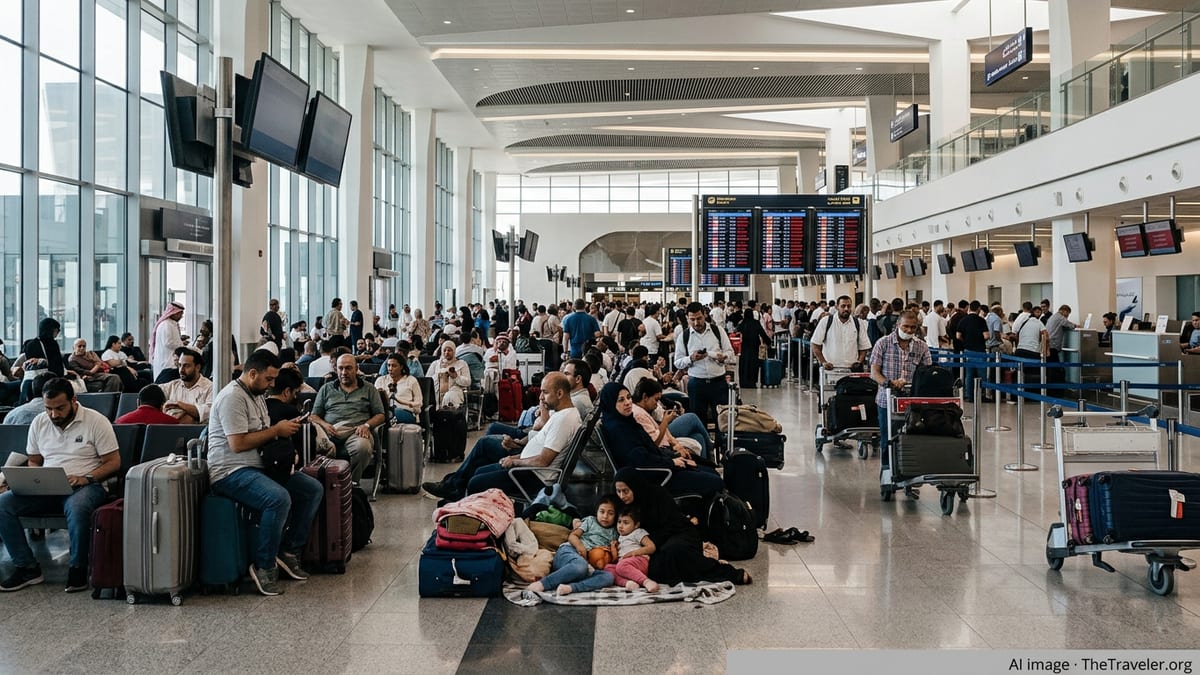
Data shows sharp improvement in UK operations
Publicly available operational data for early April indicates that UK-based airlines have moved out of the most acute phase of disruption that followed widespread airspace closures across the Middle East in March. Industry tracking services show that, while hundreds of services were cancelled or heavily delayed in the immediate aftermath of the conflict escalation, cancellation rates at major UK airports have now returned closer to seasonal norms.
Coverage in UK and international outlets points to a marked reduction in same-day cancellations from carriers such as British Airways and easyJet compared with late February and March, when airlines were repeatedly forced to scrap or retime services that relied on Gulf hubs or overflight corridors. Reports also note that live dashboards tracking British Airways operations this week show no signs of the large, rolling cancellations that characterised the height of the crisis.
Analysts indicate that the improvement reflects both stabilising flight schedules and the rapid redeployment of aircraft and crews that had been stranded or operating irregular rotations during the worst of the disruption. As aircraft and staff return to normal duty patterns, knock-on cancellations affecting domestic and short-haul European flights from the UK have also diminished.
Despite the improvement, observers caution that the recovery remains uneven between airlines and routes, with some long-haul services still vulnerable to late changes when congestion builds up along newly adopted detour paths.
Middle East capacity slowly returns after deep cuts
The easing of UK cancellations is unfolding against a backdrop of gradual recovery in Middle East aviation after dramatic capacity cuts triggered by the conflict. Industry analysis suggests that carriers based in the Gulf reduced capacity by roughly one third or more at the peak of the crisis, removing well over a million weekly seats from the global system as airspace in Iran, Iraq and parts of the Levant closed or became heavily restricted.
Reports from specialist aviation outlets describe how Emirates, Qatar Airways and Etihad initially suspended or sharply curtailed operations at key hubs as they navigated airspace closures and assessed security risks. Many Asia–Europe itineraries that typically rely on one-stop connections through Dubai, Doha or Abu Dhabi were cancelled outright, while others were rerouted via longer paths to avoid conflict zones, stretching crew duty limits and aircraft utilisation.
More recent schedules show a cautious restoration of services, with Gulf carriers progressively reinstating flights on core trunk routes and adding back frequencies to high-demand destinations in Europe and Asia. However, overall capacity remains below pre-crisis levels, and airlines continue to operate with contingency routings that can add significant flying time.
Industry commentary highlights that this phased recovery is a key factor behind the sharp improvement in UK cancellation rates. As hub operations in the Middle East stabilise, UK-originating flights that depend on onward connections through the region are less exposed to last-minute disruption, reducing the need to preemptively cancel departures from London and other British airports.
Longer routings keep pressure on fares and schedules
Even as cancellations fall, the structural impact of the Middle East conflict on routing remains visible in flight-planning data. Many long-haul services between Europe and Asia continue to avoid previously routine corridors over Iran and parts of Iraq, instead tracking further north or south. These diversions add time in the air and increase fuel burn, a significant challenge at a moment when jet fuel prices have also risen on the back of energy market volatility.
Consultancy assessments note that fuel, which often accounts for around a quarter of an airline’s operating costs, has climbed sharply since the start of hostilities. Combined with longer sector times, this has eroded margins on some routes and prompted carriers to review schedules, aircraft deployment and, in some cases, fare levels. Some European and Asian airlines have temporarily suspended direct services or reduced frequencies where detours make operations commercially or operationally difficult.
For UK travellers, this means that while flights are now less likely to be cancelled at short notice, journeys to destinations in South and Southeast Asia may still take longer and cost more than before the crisis. Schedule padding to absorb potential congestion along narrower corridors, together with continued crew and aircraft rotation adjustments, is expected to remain a feature of timetables into the coming months.
Industry observers suggest that a full return to pre-crisis routing patterns is unlikely until there is sustained de-escalation in the region and clearer guidance from aviation authorities on the long-term safety and security profile of affected airspace.
Regional winners emerge as traffic is rerouted
The reshaping of flight paths around the Middle East has also altered regional traffic flows. Coverage from regional media indicates that Egypt and parts of North Africa have gained new prominence as alternative corridors between Europe and Asia, with Cairo in particular seeing increased use as a transit and technical stop hub while traffic through some Gulf airports remains constrained.
Airports in Southern and Eastern Europe have similarly reported additional long-haul and charter activity as airlines test new routings that bypass traditional Gulf connections. For UK carriers and their alliance partners, these emerging corridors offer options to maintain network reach without relying as heavily on disrupted airspace, although they can involve more complex scheduling and coordination.
Aviation analysts point out that such shifts could persist even after the immediate crisis passes, especially if airlines and passengers grow accustomed to new connection patterns and if governments in alternative hub countries invest in infrastructure to capture a larger share of transfer traffic. However, most forecasts still see the major Gulf hubs reclaiming a central role in global aviation once conditions allow, given their geographic advantages and extensive long-haul networks.
In the short term, these changing flows are contributing to the easing of UK cancellations by spreading demand and operational risk across a wider set of hubs, rather than concentrating it in a handful of still-recovering airports.
Travellers see more stability but are urged to stay flexible
For passengers departing from the UK, the most visible change in recent days has been a move away from the rolling waves of cancellations that dominated news coverage in early March. Airport departure boards at major hubs such as Heathrow, Gatwick and Manchester now show a higher proportion of flights operating broadly on time, with disruption more often limited to longer-than-usual journey durations on certain long-haul routes.
Travel industry briefings nonetheless advise passengers to maintain a degree of flexibility when planning itineraries involving the wider Middle East region or connecting to Asia. Airlines continue to adjust schedules as conditions evolve, and some carriers are periodically consolidating lightly booked services or altering aircraft types to manage capacity and costs.
Consumer advocates note that UK and European regulations provide specific protections when flights are cancelled or significantly delayed, particularly for departures from the UK and the European Union. However, they add that the complex interplay of conflict-related airspace closures, safety considerations and commercial decisions can make compensation rules challenging to navigate, reinforcing the importance of checking fare conditions and disruption policies before travel.
With cancellations falling and more predictable timetables returning, the immediate turbulence for UK travellers appears to be subsiding. Yet the underlying conflict and its impact on regional airspace remain unresolved, leaving airlines and passengers alert to the possibility of renewed disruption if conditions deteriorate.