

More news on this day
Hundreds of travelers across the Middle East faced long waits and abrupt changes to their journeys as at least 29 flights were cancelled and 517 delayed on Tuesday, with disruptions rippling through major hubs in Saudi Arabia, Egypt, the United Arab Emirates, Türkiye and Kuwait.
Get the latest news straight to your inbox!
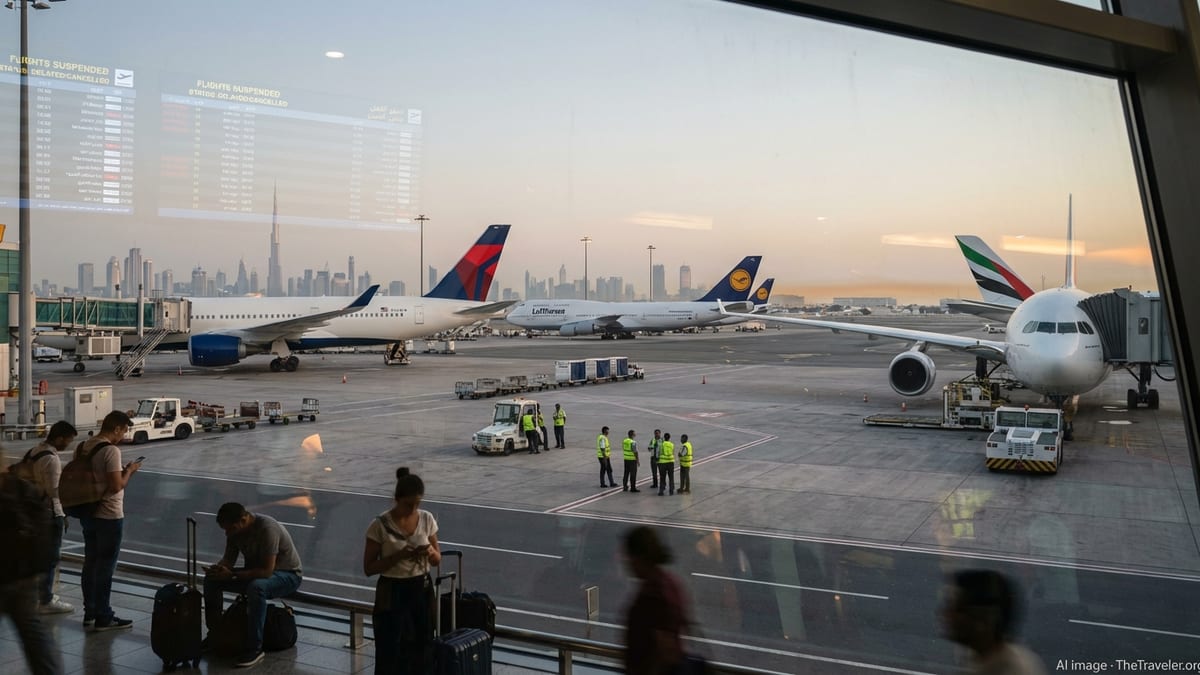
Regional Turmoil Hits Key Aviation Gateways
Published coverage indicates that the latest wave of disruption is concentrated at some of the region’s busiest airports, including Dubai, Riyadh, Cairo, Istanbul and Kuwait City. These hubs serve as vital connecting points between Europe, Asia, Africa and North America, so schedule changes at even a handful of airports can quickly echo across multiple continents.
Reports from aviation data providers and regional news outlets show that carriers such as Emirates, Saudia, Etihad and Pegasus Airlines have all been affected, along with several smaller regional operators. While some services have been cancelled outright, a far larger number have been pushed back by hours as airlines attempt to rework schedules around shifting airspace and security constraints.
The result has been crowded terminals, extended queues at service desks and a scramble for information as travelers check airport departure boards and airline apps for the latest status updates. Publicly available information suggests that the picture can change within minutes, with flights moving rapidly from on time to delayed or cancelled as conditions evolve.
In many cases, even flights that eventually depart are doing so after significant delays, disrupting onward connections and leaving passengers to negotiate last minute rebookings or overnight stays near airports already operating under strain.
Emirates, Saudia, Etihad And Pegasus Among The Worst Hit
Data compiled from flight tracking platforms and regional travel coverage indicates that full service giants Emirates, Saudia and Etihad, as well as low cost carrier Pegasus Airlines, are among the airlines most exposed to the current wave of disruption. Their networks are heavily centered on Middle Eastern hubs now affected by tightened airspace controls and heightened security risks.
In the United Arab Emirates, Emirates and Etihad have already been operating reduced and reconfigured schedules in recent weeks. Industry analysis shows that Emirates is still running below its pre crisis capacity, while Etihad is maintaining a limited commercial schedule that prioritizes core routes and repatriation style services, making any fresh disruption particularly painful for passengers depending on the few flights that are still operating.
In Saudi Arabia, flag carrier Saudia has seen operations repeatedly reshuffled as conditions in surrounding airspace fluctuate. Travelers connecting through Riyadh and Jeddah have reported tight turnaround times and missed onward flights as delays cascade through the timetable. Similar pressures are visible at Istanbul’s airports, where Pegasus Airlines and other Turkish carriers are juggling reroutings and extended block times to avoid affected skies.
Egypt’s main gateway in Cairo has also felt the impact. While domestic and some regional services continue to operate near normal at times, long haul and transit passengers have been vulnerable to knock on delays from inbound flights arriving late from disrupted hubs elsewhere in the region.
Airspace Closures And Security Risks Drive Ongoing Disruption
The current pattern of cancellations and delays builds on weeks of instability in Middle Eastern skies following the escalation of conflict involving Iran, Israel and the United States. Multiple reports from airlines, aviation authorities and international media point to partial or full airspace closures over several countries, as well as restrictions affecting overflight corridors traditionally used by long haul carriers.
Analysts note that when airspace in or around the Gulf is closed or heavily restricted, airlines are forced to take longer alternative routes, add fuel stops or cancel flights outright if a viable path cannot be secured. Flight tracking data has shown numerous services between Europe and Asia taking extended northern or southern detours, adding hours to journey times and reducing the number of rotations an airline can fly in a given day.
Publicly available information also highlights that airports in the UAE and other Gulf states have sustained varying degrees of operational disruption since late February, including temporary shutdowns and reduced runway capacity. Even as some hubs reopen for limited traffic, safety assessments and operational checks mean that airlines cannot instantly return to normal schedules.
These layers of constraint explain why the raw number of cancellations remains relatively modest compared with the scale of delays. Many flights are technically still operating, but they are doing so on stretched schedules that leave little room for recovery when new problems emerge, resulting in rolling late departures and missed connections.
Passengers Face Long Waits, Missed Connections And Changing Rules
For travelers, the immediate impact of the 29 cancellations and 517 delays has been measured in hours spent in airport terminals and uncertainty about when they will reach their destinations. Social media posts and travel forum discussions in recent days describe crowded check in halls, long queues at transfer desks and difficulty securing alternative routings out of affected hubs.
Several airlines in the region have published flexible rebooking and refund policies tailored to the disruption, allowing passengers on cancelled flights to change dates without additional fees or to seek refunds within specified windows. However, availability on alternative services can be limited at short notice, particularly for those seeking to avoid transiting through hubs seen as most vulnerable to sudden airspace changes.
Travel agencies and online booking platforms have updated advisory pages urging passengers to check flight status frequently and to avoid heading to the airport until they have confirmation that their service is operating. Some carriers continue to adjust departure times repeatedly throughout the day as they negotiate slots, crew duty limits and new routing instructions.
Travelers with complex itineraries, such as multi stop journeys between Asia, Europe and North America, are among the most affected. A delay of several hours on an initial leg into Dubai, Riyadh, Cairo or Istanbul can easily result in missed long haul connections, forcing overnight stays or entirely new routings at a time when regional capacity remains constrained.
Uncertain Outlook As Airlines Adapt Schedules
Aviation experts quoted in recent media analyses caution that the situation across Middle Eastern airspace remains fluid, with further schedule changes likely in the coming days and weeks. While some hubs are gradually restoring operations, ongoing security concerns and the risk of renewed escalations mean that airlines are planning cautiously and often publishing only partial timetables.
Industry data suggests that overall flight activity across Gulf and neighboring states is still significantly below pre conflict levels, even as major carriers add back services where possible. Recovery patterns are uneven, with some routes seeing improved connectivity while others remain suspended or heavily reduced due to airspace bottlenecks and demand uncertainty.
For now, publicly available guidance from airlines and travel advisories converges on a similar message for passengers: build extra time into itineraries involving the region, remain flexible about routing and dates, and monitor official flight status tools closely. With cancellations and delays continuing to shift from day to day, confirmed information from carriers shortly before departure remains the most reliable indicator of whether a journey will proceed as planned.
Until regional airspace stabilizes, the experience of hundreds of passengers stranded or delayed by this latest set of 29 cancellations and 517 delays may remain a recurring feature of Middle East travel, underscoring how quickly geopolitical shocks can reverberate through one of the world’s most critical aviation crossroads.