

More news on this day
Flight disruption across the Middle East intensified today as carriers in Turkey, the United Arab Emirates, Egypt and Kuwait logged at least 254 delays and 17 cancellations, disrupting operations for Saudia, Air Arabia, Emirates and other airlines at Cairo, Istanbul, Kuwait City, Dubai and secondary hubs across the region.
Get the latest news straight to your inbox!
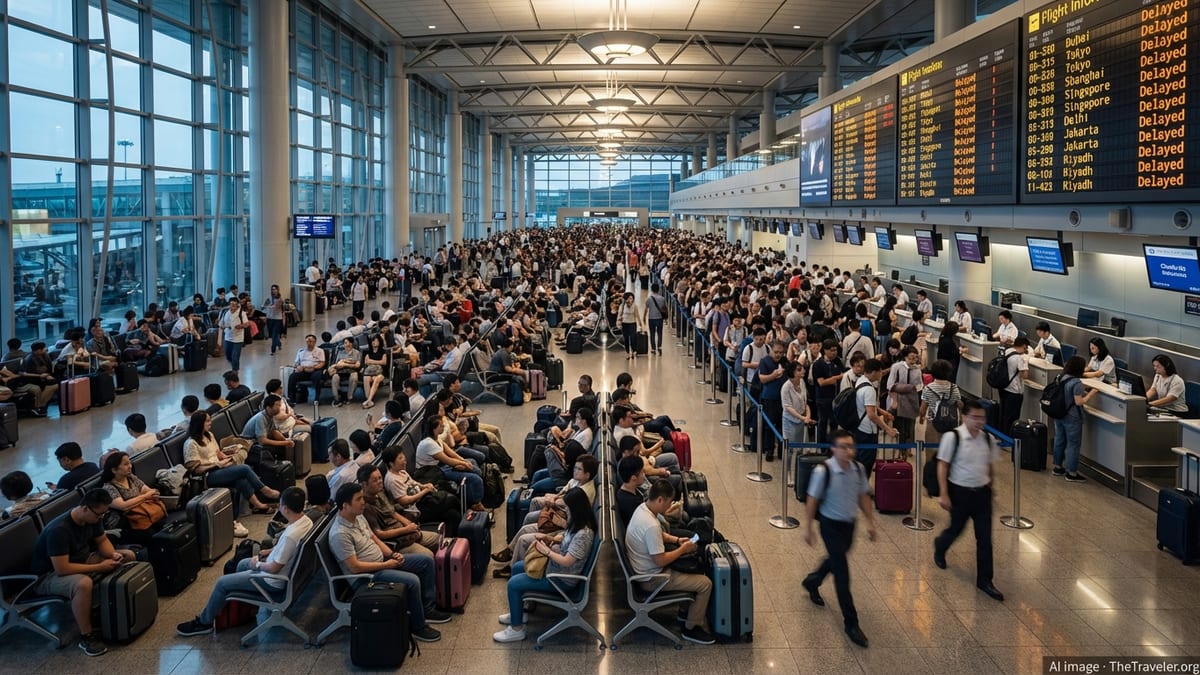
Regional Tally Highlights Deepening Operational Strain
Published data aggregating real-time airport movements in the Middle East indicates that, within a single day, airports in Turkey, the UAE, Egypt and Kuwait collectively recorded 254 delayed departures and 17 outright cancellations. These figures build on a broader pattern of aviation disruption seen since late February, when a sharp escalation in regional tensions forced repeated airspace closures and large-scale schedule rewrites across the Gulf and Eastern Mediterranean.
Numbers compiled by specialist travel and aviation outlets show that delays continue to vastly outnumber cancellations, with carriers often opting to hold flights on the ground rather than scrub routes entirely in the hope that narrow airspace windows will reopen. Recent tallies from regional hubs, including previous counts of more than 500 delays and over 20 cancellations across six Middle Eastern countries in a day, suggest that today’s four-country snapshot is part of a rolling wave of disruption rather than an isolated event.
While the 17 cancellations logged for Turkey, the UAE, Egypt and Kuwait represent a small share of total scheduled services, the knock-on effects are magnified by aircraft and crews already out of position from earlier disruptions. Industry tracking indicates that thousands of flights have been cancelled out of Middle Eastern hubs since February 28 as airlines reroute or suspend services, particularly on Asia–Europe corridors that rely heavily on Gulf and Turkish gateways.
Operational pressures remain elevated across the region, with some airlines still operating on reduced schedules or with temporary suspensions to certain destinations. Observers describe the current environment as the most challenging for Middle East connectivity since the peak of the pandemic, as carriers attempt to balance safety considerations with the need to keep key transit flows moving.
Major Hubs in Dubai, Istanbul, Cairo and Kuwait City Under Pressure
Today’s disruption has been most visible at the region’s busiest hubs, where even modest levels of cancellations and prolonged departure holds can quickly cascade into large-scale delays. At Dubai International Airport, which remains a critical connecting point between Asia, Europe and Africa, recent days have brought a patchwork of delayed departures and selective cancellations, with Emirates and flydubai frequently adjusting schedules as airspace routings shift and turnaround times lengthen.
In Turkey, Istanbul’s airports have also faced recurring operational challenges. Earlier this week, aviation data cited by travel industry coverage pointed to hundreds of delays and a notable concentration of cancellations at Istanbul Sabiha Gökçen International, underscoring the vulnerability of Turkish hubs that serve as alternatives when Gulf airspace becomes constrained. Today’s figures add further evidence that Istanbul continues to absorb significant turbulence in regional traffic flows.
Cairo International Airport in Egypt has emerged as another pressure point. Recent reporting shows the airport handling high volumes of delayed services as carriers restructure routes around restricted skies over parts of the Levant and Gulf. Even when cancellations at Cairo remain relatively low, long queues at check-in and security, as well as extended waits at passport control for arriving passengers from rescheduled flights, have become increasingly common according to on-the-ground accounts shared in public forums and media coverage.
Kuwait City’s main airport, while smaller than Dubai or Istanbul, has not been spared. Publicly available data referenced by travel analysts shows Kuwait Airways and other operators facing elevated delay rates on regional services, particularly to other Gulf states and to Egypt. With Kuwait airspace featuring prominently in some diversion plans, any local traffic management measures or capacity reductions can ripple through to neighboring hubs.
Airlines from Emirates to Saudia and Air Arabia Forced to Adapt
Among the carriers most directly affected by the latest disruption wave are the region’s heavyweight network airlines and key low-cost operators. Emirates, based in Dubai, has already spent weeks juggling a combination of suspended routes, reduced frequencies and one-off cancellations, after earlier phases of the crisis prompted temporary halts to many flights to and from its home hub. Although more services have gradually returned, the latest data on delays and cancellations shows that schedules remain fragile.
Saudi flag carrier Saudia has also been repeatedly drawn into the turbulence. Earlier published tallies for the wider region cited hundreds of delays and several cancellations involving Saudi airports such as Riyadh and Jeddah, reflecting how closures and rerouting in neighboring airspaces push additional strain onto domestic and regional rotations. Today’s figures for Turkey, the UAE, Egypt and Kuwait do not capture the full Saudi picture, but they intersect with Saudia’s operations via shared routes and connecting traffic.
Low-cost and regional airlines, including Air Arabia and others based in the Gulf, face their own set of challenges. As point-to-point operators with thinner margins and tighter aircraft utilization, they are particularly exposed when a single delay reverberates across multiple sectors in a day. Publicly accessible tracking of their performance in recent days shows recurring late departures and a scattering of cancellations, especially on short-haul hops that cross contested or capacity-constrained airspace.
Additional stress is evident at non-Gulf carriers that depend on Middle East stopovers. International airlines from Europe, Asia and North America have previously reduced or suspended some services to hubs such as Dubai and Doha in response to route lengthening and risk assessments. With flight times stretched by detours around closed skies, crew duty limits and maintenance windows become tighter, leaving less room for recovery when further delays arise inside the region.
Passengers Face Long Queues, Missed Connections and Limited Alternatives
For travelers, the statistical picture of 254 delays and 17 cancellations translates into a day of missed connections, disrupted itineraries and extended airport stays. Reports from recent days at Dubai, Istanbul and Cairo describe long queues at transfer desks and customer service counters as passengers attempt to rebook onto later flights. Even when aircraft eventually depart, late arrivals at onward hubs can strand travelers overnight when last flights of the day have already left.
Published guidance from travel organizations and consumer advocates in affected markets has consistently urged passengers to monitor flight status closely, use airline apps where possible, and document all disruption-related costs. Several advisory notes recommend travelers keep receipts for meals and accommodation, take screenshots of delay notifications, and check whether local or regional passenger rights regulations may apply, depending on the carrier and routing.
Accommodation near major hubs is also under strain. With repeated surges of stranded travelers across several weeks of disruption, hotel availability around airports such as Dubai and Istanbul has periodically tightened, especially during peak travel periods. Some national tourism agencies and foreign ministries have updated travel advisories for the Middle East to warn transit passengers of the risk of unscheduled overnight stays and to suggest allowing extra buffer time for connections through the region.
Travel planners warn that even passengers not directly flying through Turkey, the UAE, Egypt or Kuwait could feel indirect effects. As airlines reroute around Middle Eastern airspace, longer flight times on Asia–Europe and Asia–North America routes can trigger rolling delays across global networks, leaving some travelers encountering missed connections far from the original disruption hotspots.
Outlook: Prolonged Volatility Likely as Airspace Constraints Persist
Industry observers see little immediate relief on the horizon. Analysis from aviation data firms and travel consultancies suggests that as long as airspace closures and routing restrictions remain in place over parts of Iran, Iraq, Israel, Syria and nearby areas, Middle Eastern hubs and carriers will continue to operate with limited flexibility. Each new round of military or political tension can prompt further last-minute adjustments, extending the period of elevated delays and sporadic cancellations.
Some airlines have responded by extending schedule reductions and suspensions further into the calendar, particularly for services most affected by rerouting. Public statements and operational updates from carriers using Dubai, Doha and Abu Dhabi as long-haul gateways indicate that route planners are assuming a protracted period of constrained capacity, even as they restore selected flights to meet demand during peak seasons.
For travelers, the pattern of 254 delays and 17 cancellations across Turkey, the UAE, Egypt and Kuwait in a single day serves as a reminder that the region’s air network remains fragile. Travel experts recommend that anyone planning itineraries through Middle Eastern hubs in the coming weeks build in generous connection times, consider flexible tickets where possible, and remain prepared for last-minute changes to routings and schedules.
With spring and early summer traditionally strong periods for travel between Europe, Asia and Africa, airlines will face mounting pressure to normalize operations. Yet, as recent weeks of disruption show, the balance between demand and operational resilience in the Middle East can shift quickly, leaving passengers and carriers alike navigating a volatile and often unpredictable aviation landscape.