

More news on this day
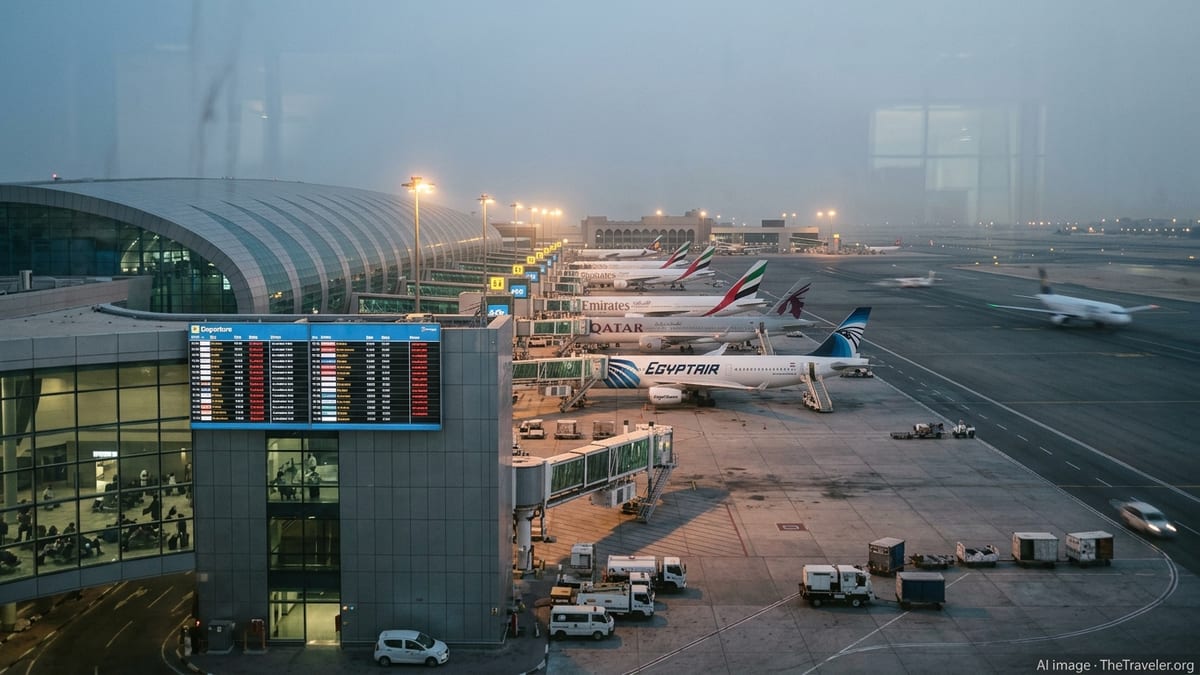
Air travel across the Middle East faced fresh turmoil on March 18, 2026, as airports in Saudi Arabia, Kuwait, the United Arab Emirates and Egypt reported at least 206 flight delays and 114 cancellations, disrupting operations for Emirates, Qatar Airways and EgyptAir at key hubs including Riyadh’s King Khalid International Airport, Kuwait International Airport, Dubai International Airport and Cairo International Airport.
Get the latest news straight to your inbox!
Regional Flight Disruptions Deepen Amid Security Crisis
Published travel advisories and flight-tracking data indicate that the latest wave of disruption is closely tied to the continuing security crisis triggered by the Iran conflict and airspace restrictions across the Gulf. King Khalid International Airport in Riyadh is operating with limited services, with advisories describing ongoing delays and cancellations as airlines reroute or scale back frequencies.
Kuwait International Airport remains one of the hardest-hit gateways. Public information from aviation and government sources shows that regular commercial traffic has been largely suspended since the closure of Kuwaiti airspace in late February, forcing carriers such as Jazeera Airways and others to divert operations to smaller airports inside Saudi Arabia. The continuing shutdown has added to the overall tally of cancellations affecting the region.
In the United Arab Emirates, Dubai International Airport, the home base of Emirates, has seen a stop-start recovery. After a blanket suspension of many flights in early March, a series of limited outbound services has resumed, but with frequent last-minute schedule changes. Travelers continue to report extended delays, rebookings and same-day cancellations as airlines react to changing airspace permissions and routing constraints.
Cairo International Airport, a primary hub for EgyptAir, has also come under pressure. Recent Middle East port and travel advisories note that EgyptAir has suspended multiple routes from Cairo to Gulf destinations such as Dubai, Abu Dhabi, Sharjah, Doha and Kuwait, contributing to the growing number of canceled flights. While Cairo’s terminals remain open, the cuts to regional schedules are echoing across connecting networks.
Emirates, Qatar Airways and EgyptAir Forced to Redraw Networks
The latest figures of 206 delays and 114 cancellations reflect the combined impact on several of the Middle East’s most prominent airlines. Emirates, operating from Dubai, has gradually moved from a near-total suspension of services at the start of the crisis toward a more selective network, using a reduced schedule to key long-haul destinations and a narrow set of regional links. Publicly available updates shared by the airline and passengers show that these flights often depart significantly behind schedule as departure slots and routings shift.
Qatar Airways, which normally funnels traffic through Doha, is experiencing knock-on effects even when its own aircraft are not directly grounded at the affected airports. The closure and tight control of neighboring airspace have forced the carrier to reschedule or reroute flights that would typically overfly Saudi Arabia, Kuwait or the UAE. According to recent coverage of the wider conflict, Doha’s Hamad International Airport has been handling an uneven mix of evacuations, diverted flights and constrained commercial services, feeding into regional delays.
EgyptAir’s hub-and-spoke model out of Cairo has come under particular strain from route suspensions to Gulf cities. Travel and shipping bulletins from early March highlight that the airline halted flights from Cairo to several high-risk Gulf destinations, including Dubai and Kuwait, a move that immediately added to cancellation statistics. Passengers booked on these routes have been left to seek alternative connections via less affected airports, often at short notice.
Among all three carriers, publicly available information points to an emphasis on repatriation and essential travel, with capacity concentrated on corridors needed to move residents and foreign nationals out of conflict-affected areas. This shift has left leisure travelers, business passengers and transit customers with fewer options and longer waits, particularly at Riyadh, Dubai and Cairo.
Kuwait and Riyadh Struggle With Prolonged Airspace Constraints
Kuwait’s prolonged airspace closure continues to play an outsized role in the region’s travel disruption. Information published by airport and aviation authorities shows that since late February, all regular commercial flights to and from Kuwait International Airport have been suspended, effectively turning the airport into a minimal-operations facility. Airlines have resorted to using regional alternatives such as airports in eastern Saudi Arabia, adding ground travel time and logistical complexity for passengers.
This near-total shutdown has skewed overall statistics, since every scheduled departure or arrival that would have passed through Kuwait has either been canceled outright or rerouted. The cumulative effect is visible in the rising count of cancellations across the Middle East, even on days when other hubs such as Dubai manage to run partially restored operations.
Riyadh’s King Khalid International Airport is facing a different, but related, problem. Travel-risk advisories current as of early March describe the airport as open but operating with limited flight volumes and regular disruption. Airlines serving Riyadh have trimmed schedules, consolidated frequencies and occasionally shifted operations to alternative Saudi airports less affected by potential overflight issues, which has contributed to the region-wide total of delayed flights.
Passengers using these airports report a patchwork of outcomes: some flights depart with modest delays, while others experience rolling postponements that can stretch through the day before ending in cancellation. This uneven pattern makes it challenging for travelers to plan connections or guarantee arrival times, further amplifying the sense of uncertainty.
Dubai and Cairo Hubs Grapple With Surging Demand and Limited Capacity
Dubai International Airport remains one of the most closely watched indicators of regional recovery. After passenger reports and airline statements described a complete halt to many services in the first days of March, operations have slowly resumed under tight constraints. A limited number of Emirates departures now leave Dubai each day, but observers note that the schedule is far slimmer than usual and highly susceptible to change.
The combination of reduced flight volumes and high demand has created crowded terminals and long queues at check-in and transfer desks. Travelers sharing their experiences on public forums describe repeatedly rebooked itineraries, overnight stays in airport hotels and challenges obtaining updated information as call centers and service desks struggle to keep pace with the volume of schedule changes.
Cairo International Airport, meanwhile, has seen its role evolve as both a departure point and a transit hub for travelers attempting to bypass the Gulf. With EgyptAir suspending links from Cairo to several Gulf destinations, passengers are turning to alternative routings via Europe, North Africa and, where possible, relatively less affected parts of the Middle East. This has increased pressure on remaining long-haul services that continue to operate from Cairo, even as regional connectivity shrinks.
Publicly available port and travel advisories indicate that, while Egypt’s airports remain fully operational from a safety and infrastructure standpoint, the selective suspension of flights to Gulf hubs significantly constrains options for regional travelers. For many, the journey now involves multiple carriers and additional stopovers, adding both cost and uncertainty.
Travelers Confront Uncertainty as Airlines Adjust Day by Day
The combined total of 206 delays and 114 cancellations illustrates only part of the disruption facing passengers across the Middle East. Industry trackers and airline updates point to a highly fluid situation in which flight status can shift repeatedly in the hours leading up to departure. Many travelers are choosing to reach airports well before scheduled check-in times, anticipating potential security checks, document verification for rebooked itineraries and long lines at service counters.
Airlines operating through King Khalid, Kuwait, Dubai and Cairo are still revising timetables on a near-daily basis, depending on airspace permissions, overflight risk assessments and operational capacity. Publicly posted travel waivers from global carriers referencing “Middle East unrest” show that even airlines outside the region are allowing passengers to change or postpone trips touching these hubs without additional fees, underlining the scale of the disruption.
For now, the picture for Emirates, Qatar Airways and EgyptAir remains one of gradual, uneven adjustment rather than a swift return to normal. With airspace restrictions and security concerns still evolving, the likelihood of further delays and cancellations remains high, and travel experts advise that anyone planning to transit the region in the coming days should be prepared for rapidly changing conditions and possible last-minute itinerary changes.