

More news on this day
Air travel across the Middle East faced another day of severe disruption as at least 30 flights were cancelled and 494 delayed across Egypt, Jordan, Saudi Arabia, the United Arab Emirates and neighboring states, snarling operations for Saudia, Gulf Air, All Nippon Airways, SpiceJet and other carriers at major hubs including Cairo, Jeddah, Amman and Dubai.
Get the latest news straight to your inbox!
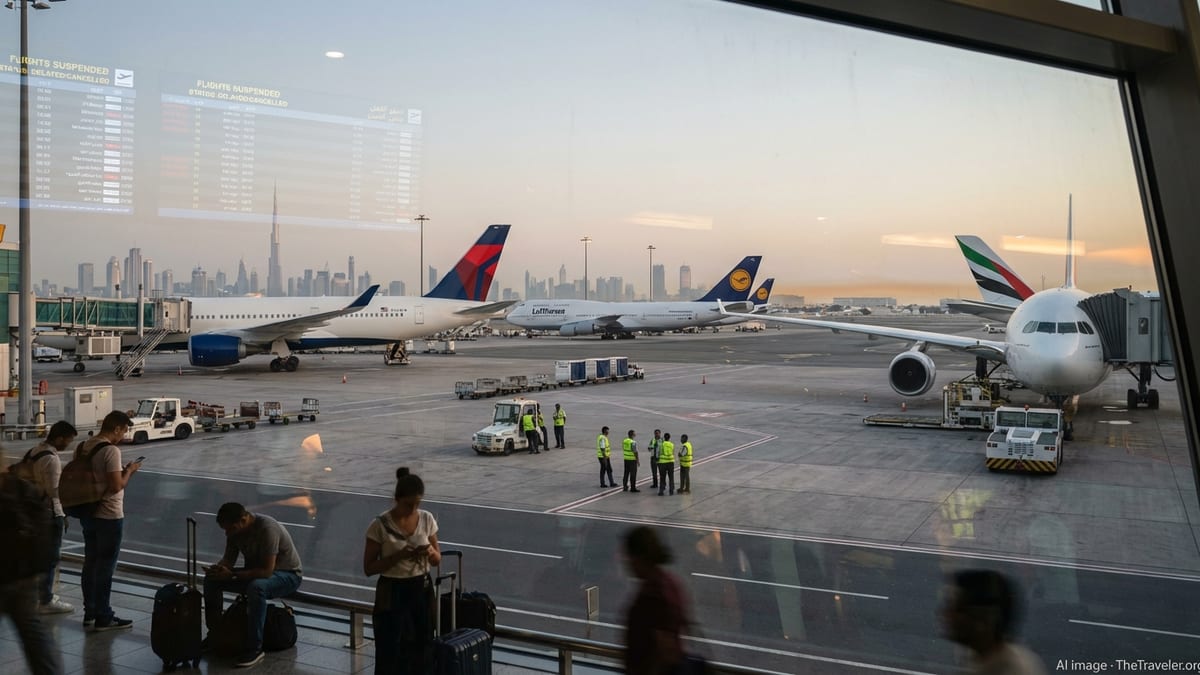
Fresh Wave Of Disruptions Across Regional Hubs
Regional flight data and published coverage indicate that the latest wave of cancellations and delays has hit some of the Middle East’s busiest airports, with Cairo, Jeddah, Amman and Dubai among the worst affected. While the total number of outright cancellations, around 30, remains modest compared with earlier phases of the crisis, the nearly 500 delays reported across multiple countries have created rolling knock-on effects for passengers and airline schedules.
Saudi Arabia, Egypt, Jordan and the UAE have all seen services curtailed or rescheduled as carriers respond to evolving airspace restrictions and operational challenges. Reports from regional outlets describe congested terminals, extended waits at departure gates and late-night arrivals as airlines attempt to reposition aircraft and crew around bottlenecks in regional corridors.
The pattern mirrors previous days of disruption, when Saudi Arabia, Egypt, the UAE, Türkiye and Kuwait collectively recorded dozens of cancellations and more than 500 delays in a single 24-hour period, affecting carriers such as Emirates, Saudia, Etihad and Pegasus and key gateways from Dubai and Riyadh to Cairo, Istanbul and Kuwait City. Publicly available tracking data for the current round suggests a similar concentration of issues at major hubs that connect Europe, Asia and Africa.
Airports and airlines across the region continue to advise passengers, through public notices and digital channels, to verify flight status before heading to the airport and to anticipate longer processing and connection times where services are operating.
Saudia, Gulf Air, ANA, SpiceJet And Others Impacted
The latest figures highlight how broadly the disruption has spread across airline networks that rely on Middle Eastern hubs. Saudia has repeatedly emerged among the most affected carriers in the region, with earlier reporting showing the airline recording the highest combined disruption in Saudi Arabia, including multiple cancellations and dozens of delays centered on Jeddah and Riyadh. The new cancellation and delay totals indicate that the flag carrier continues to manage a volatile operating environment.
Gulf Air, which uses Bahrain as a key connecting point between the Gulf and wider Asia and Europe, has also been adjusting schedules, including services transiting Saudi airspace or connecting to airports such as Amman and Cairo. Industry monitoring and recent travel advisories have highlighted how even indirect exposure to constrained airspace can force carriers to retime or reroute flights, contributing to the wider pool of delayed services.
Asian and Indian carriers are similarly caught in the turbulence. All Nippon Airways and other Asia based airlines that normally rely on West Asia corridors for long haul routes to Europe have been reshaping flight paths and timings, with delays reported on services that skirt affected zones. Indian low cost and full service operators, including SpiceJet and Air India Group, have recently announced cuts to certain ad hoc and supplemental flights while maintaining a reduced schedule of regular services to Saudi Arabia and the UAE, reflecting ongoing uncertainty over routings and timings.
For carriers from outside the region, these disruptions add to a complex operational picture. Previous adjustments by European and North American airlines, including rerouting or suspending flights to Dubai, Riyadh, Doha and other Gulf cities, have already lengthened journey times and increased fuel costs. The new cancellations and delays across Egypt, Jordan, Saudi Arabia and the UAE risk extending that period of instability.
Cairo, Jeddah, Amman And Dubai Under Strain
Cairo has emerged as both a pressure point and, increasingly, a vital alternative corridor amid the ongoing turbulence. Egyptian media and aviation analysis suggest that while EgyptAir temporarily suspended multiple routes to Gulf and Levant destinations at the height of recent airspace closures, Egyptian airspace itself has remained broadly open, enabling Cairo to act as a diversion and refueling point for traffic that can no longer transit parts of the Gulf and Levant.
Jeddah’s King Abdulaziz International Airport and Riyadh’s King Khalid International Airport have experienced repeated waves of disruption, with public travel alerts in Saudi Arabia in recent weeks urging passengers to reconfirm flights before traveling. Saudia’s network, which links these hubs to destinations across Asia, Africa and Europe, has been particularly exposed to sudden changes in overflight permissions and route availability, resulting in clusters of delays even when outright cancellations are limited.
In Jordan, Amman’s Queen Alia International Airport has been affected by restrictions and rerouting affecting regional airspace. Available operational summaries classify Jordan as open but experiencing delays, illustrating how even airports that remain technically accessible can suffer from the cascading effects of congested alternative corridors and longer routings that push aircraft and crews off schedule.
Dubai’s role as a super hub linking Europe and the Americas with Asia, Africa and Oceania has made any disruption there especially consequential. Earlier in the crisis, coverage from international and regional outlets described closures or partial shutdowns at Dubai and neighboring Gulf hubs, resulting in thousands of cancellations and diversions. While some operations have since resumed on a limited basis, the fresh round of delays and cancellations across the broader region underlines how fragile recovery remains for one of the world’s busiest aviation crossroads.
Airspace Closures And Rerouting Drive Ongoing Volatility
The continuing pattern of cancellations and delays is closely tied to airspace closures and restrictions across parts of the Middle East, prompted by heightened geopolitical tensions and security concerns. Notices to air missions covering portions of Iran, Iraq, Israel, Syria, and parts of the Gulf have periodically limited or suspended civilian overflights, forcing airlines to elongate routes, skirt no fly zones or temporarily suspend operations altogether.
Analysts note that during the most acute phase of the recent crisis, published estimates pointed to several thousand flights per day being cancelled globally as key Gulf and Levant corridors shut down. Even as some restrictions have eased, partial closures and rapidly changing permissions continue to inject uncertainty into airline planning, making it difficult to restore stable schedules or accurately forecast capacity.
The operational impact is felt not only in the number of flights that never take off, but also in the large volume of services that depart or arrive significantly late. Extended routings through alternative corridors can add 30 to 90 minutes to certain long haul journeys, complicating crew rostering, aircraft utilization and connection windows. This in turn contributes to the elevated delay figures now being recorded across Egypt, Jordan, Saudi Arabia, the UAE and neighboring markets.
Industry assessments published over recent weeks have framed the situation as one of the most serious crises for civil aviation in the Middle East and North Africa in years, citing mounting financial losses for airlines and airports alongside the operational strain of maintaining safety standards in a rapidly changing environment.
What Passengers Are Being Urged To Do
For travelers, the immediate consequences of 30 cancellations and nearly 500 delays in a single cycle are missed connections, unexpected overnight stays and disrupted itineraries stretching well beyond the region itself. With major transit hubs such as Cairo, Jeddah, Amman and Dubai all affected, the knock on effects extend to Europe, Asia, North America and Africa as delayed aircraft and crews ripple through global networks.
Public guidance from airlines and airports across the affected countries consistently emphasizes the importance of checking flight status before leaving for the airport, monitoring airline apps and communication channels, and being prepared for last minute changes. Some carriers have also highlighted flexible rebooking policies and options to reroute via alternative hubs where capacity allows.
Travel industry advisories recommend that passengers build extra time into itineraries involving Middle Eastern connections, avoid tight layovers, and ensure that accommodation and travel insurance arrangements can accommodate unexpected delays. Tour operators and corporate travel managers are similarly reassessing routing choices, with some temporarily favoring itineraries that bypass the most volatile corridors.
While there are tentative signs of gradual adjustment in parts of the network, the latest data on cancellations and delays across Egypt, Jordan, Saudi Arabia, the UAE and beyond suggests that travelers planning to transit the region in the coming days should remain alert to ongoing volatility and be ready to adjust plans at short notice.