

More news on this day
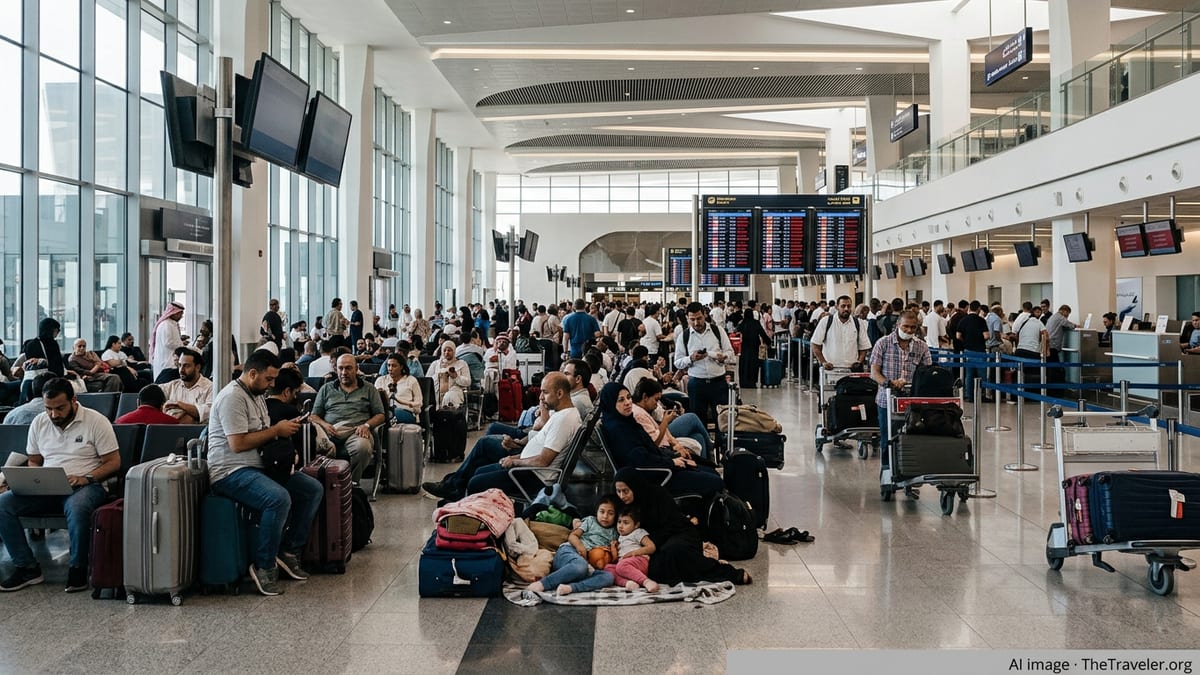
Air travel across the Middle East faced another day of disruption as airports in Türkiye, the United Arab Emirates, Egypt and Kuwait registered 254 delays and 17 cancellations, slowing traffic for Saudia, Air Arabia, Emirates and other carriers at major hubs from Cairo and Istanbul to Dubai and Kuwait City.
Get the latest news straight to your inbox!
Ripple Effects Across Cairo, Istanbul, Dubai and Kuwait City
Published airport and flight-tracking data for Sunday point to a patchwork of disruption across the region, with late departures far outnumbering outright cancellations. The combined tally of 254 delays and 17 cancelled services reflects a system that is still operating but under sustained strain from airspace restrictions and rapidly changing routings.
At Cairo International Airport, delays on regional services have stacked up as airlines contend with congestion on remaining open corridors and extended routings to avoid sensitive airspace. Publicly available information shows Egypt-based and Gulf carriers facing longer block times on flights to the Gulf and Levant, complicating aircraft rotations and crew planning.
Istanbul’s role as a major connecting hub between Europe, Asia and the Middle East has made it particularly exposed to knock-on effects. Flight-status boards on Sunday again showed clusters of late departures and arrivals on routes that would normally cross disputed skies, underscoring how even indirect exposure to restricted areas can reverberate through a hub’s schedule.
In the Gulf, Dubai International and Kuwait International airports continue to see a mix of delayed and cancelled services as airlines recalibrate. While most flights are still operating, the latest figures underline that even a relatively small number of cancellations can translate into hundreds of disrupted itineraries once onward connections are factored in.
Saudia, Emirates, Air Arabia and Regional Carriers Under Pressure
The burden of the current wave of disruption is falling heavily on Middle East and near-regional airlines that rely on dense networks threading through Gulf and Mediterranean hubs. Saudia, Emirates and Air Arabia are among the carriers with significant exposure to routes touching affected airspace, alongside EgyptAir, Pegasus Airlines and Kuwait Airways.
Emirates, whose Dubai hub is a central artery for global long haul travel, has continued to adjust its schedules as conditions evolve. Earlier periods of more severe disruption saw entire waves of departures from Dubai curtailed; the situation now is more targeted, but recurring delays are still cascading through the network and complicating passenger rebooking efforts.
Saudia’s operations have similarly felt the impact of rerouting and shifting demand. With Saudi airports such as Jeddah and Riyadh already coping with broader regional disruptions in recent days, additional bottlenecks on services to and from Cairo, Istanbul and Dubai are amplifying the pressure on ground handling and customer service systems.
Low cost and hybrid carriers such as Air Arabia, flydubai and Pegasus Airlines, which shuttle large numbers of migrant workers and price-sensitive leisure travelers between secondary cities and major hubs, are also highly exposed. Their thinner margins of schedule slack make it harder to absorb extended flight times without knock-on delays later in the day.
Conflict-Linked Airspace Closures Extend the Crisis
The latest figures come against the backdrop of a much larger disruption triggered by the conflict that erupted between United States and Israeli forces and Iran in late February. Industry analyses indicate that more than 14,000 flights have been cancelled out of the broader Middle East region since February 28, as airlines adjusted to airspace closures and advisories affecting swathes of the Gulf and Levant.
In previous weeks, aviation bulletins and corporate travel alerts documented temporary shutdowns or severe restrictions in the skies over Iran, Iraq, Israel, Jordan, Kuwait, Qatar, Bahrain and parts of the United Arab Emirates. Airlines were forced to abandon traditional east west corridors that connect Europe with Asia and Africa, lengthening flight times and compressing capacity on alternative routings through still-open airspace.
Government notices and risk assessments cited in travel industry coverage describe a “fluid” situation in Saudi Arabia and parts of the Gulf, with some countries suspending services outright and others keeping airspace technically open while carriers impose their own restrictions. Egypt’s airspace has generally remained available, but its carriers and airports continue to feel secondary effects as traffic diverts around closed zones.
The net result is a regional aviation map that looks markedly different from early February, with some hubs such as Dubai and Doha still processing large numbers of passengers but with thinner schedules, fewer frequencies and greater vulnerability to fresh shocks.
Passengers Face Long Queues, Reroutings and Uncertain Timelines
For travelers on the ground in Cairo, Istanbul, Dubai and Kuwait City, the latest day of 254 delays and 17 cancellations adds to weeks of uncertainty. Passenger accounts shared via social media and travel forums describe long queues at transfer desks, missed onward connections and difficulty securing clear information on revised itineraries.
Guidance from airlines and airports across the region generally advises passengers not to proceed to the airport unless their flight shows as operating, and to rely on official apps and customer portals for live status and rebooking options. Some carriers, including major Gulf airlines, are offering fee waivers for date changes and, in certain cases, full refunds where flights are cancelled or severely disrupted.
Consumer advocates have also reminded international travelers that compensation regimes such as Europe’s EU261 still apply on eligible itineraries, even when disruptions are linked to conflict or airspace issues, although outcomes can depend on how regulators and courts interpret “extraordinary circumstances” in each case. In practice, many passengers are prioritizing getting home or to their next destination before pursuing formal claims.
Hotel and ground transport providers in hub cities report elevated last minute demand from stranded travelers seeking overnight accommodation. In the United Arab Emirates, earlier phases of the disruption prompted emergency lodging and visa arrangements for some visitors who were unable to depart before their permits expired, setting a precedent for potential future waves of assistance if conditions deteriorate again.
Outlook: Continued Volatility for Middle East Aviation
Industry observers caution that while Sunday’s tally of 254 delays and 17 cancellations is modest compared with the peak of regional disruption in early March, it underscores a lingering fragility. Any additional escalation in the conflict, or new airspace restrictions affecting key corridors, could quickly translate into another surge of schedule changes and grounded aircraft.
Airlines are continuing to adapt by trimming frequencies, consolidating flights and deploying larger aircraft on routes with sustained demand. Some carriers are also exploring alternative hubs outside the most affected airspace, routing traffic through secondary points in Europe or Central Asia to maintain connectivity between Asia, Africa and North America.
Travel planners and corporate buyers are responding by building more slack into itineraries involving Middle East connections, and by diversifying routings where possible. Forward booking data compiled by industry analysts suggest that while demand for travel through Dubai, Istanbul and Cairo remains resilient, some passengers are temporarily favoring itineraries that avoid the most volatile areas.
With regional tensions still unresolved and thousands of flights already cancelled since late February, aviation specialists expect a drawn out recovery, marked by intermittent flare ups similar to Sunday’s wave of delays and cancellations. For passengers, that likely means continuing to monitor flight status closely, preparing for last minute schedule changes and allowing extra time at the airport when traveling through the region’s major hubs.