

More news on this day
Thousands of air travelers across the Middle East are facing cascading disruption as regional conflict and severe weather trigger hundreds of flight cancellations and nearly two thousand delays, snarling operations at key hubs from Jeddah and Cairo to Istanbul, Dubai and Doha.
Get the latest news straight to your inbox!
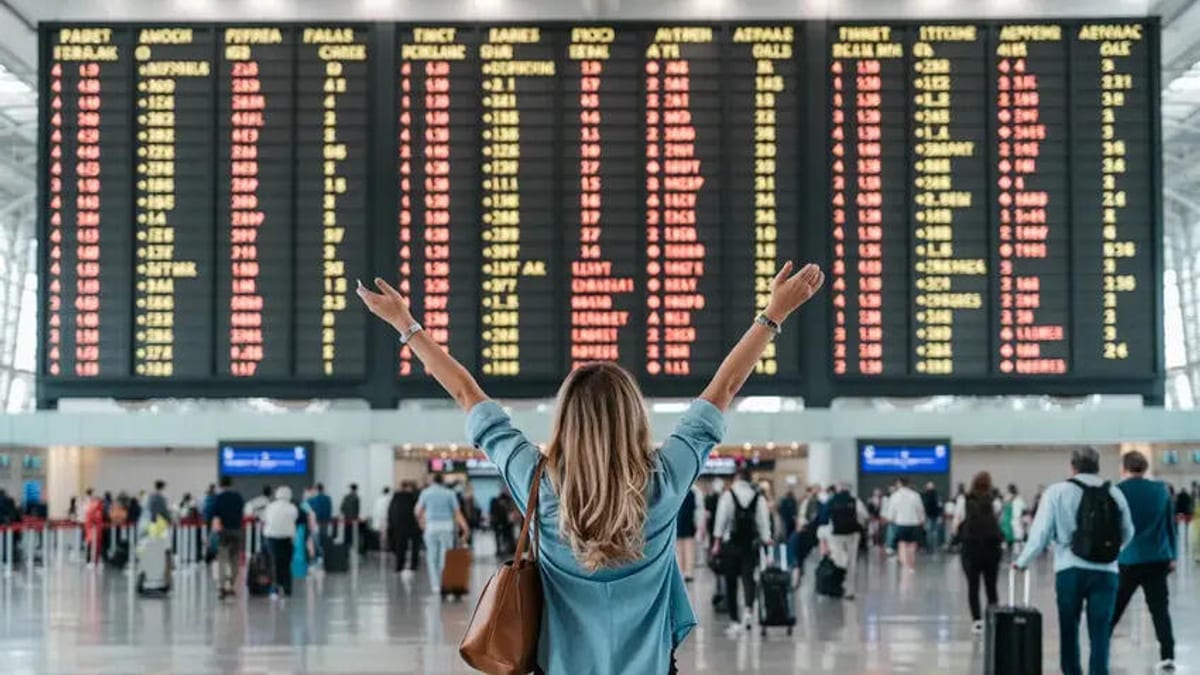
Image by Travel and Tour World – Tourism, Airline, Destination, MICE, Gobal Travel Market, Hotel news that you will find only over here.
Conflict Fallout Cripples Key Gulf and Turkish Hubs
Publicly available data on airline operations indicates that a new wave of disruption has swept through Middle Eastern skies in recent days, with at least 227 flights cancelled and around 1,939 delayed across Saudi Arabia, Turkey, the United Arab Emirates, Qatar, Egypt and neighboring states. The turmoil follows weeks of escalating conflict involving Iran, Israel and the United States, which has led to intermittent airspace closures over Iran, Iraq, Syria and parts of the Gulf.
Reports from aviation trackers and industry briefings describe a patchwork of restrictions that at times have affected the airspace of the UAE, Qatar, Bahrain and other Gulf countries, forcing airlines to reroute or ground aircraft. When key segments of regional airspace close, flights between Europe, Asia and Africa often must detour via longer southern corridors over Oman, Saudi Arabia or Egypt, stretching crew duty times and pushing schedules off balance for days at a time.
Turkey’s role as a bridge between Europe and the Middle East has also been strained. Updates shared by travel forums and regional media indicate that authorities have periodically curtailed flights from Istanbul to several Gulf and Levant destinations, concentrating limited capacity on a smaller number of routes. That has intensified pressure on remaining services to and from cities such as Jeddah and Dubai, with knock-on disruption for passengers trying to connect onward to South Asia and beyond.
In parallel, regional carriers have scaled back or suspended certain rotations into the most affected zones, then struggled to restore regular schedules once airspace reopened. The result is an uneven, stop-start recovery that continues to leave aircraft and crews out of position and generates rolling delays even on routes that are technically operating.
Gulf Airlines Confront Cancellations and Patchwork Schedules
The latest wave of cancellations has hit Gulf-based airlines particularly hard, undercutting a business model built on dense connecting banks in mega-hubs like Dubai, Doha and Abu Dhabi. Publicly available coverage notes that Gulf Air, Saudia, Flynas, Flydubai and other regional carriers have been forced to revise timetables repeatedly, trim frequencies and at times consolidate flights in order to keep aircraft circulating through available corridors.
Dubai International, normally the world’s busiest international airport by passenger volume, has been operating at a fraction of its usual schedule after missile and drone threats prompted closures and subsequent phased reopening. Travel industry reports suggest that while local carriers now operate a majority of services in and out of Dubai, overall activity remains well below normal levels, limiting options for stranded travelers and forcing lengthy layovers for those able to secure seats.
In Qatar, Hamad International Airport in Doha has seen operations oscillate as authorities respond to evolving security assessments. Coverage from aviation and business outlets describes a pattern of temporary suspensions, followed by tightly managed “repatriation” or limited commercial flights using designated safe corridors. These constrained operations have created bottlenecks for passengers who traditionally rely on Qatar Airways’ extensive connecting network between Europe, Africa, Asia and Australasia.
Saudi Arabia’s main gateways, including Jeddah and Riyadh, have shouldered additional traffic when neighboring airspace was restricted, yet they too have encountered cancellations and extended delays. Industry analyses indicate that Saudia and low cost partner Flynas have juggled diversions, crew rest requirements and shifting demand, sometimes prioritizing key domestic and evacuation-style routes over regular international services.
Egypt and Jeddah Emerge as Critical Corridors
As conflict-related closures have narrowed the number of viable corridors between Europe and Asia, Egypt and western Saudi Arabia have gained outsized importance. Reporting from regional media highlights Cairo’s emergence as a crucial overflight and transit hub, with Egyptian airspace remaining broadly open while large swaths of skies to the east have been constrained or shut entirely.
Egypt’s national carrier and its main airport in Cairo have absorbed rerouted long haul flights that previously passed through Gulf hubs, adding extra pressure on infrastructure already dealing with normal seasonal demand. Industry experts cited in local coverage point to an unusual pattern in which flights between Europe and South or Southeast Asia now arc over the eastern Mediterranean and Egypt before turning south over the Red Sea, avoiding higher risk areas further east.
On the Arabian Peninsula’s western flank, Jeddah has become another key pivot. When airspace closures have affected the central and eastern Gulf, some airlines have shifted operations toward Jeddah and nearby airports to stage departures and arrivals away from the most heavily targeted zones. This has brought an influx of transit passengers into western Saudi Arabia, even as airports there grapple with their own schedule disruptions and resource constraints.
The concentration of rerouted traffic into Cairo and Jeddah has also exposed travelers to compounding delays. With aircraft frequently arriving late from elongated detours, departures slip behind schedule, crews hit duty time limits and subsequent sectors are deferred or cancelled. Passengers who previously planned straightforward same day connections via Dubai or Doha are instead contending with overnight stops and rapidly changing itineraries.
Istanbul and European Gateways Feel the Ripple Effects
Istanbul’s dual role as both a local origin-destination market and a global connecting hub means it has become a major pressure point in the current disruption. Travel discussion boards and regional press coverage describe Turkish carriers juggling demand from Europe-bound travelers who can no longer easily transit Gulf hubs, while also dealing with constraints on flights to several Middle Eastern destinations.
When Middle East airspace closures spike, airlines funnel additional traffic through Istanbul to skirt affected zones, particularly for itineraries linking Europe, India and Southeast Asia. This surge in connecting passengers has contributed to longer queues, tighter minimum connection times and a rising risk of missed onward flights, especially when inbound services from the Middle East or North Africa arrive behind schedule.
European airlines and airports are feeling the secondary effects as well. Industry reports note that carriers from Europe have cancelled or suspended direct services to some Gulf and Levant destinations, shifting capacity instead to routes that use alternative hubs or safer corridors via North Africa. These shifts increase pressure on hubs such as Istanbul, Cairo and occasionally Athens or Larnaca, where the influx of rerouted traffic competes for limited slots and ground handling resources.
The resulting network imbalances are visible in irregular aircraft rotations, with planes and crews frequently ending their day far from their planned bases. That lack of predictability feeds back into flight planning, encouraging operators to add extra padding to schedules, which in turn further depresses effective capacity on already strained routes.
Passengers Face Stranded Stays, Visa Extensions and Long Detours
For passengers caught in the middle of the upheaval, the statistics of cancellations and delays translate into very personal challenges. Travelers transiting major hubs such as Dubai, Doha, Jeddah, Cairo and Istanbul have reported multi day layovers, last minute hotel scrambles and mounting uncertainty over when replacement flights will depart.
In response, several governments in the region, including Qatar, the United Arab Emirates and Saudi Arabia, have moved to ease immigration rules for stranded visitors. Public announcements summarized in travel advisories describe temporary extensions of tourist visa validity and waivers of overstay fines for travelers who can demonstrate that flight cancellations or airspace closures prevented timely departure. These measures are intended to prevent travelers from facing unexpected legal or financial penalties while they wait for limited seats to open.
Travel industry commentary stresses that flexibility and preparation have become essential for anyone flying through the region. Passengers are being urged to monitor airline notifications closely, travel with digital and printed copies of their original bookings and subsequent reissues, and budget extra time for connections through Middle Eastern and North African hubs. Even where flights are operating, longer routings to avoid conflict zones often result in extended flight times and increased risk of crew related delays.
With no swift resolution to the broader geopolitical crisis yet visible, aviation analysts warn that volatility in Middle East schedules could persist for weeks. For now, the combination of 227 cancellations, nearly 2,000 delays and ongoing airspace uncertainty underscores how central the region is to global connectivity, and how quickly disruption there can reverberate across continents.